TorontoOntario · 36 tours
 Niagara FallsOntario · 25 tours
 New York CityNew York · 30 tours
 Las VegasNevada · 8 tours
 San FranciscoCalifornia · 16 tours
 VancouverBritish Columbia · 17 tours
 DubaiUAE · 54 tours
 Abu DhabiUAE · 5 tours
 Buenos AiresArgentina · 23 tours
 AthensGreece · 31 tours
 AucklandNew Zealand · 38 tours
 CancunMexico · 54 tours
No destinations match “”. Try searching all tours instead — that search understands full questions, not just place names.
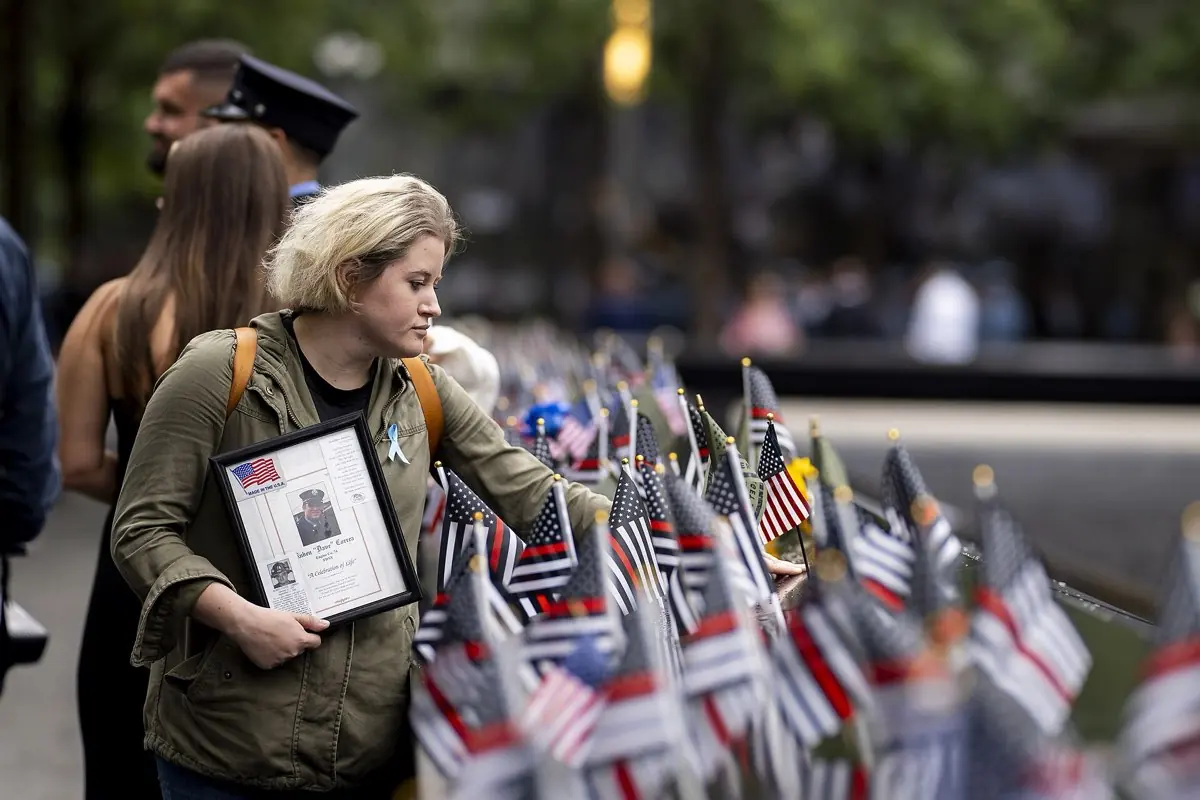
A pair of reflecting pools and museum marking the site of the World Trade Center.
Visitor guide
The National September 11 Memorial & Museum stands on the site of the original World Trade Center in Lower Manhattan. Its outdoor memorial, two reflecting pools set in the footprints of the Twin Towers, was dedicated on September 11, 2011. The museum below it opens the story of the attacks and their aftermath through objects, images and recordings.
The memorial design, Reflecting Absence by architect Michael Arad with landscape architect Peter Walker, was chosen on January 6, 2004, from 5,201 entries submitted from 63 countries, after an international competition launched in 2003 by the Lower Manhattan Development Corporation. Two pools, each nearly an acre, mark where the towers stood. Water falls down the four walls of each pool into a central void. The memorial's own site describes these as the largest man-made waterfalls in North America. Construction began on March 13, 2006.
The memorial occupies about half of the 16-acre World Trade Center site and is planted with more than 400 swamp white oaks, which shade the plaza. The memorial was dedicated on the tenth anniversary and opened to the public the next day. It is operated by a non-profit organization that was known as the World Trade Center Memorial Foundation until it was renamed in 2007.
Bronze parapets around the pools carry the names of those killed in the attacks of September 11, 2001, together with the six people killed in the February 26, 1993 World Trade Center bombing, a total of 2,983 names on 152 panels according to Wikipedia. Names are arranged not alphabetically but by what the designers call meaningful adjacencies, based on where people were at the time and on their workplaces, and about 1,200 family requests were also taken into account. Each panel is labeled N for the North Pool or S for the South Pool, followed by a number.
Among the oaks stands the Survivor Tree, a callery pear recovered from the site in October 2001. It was replanted in the Bronx in November 2001, nursed back to health there, and returned to the plaza in December 2010. It is a quiet counterpoint to the pools. A separate area, the Memorial Glade, opened on May 30, 2019, to honor first responders and recovery workers who later became ill or died from exposure at the site. The bronze sculpture The Sphere by Fritz Koenig, which stood in the original plaza, was relocated to nearby Liberty Park in 2017.
The museum was dedicated on May 15, 2014, and opened to the public on May 21, 2014. Davis Brody Bond designed the underground galleries, which sit roughly 70 feet below ground, and Snohetta designed the entry pavilion, which houses two steel tridents salvaged from the Twin Towers. Inside, visitors encounter surviving structural elements, including an exposed section of the slurry wall and the Last Column, the final piece of steel removed from the site in May 2002. The Survivors' Staircase, the first artifact moved into the museum, arrived in July 2008. Wikipedia reports that the collection includes more than 14,000 artifacts, 40,000 images, 3,500 oral recordings and over 500 hours of video.
This is a place many people prefer to experience slowly and quietly. Check the 9/11 Memorial & Museum for current hours, ticketing and which parts are open before you go, and allow more time than you expect to need.
On a private Voyzo tour, a private vehicle and driver can take you door to door to Lower Manhattan, leaving you free to set your own pace at the memorial rather than managing a group schedule.
See every tour and attraction we cover in New York City.