TorontoOntario · 36 tours
 Niagara FallsOntario · 25 tours
 New York CityNew York · 30 tours
 Las VegasNevada · 8 tours
 San FranciscoCalifornia · 16 tours
 VancouverBritish Columbia · 17 tours
 DubaiUAE · 54 tours
 Abu DhabiUAE · 5 tours
 Buenos AiresArgentina · 23 tours
 AthensGreece · 31 tours
 AucklandNew Zealand · 38 tours
 CancunMexico · 54 tours
No destinations match “”. Try searching all tours instead — that search understands full questions, not just place names.
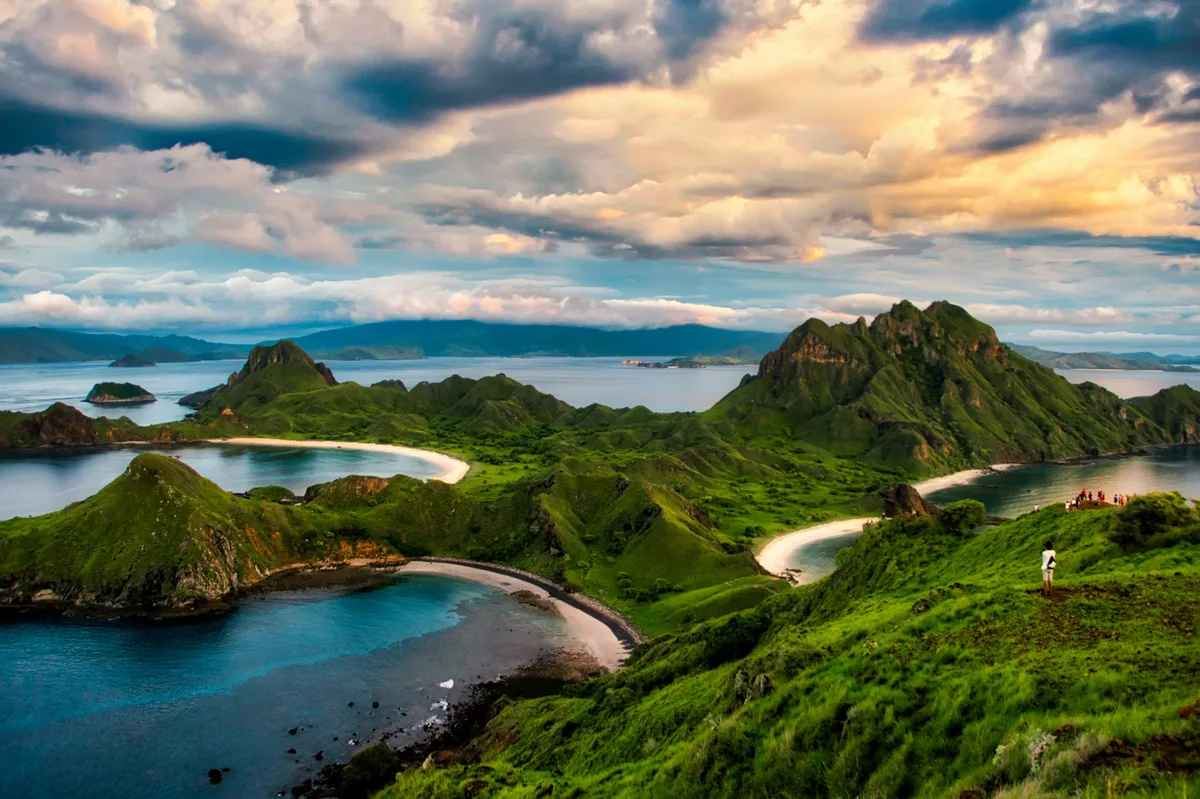
A UNESCO World Heritage marine park across Komodo and Rinca islands, home to the wild Komodo dragon — the world's largest living lizard — alongside pink-sand beaches and rich coral reefs.
Visitor guide
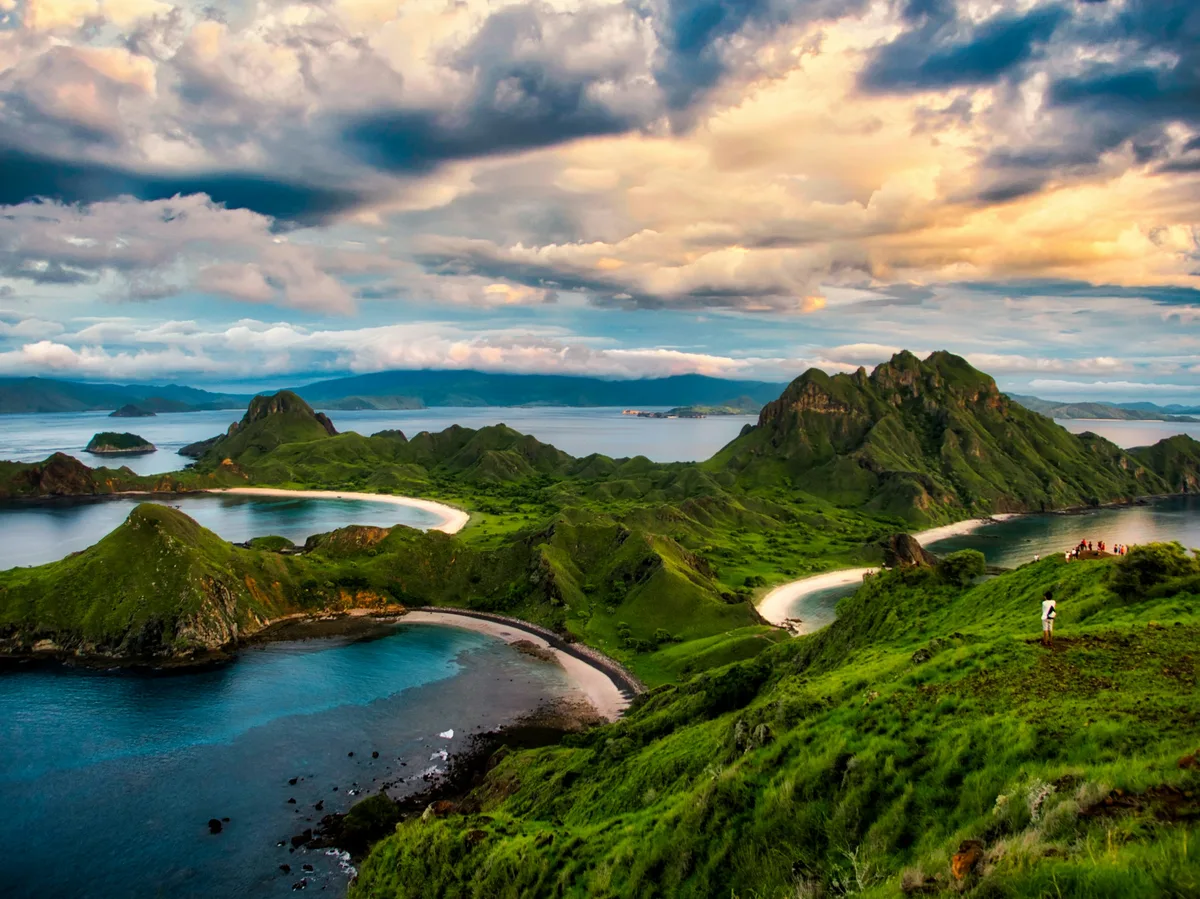
Komodo National Park is a protected area in the Lesser Sunda Islands of eastern Indonesia, spread across the islands of Komodo, Rinca and Padar and the waters around them. It is best known as the natural home of the Komodo dragon, the world's largest living lizard, and it also protects savanna hills and some of the richest coral reefs in the Coral Triangle.
Protection here came in stages. According to Wikipedia, Padar and part of Rinca became nature reserves in 1938, and Komodo Island followed in 1965. The area was recognised as a UNESCO biosphere reserve in 1977 and formally established as a national park in 1980, initially covering roughly 75,000 hectares. A 1984 expansion brought the total to about 219,322 hectares by adding marine areas and two recreation parks on the Flores mainland, so that the sea now makes up around 60 percent of the park. UNESCO inscribed it as a World Heritage Site in 1991, and it was named an ASEAN Heritage Park in 2005.
Wikipedia gives the park's area as about 1,733 square kilometres, of which roughly 603 square kilometres is land, while UNESCO lists the World Heritage property at 219,322 hectares (about 2,193 square kilometres), so figures differ by source. It includes three large islands, 26 smaller ones and a coastal section of western Flores, and it lies on the border region between East Nusa Tenggara and West Nusa Tenggara provinces.
The islands are volcanic in origin, with rounded, rugged hills that rise to about 735 metres. Savanna grassland dotted with lontar palms dominates much of the land, while deciduous forest, cloud forest at higher elevations and mangroves in sheltered bays add variety. The climate is among the driest in Indonesia, with annual rainfall of roughly 800 to 1,000 millimetres, and dry-season temperatures from May to October can climb to around 40 degrees Celsius. The Sape Strait, which separates Komodo and Rinca from Sumbawa, has some of the strongest currents in the world.
The Komodo dragon was first documented by Western science in 1912. Females typically reach about 2 to 2.5 metres in length, while males can grow to around 3 metres and weigh up to 136 kilograms. Wikipedia gives approximate wild populations of about 1,700 on Komodo, 1,300 on Rinca, around 100 each on Gili Motang and Gili Dasami, and about 2,000 on western Flores; the species has disappeared from Padar. Timor rusa deer are the dragon's main prey, and the savanna and forest habitat is managed to support them.
Other wildlife includes water buffalo, wild boar, crab-eating macaques, civets, the endemic Rinca rat, around twelve species of land snake including the Timor python, and birds such as the orange-footed scrubfowl and the critically endangered lesser sulphur-crested cockatoo.
The surrounding seas lie within the Coral Triangle and are known for their diversity. Wikipedia lists whale sharks, manta rays, eagle rays, ocean sunfish, pygmy seahorses, clown frogfish, nudibranchs and blue-ringed octopuses among the marine species, and dolphins, sperm whales and dugongs also occur. Coral reefs are best developed along Komodo's northeast coast, and well-known dive sites include Manta Alley, Castle Rock and the Cauldron.
The Ata Modo are regarded as the original inhabitants of Komodo, although few full-blooded members remain. Villages existed on Komodo, Rinca, Kerora and Papagaran before the park was created, and most residents today are fishing families whose roots lie in places such as Bima, Manggarai and South Sulawesi. Tourism has grown since the late 1980s, and a private guided visit is a practical way to see the islands and their wildlife.
See every tour and attraction we cover in Indonesia.