TorontoOntario · 36 tours
 Niagara FallsOntario · 25 tours
 New York CityNew York · 30 tours
 Las VegasNevada · 8 tours
 San FranciscoCalifornia · 16 tours
 VancouverBritish Columbia · 17 tours
 DubaiUAE · 54 tours
 Abu DhabiUAE · 5 tours
 Buenos AiresArgentina · 23 tours
 AthensGreece · 31 tours
 AucklandNew Zealand · 38 tours
 CancunMexico · 54 tours
No destinations match “”. Try searching all tours instead — that search understands full questions, not just place names.
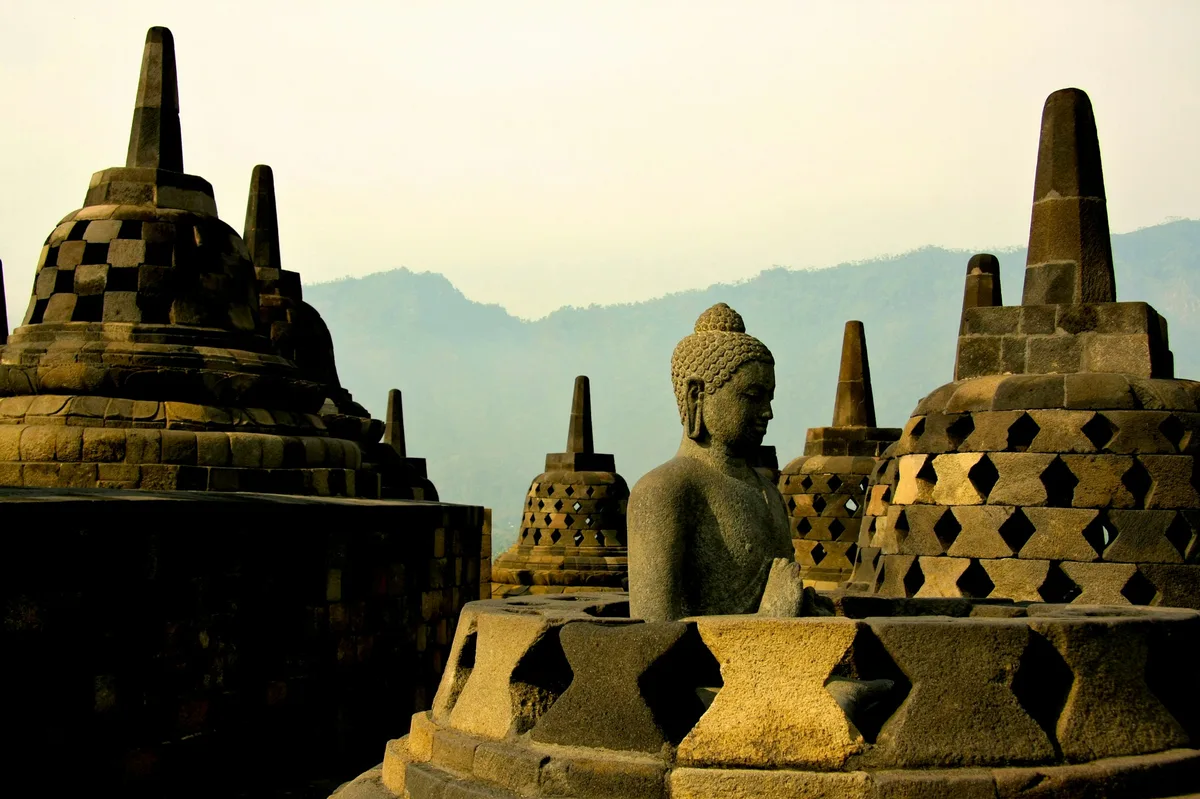
The world's largest Buddhist temple, a 9th-century stepped pyramid near Yogyakarta on Java, decorated with intricate relief carvings and crowned with bell-shaped stupas.
 Multi-Day Tours
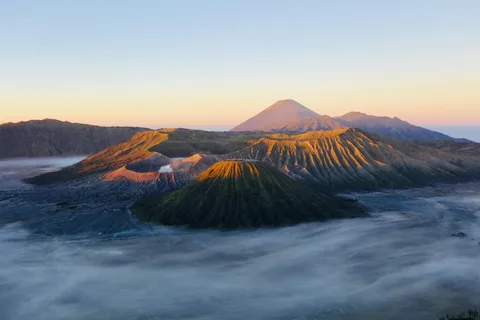
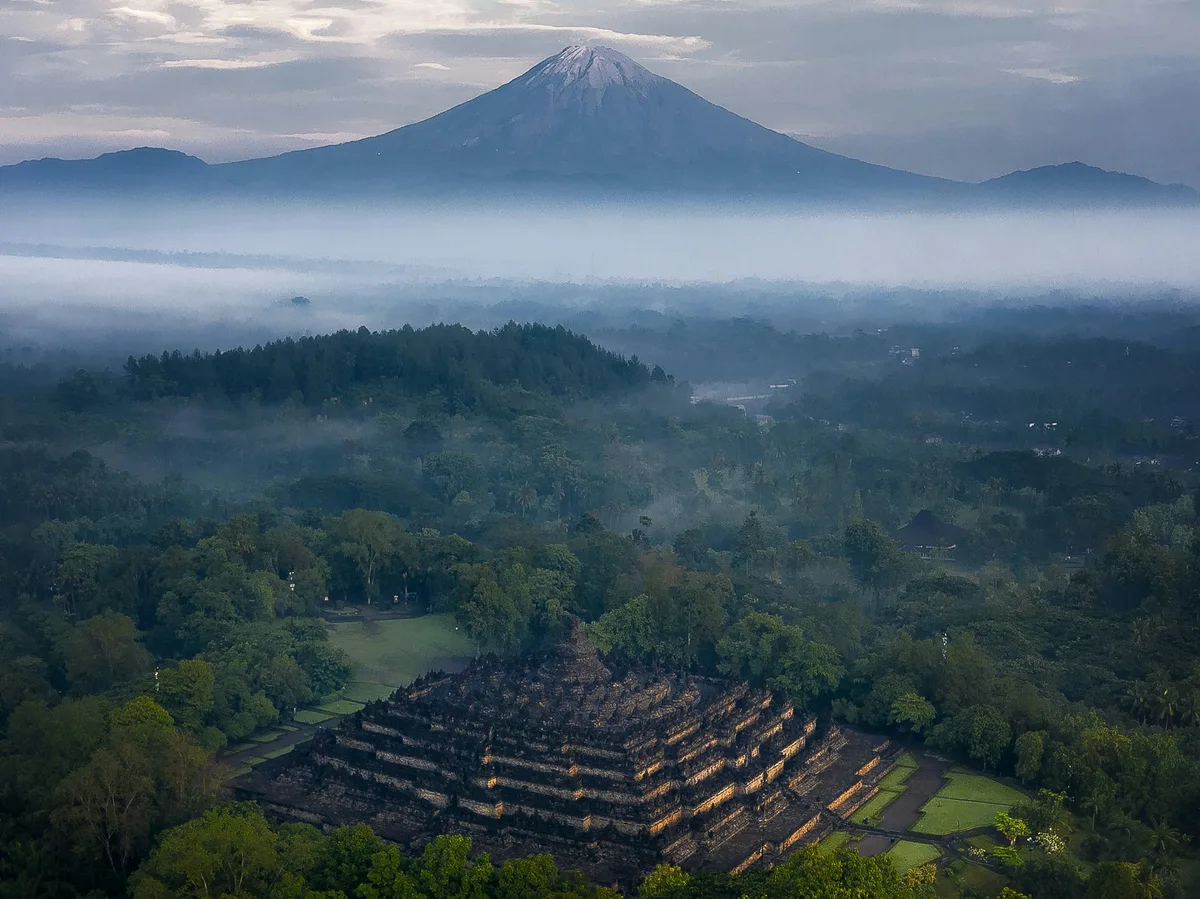
A 14-day grand tour from Jakarta through Bogor's volcanoes and Yogyakarta's Borobudur and Prambanan temples to Mount Bromo's sunrise crater, Ubud, and snorkeling in the Gili Islands.
 Multi-Day Tours
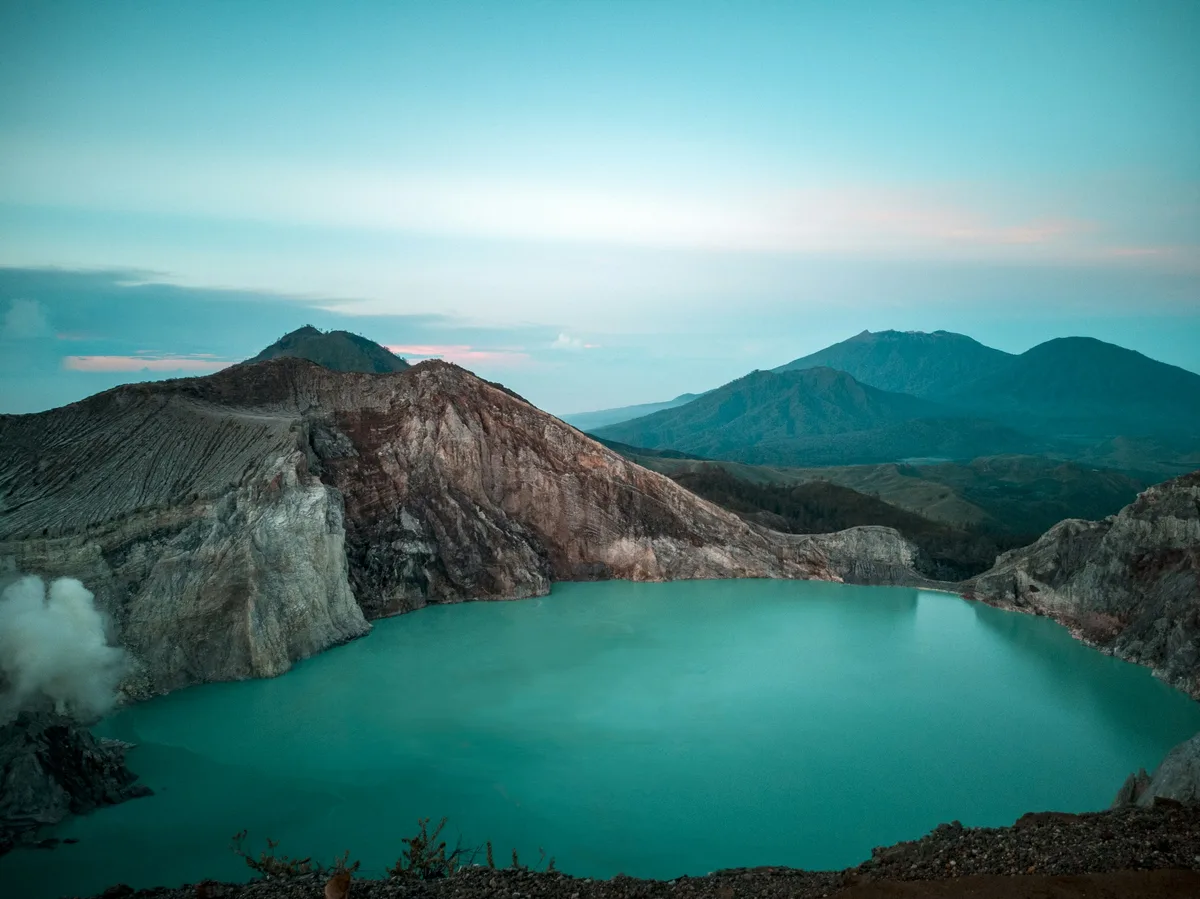
A 13-day route from Nusa Dua through Yogyakarta's Borobudur and Prambanan temples to sunrise on Mount Bromo, the blue flames of Ijen's crater, snorkeling off Menjangan Island, and river rafting in Ubud.
Visitor guide
Borobudur is a Mahayana Buddhist temple in Magelang Regency, Central Java, Indonesia, roughly 40 kilometres northwest of Yogyakarta. Built in stone during the Sailendra dynasty, it takes the form of a stepped monument covered in carved relief panels and topped with perforated stupas, and it is widely described as the largest Buddhist temple in the world.
The temple rises on a plain between two pairs of volcanoes, Sindoro-Sumbing and Merbabu-Merapi, and between the Progo and Elo rivers. Sources differ slightly on its age: Wikipedia's introduction gives the 9th century, while the body of the article notes evidence for the 8th. The archaeologist Jacques Dumarcay proposed that it was built in five stages, beginning around 780 under the Sailendra and finishing around 833 under the Sanjaya. No contemporary records of its construction or intended purpose are known.
Borobudur has nine stacked platforms, six square and three circular, crowned by a central dome that stands about 35 metres above ground. The original foundation measures roughly 118 metres on each side. Seventy-two Buddha statues sit inside perforated stupas on the upper circular terraces, and stairways on all four sides lead pilgrims upward through arched gateways decorated with kala and makara motifs.
The monument carries about 2,672 relief panels, including some 1,460 narrative panels that guide visitors along the galleries as they walk clockwise. The structure is often interpreted as a mandala and as a representation of Buddhist cosmology. Popular accounts divide it into three realms, Kamadhatu, Rupadhatu and Arupadhatu, although scholars have questioned that neat reading.
How and why Borobudur was abandoned is not well understood. Several sources link it to the shift of the Javanese court to East Java sometime between 928 and 1006, after which volcanic ash and jungle growth covered it. A 14th-century text refers to a vihara at Budur, and later folk stories attached misfortune to the site.
British administrator Thomas Stamford Raffles heard of the monument in 1814 and sent the Dutch engineer Hermann Cornelius, who cleared the site with about 200 workers over roughly two months. Raffles mentioned it in The History of Java in 1817 and is credited with bringing it to international attention, though he never visited. The excavation was completed in 1835.
A first restoration led by the Dutch engineer Theodoor van Erp ran from 1907 to 1911. A far larger project, run by the Indonesian government with UNESCO between 1975 and about 1982, dismantled more than a million stones and rebuilt the monument using the anastylosis method, adding a modern drainage system. UNESCO inscribed the Borobudur Temple Compounds as a World Heritage Site in 1991, and the listing also includes the smaller Pawon and Mendut temples nearby.
Each year, on the full moon of May or June, Indonesian Buddhists mark Vesak, with a procession that travels from Mendut through Pawon to Borobudur. The temple is among Indonesia's most visited attractions. Heavy foot traffic has worn its stone stairs, and wooden coverings have been added to protect them, so access is managed to protect the structure. A private guided visit with a driver makes it simple to combine Borobudur with Prambanan and other Yogyakarta sights while a guide explains the relief stories.
See every tour and attraction we cover in Indonesia.