TorontoOntario · 36 tours
 Niagara FallsOntario · 25 tours
 New York CityNew York · 30 tours
 Las VegasNevada · 8 tours
 San FranciscoCalifornia · 16 tours
 VancouverBritish Columbia · 17 tours
 DubaiUAE · 54 tours
 Abu DhabiUAE · 5 tours
 Buenos AiresArgentina · 23 tours
 AthensGreece · 31 tours
 AucklandNew Zealand · 38 tours
 CancunMexico · 54 tours
No destinations match “”. Try searching all tours instead — that search understands full questions, not just place names.
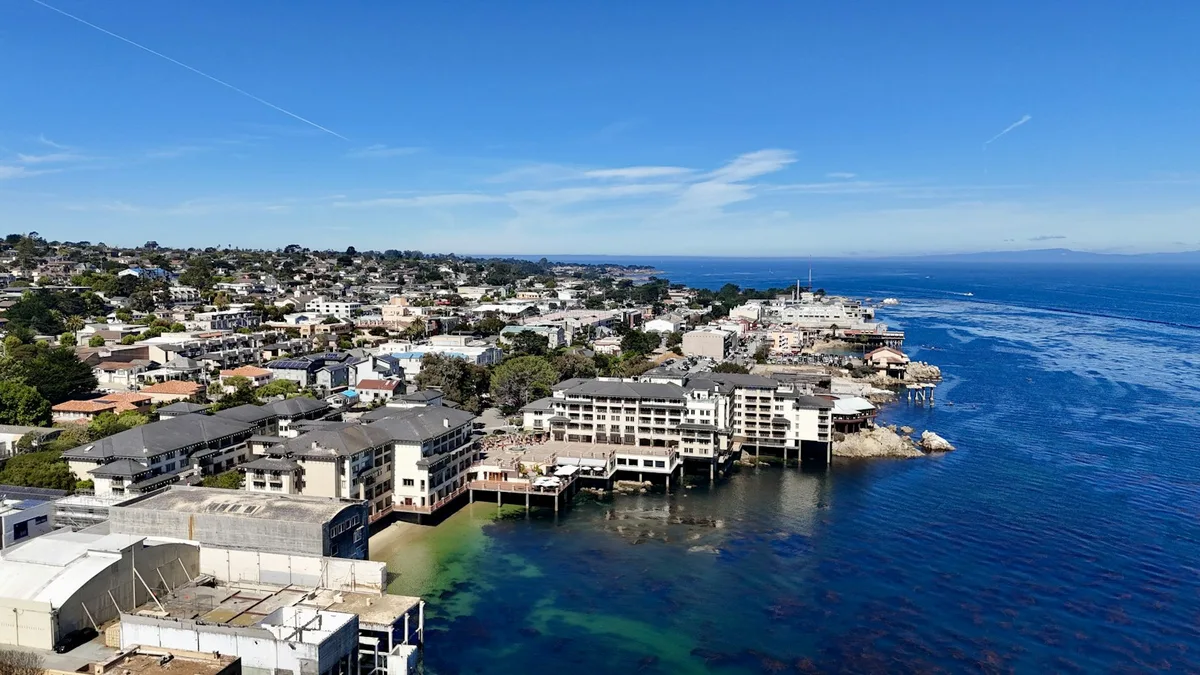
A historic waterfront street of former sardine canneries, made famous by John Steinbeck's novel of the same name, now lined with shops, restaurants, and views of Monterey Bay.
Visitor guide
Cannery Row is a waterfront street of about 0.8 miles in New Monterey, Monterey, California, running along Monterey Bay toward Pacific Grove. Once the center of the sardine industry, it was immortalized by John Steinbeck's 1945 novel Cannery Row and is now lined with restaurants, shops, hotels and the Monterey Bay Aquarium.
The street was originally Ocean View Avenue, and its roots reach back to a Chinese fishing village at China Point, established in the early 1850s and devastated by a fire in 1906. The first major cannery there, the Monterey Fishing and Canning Company, opened in March 1902 (Wikipedia credits Frank E. Booth with starting sardine canning in Monterey that year). Knut Hovden, who was hired in 1905, developed an assembly-line system for sardine canning in 1913, and demand grew during World War I; by 1918 the canneries were turning out about 1.4 million cans a year, and the nickname Cannery Row was in use by then. In the early days fish were cut by hand by Chinese, Japanese and Spanish workers, until machine cutters took over.
In the early 1940s about 30 canneries and reduction plants lined the street, employing roughly 3,000 to 4,000 people. Then the sardine catch collapsed, falling from 142,282 tons in 1946 to 26,818 tons in 1947. By 1958 only five struggling canneries remained, and the California Packing Company closed in 1962. The Hovden Cannery, which had turned to squid, was the last to shut, in 1973. A few buildings from the working era survive, including parts of the Hovden Cannery (1916), the Monterey Canning Company warehouse (1918), the Wing Chong Market (1918), a conveyor bridge (1918) and the Pacific Biological Laboratories building (1937).
Steinbeck published Cannery Row in 1945 and the sequel Sweet Thursday in 1954. The street was officially renamed Cannery Row in 1958. The character Doc was inspired by Ed Ricketts, a marine biologist who ran Pacific Biological Laboratories, a supplier of preserved marine specimens. Accounts differ on the company's founding and move to Cannery Row (the 1920s to 1930), but the lab building stands at 800 Cannery Row and the City of Monterey bought it in the 1990s. Ricketts also wrote Between Pacific Tides and collaborated with Steinbeck on Sea of Cortez (1941). He died in 1948.
Ricketts was born in Chicago on May 14, 1897, and studied zoology there without taking a degree. He and a college roommate, Albert Galigher, started the supply business in Pacific Grove in 1923, and Ricketts became sole owner the following year. Between Pacific Tides, written with Jack Calvin and published in 1939, is regarded as a classic of marine ecology because it organizes the seashore by habitat. In 1940 he and Steinbeck sailed to the Gulf of California to collect marine invertebrates, which led to Sea of Cortez. Steinbeck is reported to have met Ricketts around 1930, although one historian places their first meeting in Carmel rather than where Steinbeck recalled it.
On November 25, 1936, a fire at the neighboring Del Mar Cannery destroyed most of the lab's contents; the manuscript of Between Pacific Tides survived because it had already been sent to Stanford. Steinbeck bought half the company's stock afterward, which helped save it, and the present building went up in 1937. After Ricketts's death the building was sold in 1949, and in 1958 a group of friends, including cartoonists and artists, bought it and used it as a weekly club; the group is credited with helping launch the Monterey Jazz Festival in 1957. The City of Monterey bought the building in December 1993, and it was listed on the National Register of Historic Places on December 29, 1994. A seismic rehabilitation was completed in 1998, and the City of Monterey offers tours at set times, so check ahead.
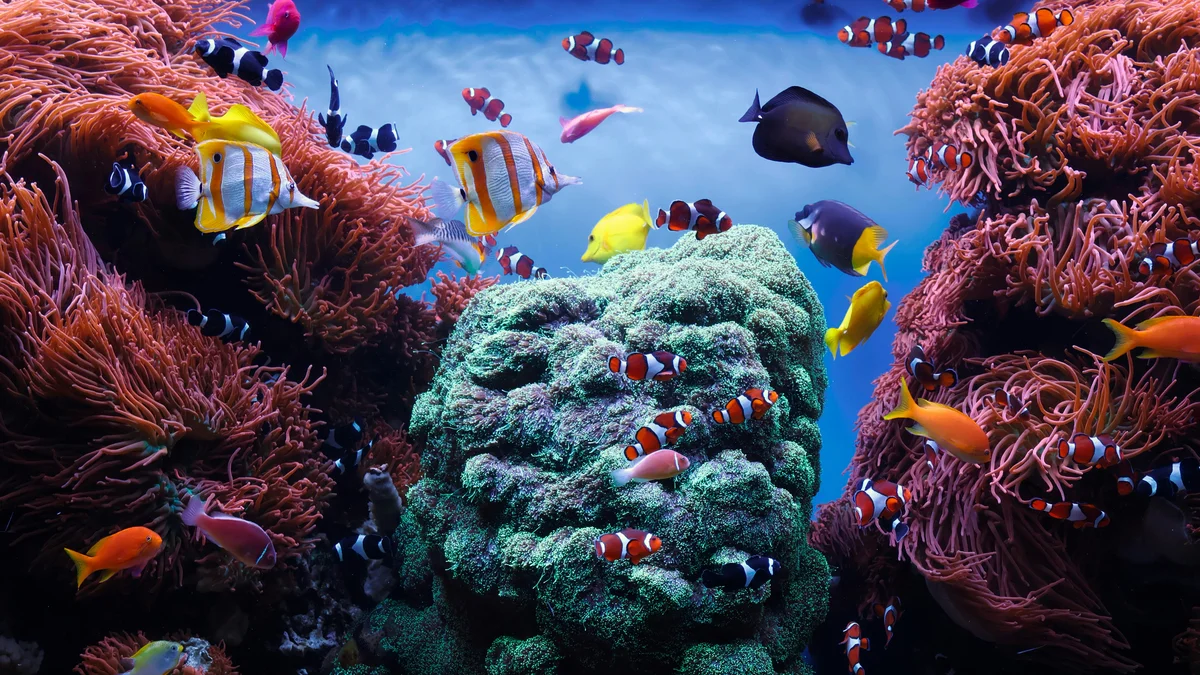
The old canneries have become restaurants, shops and hotels. The Monterey Bay Aquarium opened on October 20, 1984, on the former Hovden Cannery site, and the cannery's boiler house is preserved there as a non-working exhibit. Scientists at Stanford's Hopkins Marine Station had raised the idea, Stanford had bought the cannery property in 1967, and in 1978 the Packard family created a foundation that purchased the site. The building was designed by the firm Esherick, Homsey, Dodge and Davis, and its opening slogan, "the fish are back!", nodded to the vanished sardines. Its kelp forest exhibit is considered the first successful attempt to keep a living kelp forest in an aquarium. Pacific Grove lies at the far end of the street, so this is a good area for an unhurried walk.
A private vehicle and driver can take you door to door to Cannery Row, which helps when you are combining it with the aquarium, Pacific Grove or other Monterey Peninsula stops. Voyzo can plan the pace around your interests.
See every tour and attraction we cover in Monterey.