TorontoOntario · 36 tours
 Niagara FallsOntario · 25 tours
 New York CityNew York · 30 tours
 Las VegasNevada · 8 tours
 San FranciscoCalifornia · 16 tours
 VancouverBritish Columbia · 17 tours
 DubaiUAE · 54 tours
 Abu DhabiUAE · 5 tours
 Buenos AiresArgentina · 23 tours
 AthensGreece · 31 tours
 AucklandNew Zealand · 38 tours
 CancunMexico · 54 tours
No destinations match “”. Try searching all tours instead — that search understands full questions, not just place names.
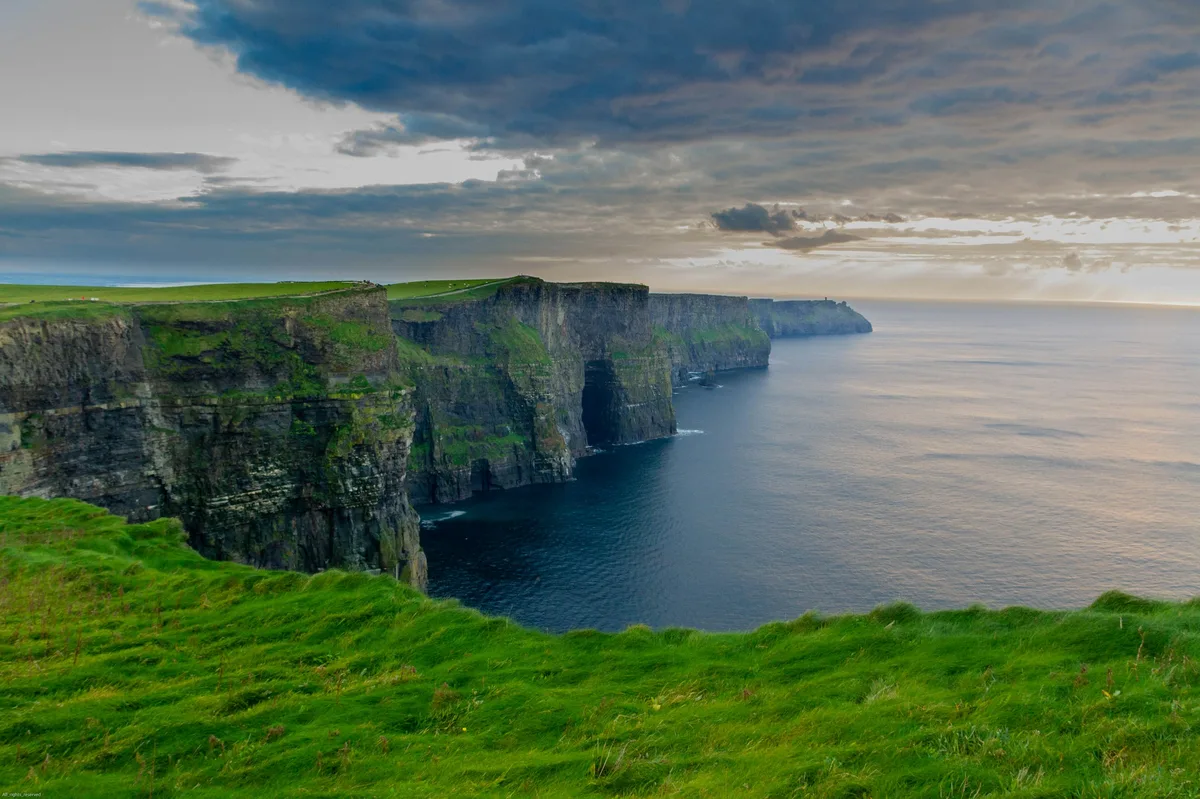
Ireland's iconic 700-foot sea cliffs on the west coast of County Clare, walked on clifftop trails and viewed from the water on a boat cruise.
 Multi-Day Tours
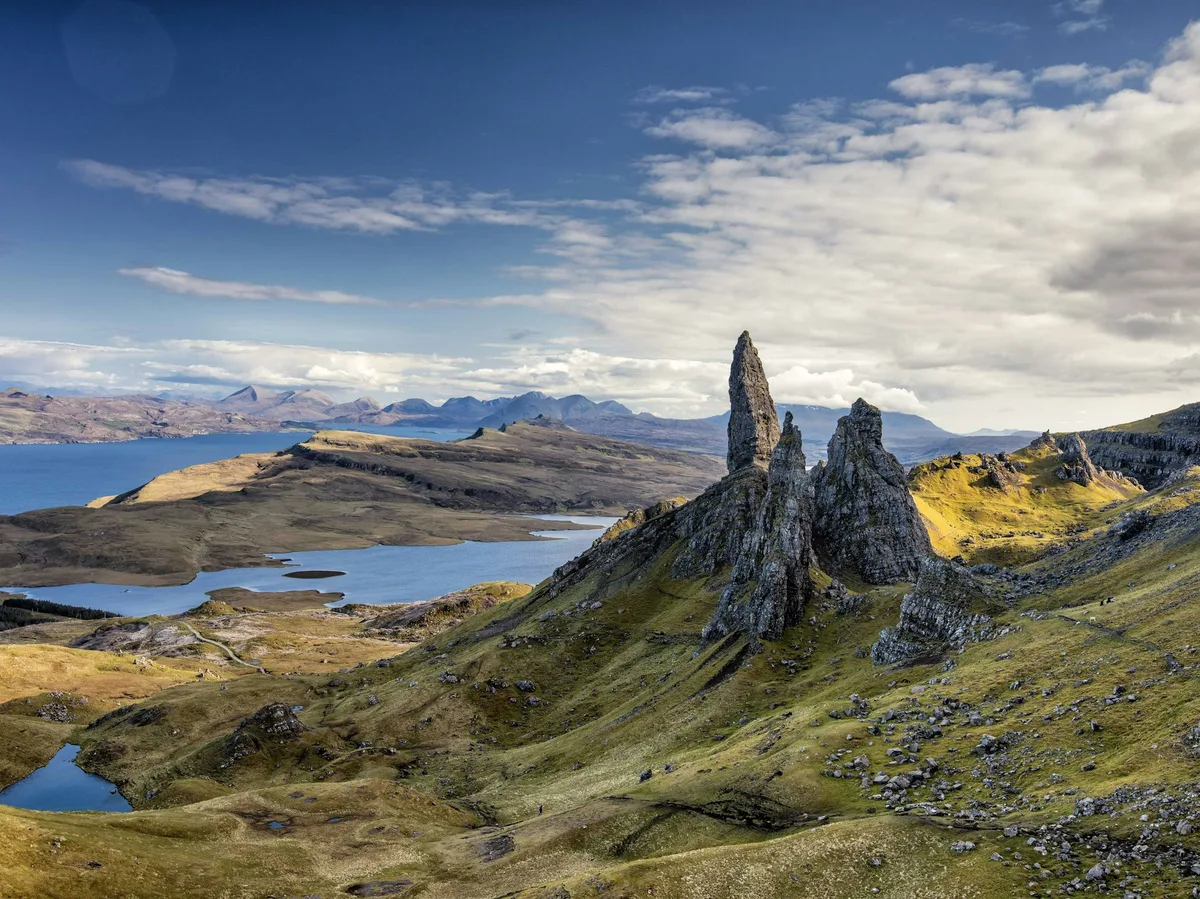
A 12-day road trip from Edinburgh through the Scottish Highlands and the Isle of Skye, then a short flight to Belfast to tour the Giant's Causeway, Galway's West Coast, and Dublin.
 Multi-Day Tours
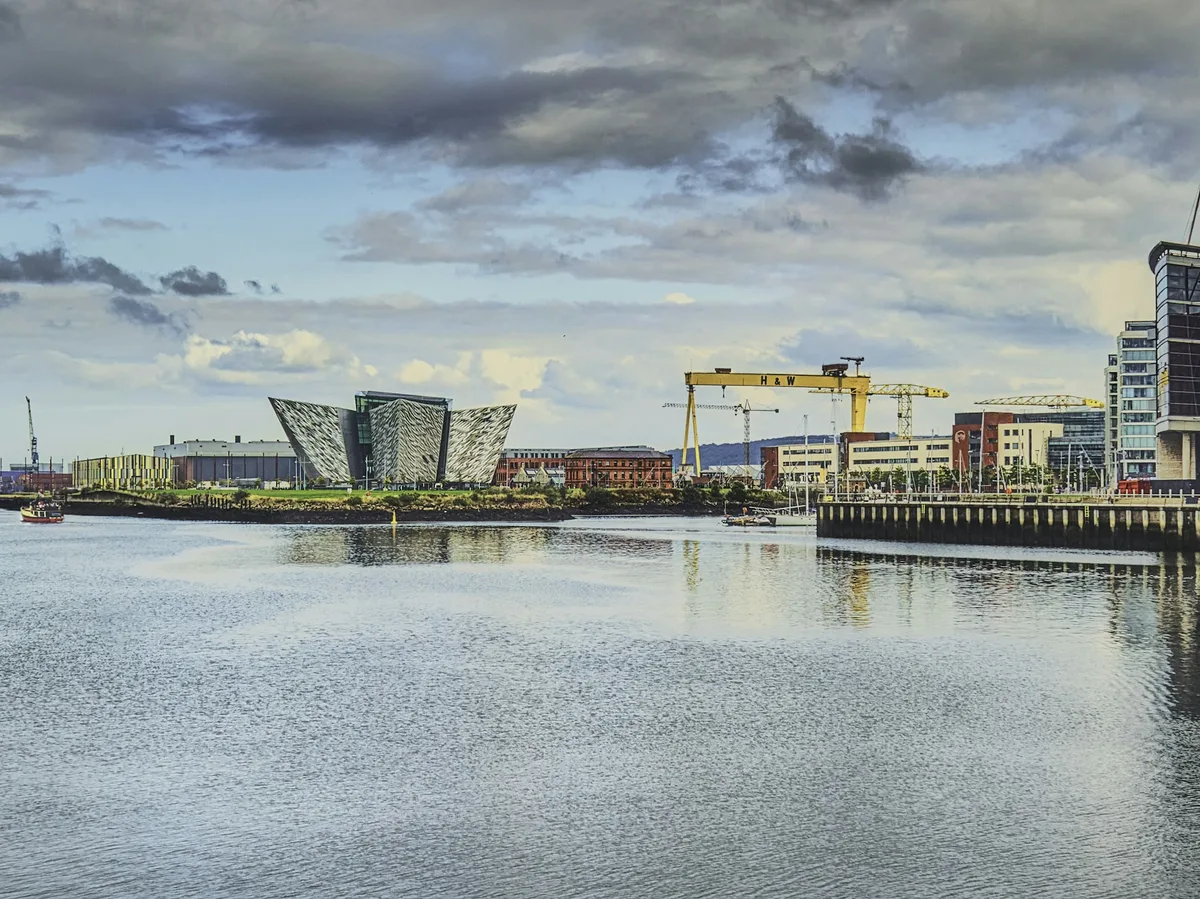
An 11-day private, driver-guided route from Dublin through Belfast, the Giant's Causeway, Londonderry, Donegal, and Connemara to Galway, before returning to Dublin.
 Multi-Day Tours
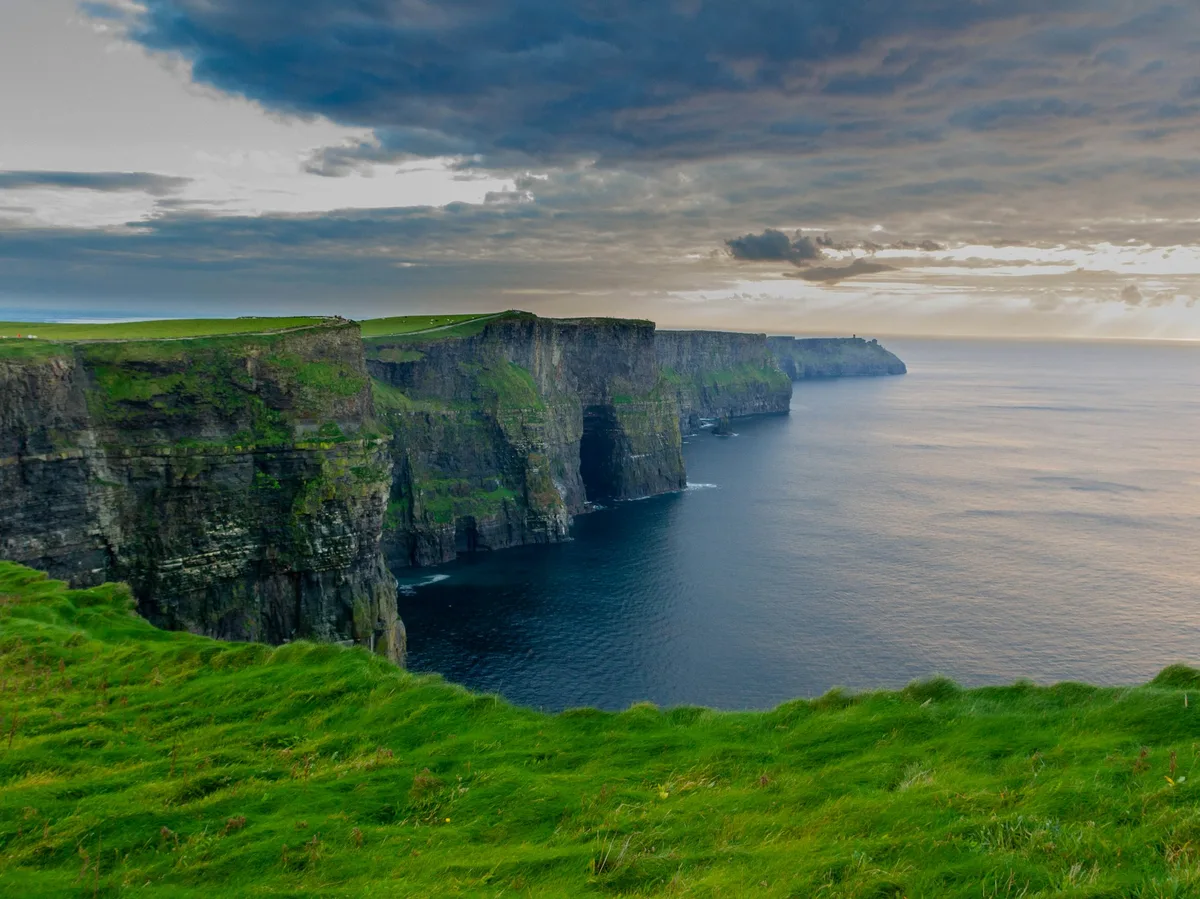
An 8-day family-paced loop from Dublin to Galway, Connemara, the Cliffs of Moher, Killarney, and Cork before returning to Dublin, built around family-friendly stops.
Visitor guide
The Cliffs of Moher are sea cliffs on the southwestern edge of the Burren region in County Clare, on Ireland's Atlantic coast. They run for about 14 kilometres along the coast by some measures, although the official site describes them as stretching about 8 kilometres as the crow flies and are among the most visited natural attractions in Ireland.
According to Wikipedia, the cliffs rise roughly 120 metres above the Atlantic at Hag's Head at the southern end and reach their highest point of 214 metres about 8 kilometres to the north, just beyond O'Brien's Tower. Sir Cornelius O'Brien built this round stone tower in 1835 near the middle of the cliffs. The nearest villages are Liscannor to the south and Doolin to the north.
The name comes from an old promontory fort called Mothar or Moher that stood on Hag's Head. The fort was still standing in 1780 but was demolished in 1808, and its stone went into a lookout and signal tower intended to warn of a French invasion during the Napoleonic wars. That tower now marks the site. On clear days, views from the cliffs reach the Aran Islands in Galway Bay, the Maumturks and Twelve Pins ranges in County Galway, and Loop Head to the south.
The cliffs are made mainly of Namurian shale and sandstone, laid down between roughly 313 and 326 million years ago when a river carried sand, silt and clay into an ancient marine basin. Up to 200 metres of sedimentary rock is exposed, and geologists regard the site as a valuable record of deep-water deltaic deposits. The rock contains abundant trace fossils such as feeding trails and burrow casts.
Waves continue to undermine the cliffs, producing sea caves, sea stacks and sea arches. Branaunmore, a 67-metre sea stack below O'Brien's Tower, was once connected to the mainland, and a large sea arch lies beneath the signal tower at Hag's Head.
At peak season an estimated 30,000 pairs of seabirds, representing around 20 species, nest on the cliffs. Atlantic puffins form colonies in isolated areas and on nearby Goat Island, and razorbills also breed here. The site is designated an Important Bird Area. Offshore, grey seals, porpoises, dolphins and minke whales are among the animals that can be seen, while feral goats, foxes, badgers and Irish hares live on the land.
Since 2011 the cliffs have been part of the Burren and Cliffs of Moher Geopark, a UNESCO-recognised geotourism area. They are also a signature point on the Wild Atlantic Way. A visitor centre built into the hillside opened in 2007, with exhibitions on the cliffs' geology, history, plants and animals. The coastal walk between Hag's Head and Doolin runs about 14 kilometres, though safety closures have affected sections of the walking trail, so current conditions should be checked before any visit.
The cliffs have featured in films including The Princess Bride and Harry Potter and the Half-Blood Prince. A private guided visit with a driver suits the cliffs well, because they can be combined with the Burren, Doolin and the surrounding coast.
See every tour and attraction we cover in Ireland.