TorontoOntario · 36 tours
 Niagara FallsOntario · 25 tours
 New York CityNew York · 30 tours
 Las VegasNevada · 8 tours
 San FranciscoCalifornia · 16 tours
 VancouverBritish Columbia · 17 tours
 DubaiUAE · 54 tours
 Abu DhabiUAE · 5 tours
 Buenos AiresArgentina · 23 tours
 AthensGreece · 31 tours
 AucklandNew Zealand · 38 tours
 CancunMexico · 54 tours
No destinations match “”. Try searching all tours instead — that search understands full questions, not just place names.
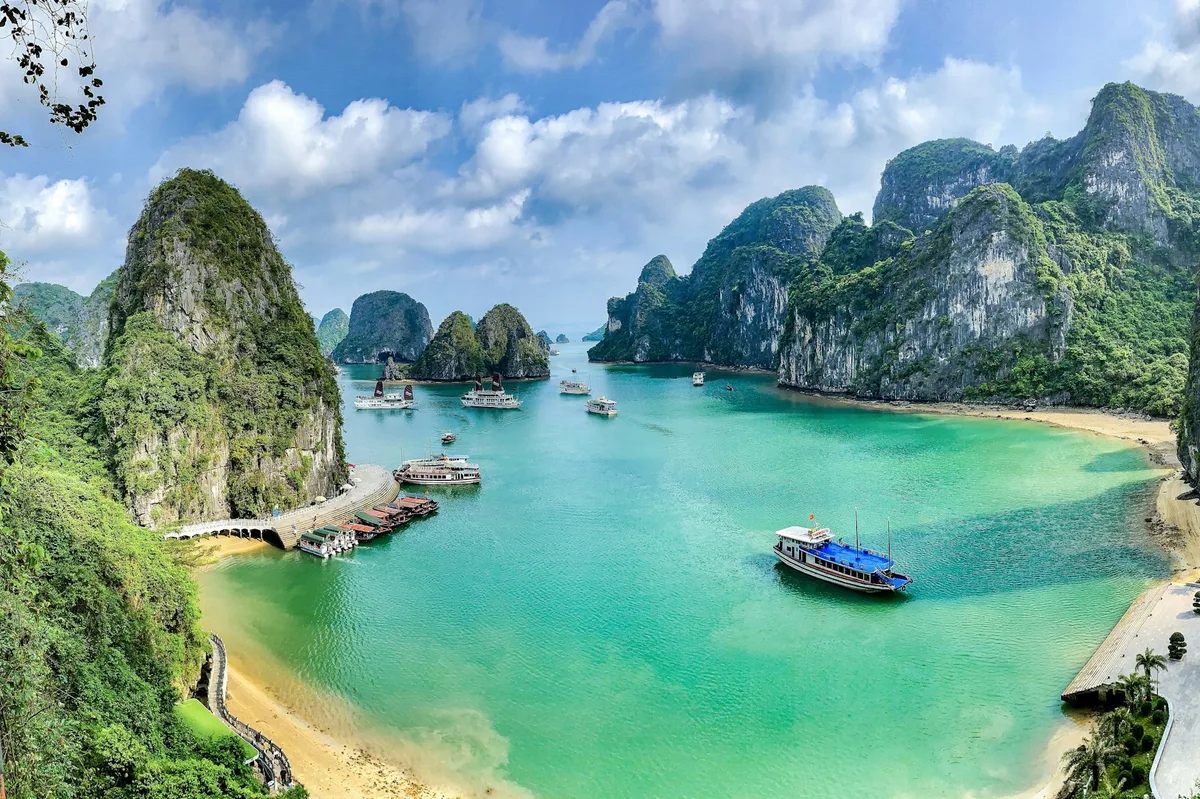
A UNESCO World Heritage bay in northeastern Vietnam scattered with thousands of limestone karst islands, typically explored on an overnight cruise with kayaking among the formations.
 Multi-Day Tours
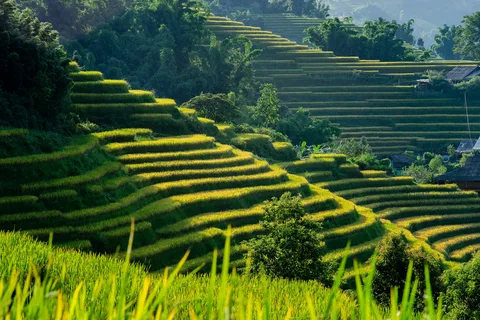
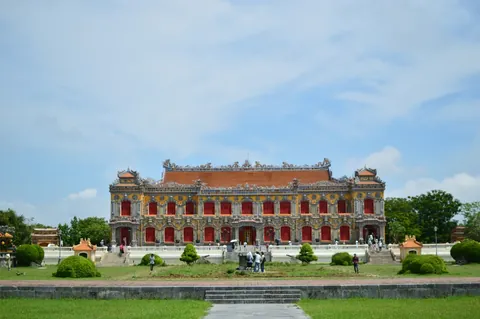
A 12-day private circuit from Hanoi's Old Quarter and Sapa's rice terraces to an overnight Ha Long Bay cruise, Hue's Imperial Citadel, Hoi An's Ancient Town, and the Mekong Delta from Ho Chi Minh City.
 Multi-Day Tours
A 10-day private trip combining Hanoi, an eco-cycling day through Mai Chau's rice paddies, an overnight Ha Long Bay cruise, beach time near Hoi An, and the Mekong Delta's Cai Rang floating market.
 Multi-Day Tours
An 11-day off-the-beaten-track route from Hanoi through Ha Giang, Dong Van, and Ba Be National Park to Cao Bang and Bac Son, finishing with an overnight Ha Long Bay cruise — homestays, karst landscapes, and Vietnam's far northern borderlands.
Visitor guide
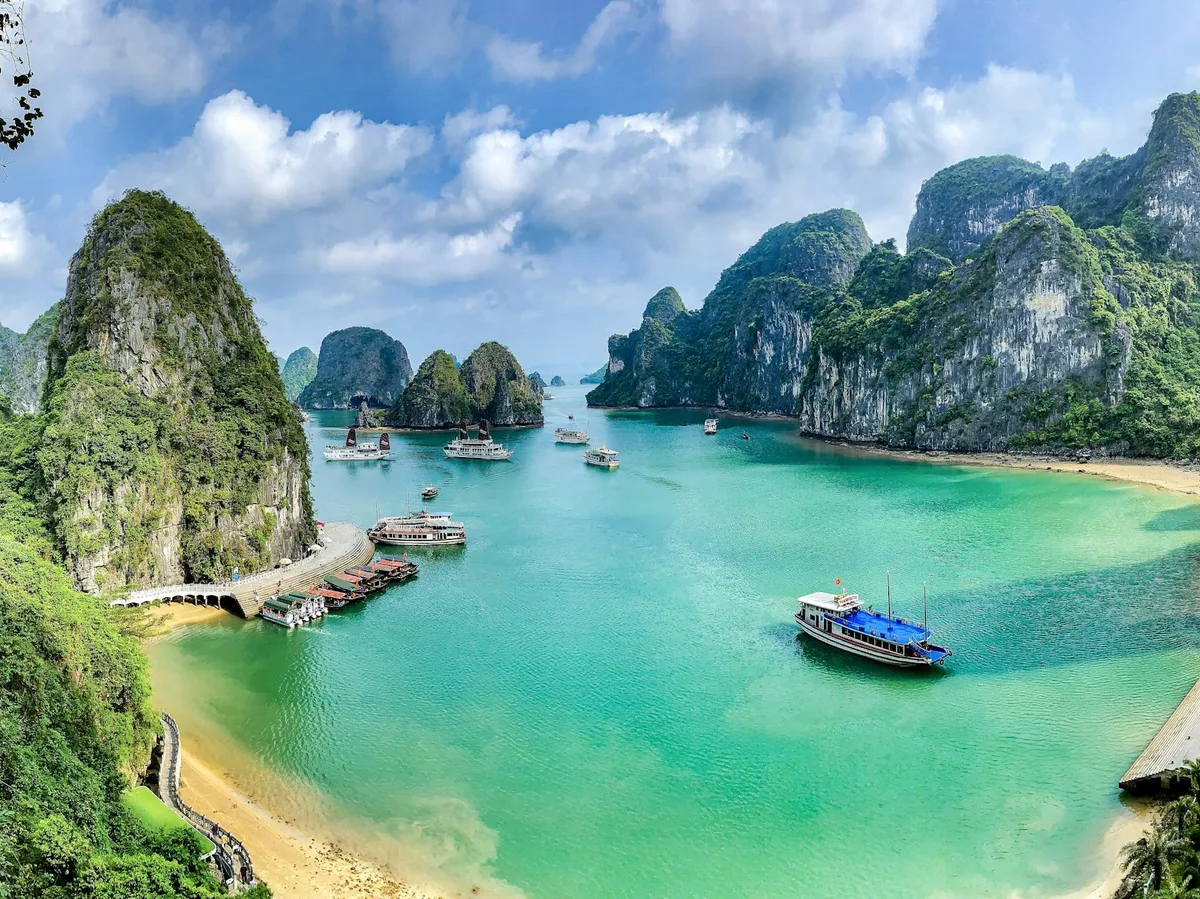
Ha Long Bay is a bay of limestone islands in northeastern Vietnam, administered by Quang Ninh province. Its name is commonly translated as "descending dragon", and the bay is a UNESCO World Heritage Site known for its dense field of rock towers rising from emerald water.
According to Wikipedia, the bay covers roughly 1,553 square kilometres along a coastline of about 120 kilometres, and is usually described as holding close to 2,000 islets, although counts vary by source. The UNESCO-protected core is much smaller, at about 434 square kilometres with 775 islets. Most islands are limestone towers, often 50 to 100 metres high, in what geologists call a fenglin landscape, and some cone-shaped karst areas rise past 200 metres. The limestone is described as being around 500 million years old, while the karst scenery developed over roughly 20 million years in a warm, wet climate before rising seas flooded the lower ground.
Many islands are hollow. Hang Dau Go, described as the largest grotto in the area, has three chambers of stalactites and stalagmites, and other well-known caves include Sung Sot (Surprise Cave), Thien Cung and Luon. Some islands, such as Dau Be, hold enclosed lakes formed in sunken dolines, and the island tops are covered in dense jungle.
The bay was first inscribed on the World Heritage list in 1994 for its aesthetic value, and the listing was extended in 2000 to recognise its geological and geomorphological importance. Wikipedia notes that sources differ on exactly which criteria apply, so the UNESCO entry is the authoritative reference. Two ecosystems share the area: tropical evergreen forest on the islands and a marine and coastal system in the water, which supports fish, shellfish and cuttlefish. In 2023 a new sponge species was reported from underwater caves in the bay.
Archaeological finds show people lived around the bay tens of thousands of years ago, including the Soi Nhu, Cai Beo and Ha Long cultures, which depended on fishing and shellfish. The bay was also a battleground. In 1288, according to Wikipedia, General Tran Hung Dao used stakes set at high tide to sink a Mongol fleet in these waters. Fishing communities such as Cua Van, Ba Hang and Cong Tau have lived on floating houses and made a living from fishing and aquaculture, though the article reports that since 2014 authorities have relocated hundreds of households ashore, leaving only a few villages for tourism.
Local tradition, offered as legend rather than history, says the gods sent a family of dragons to help the Vietnamese fight invaders. The dragons spat out jewels and jade that became the islands and formed a wall against enemy ships, and after the victory they stayed to live in the bay, which is how the place got its name.
The climate is tropical, with a hot, humid summer and a drier, cooler winter, so conditions on the water vary by season. Tides in the bay swing by roughly three and a half to four metres each day, which shapes how cave entrances and floating villages look. Conservation rules include a ban on high-speed motorboats and on coal and stone extraction in the heritage zone. A private guided visit with a driver for the road leg from Hanoi suits travellers who want the bay arranged around their own pace.
See every tour and attraction we cover in Vietnam.