TorontoOntario · 36 tours
 Niagara FallsOntario · 25 tours
 New York CityNew York · 30 tours
 Las VegasNevada · 8 tours
 San FranciscoCalifornia · 16 tours
 VancouverBritish Columbia · 17 tours
 DubaiUAE · 54 tours
 Abu DhabiUAE · 5 tours
 Buenos AiresArgentina · 23 tours
 AthensGreece · 31 tours
 AucklandNew Zealand · 38 tours
 CancunMexico · 54 tours
No destinations match “”. Try searching all tours instead — that search understands full questions, not just place names.
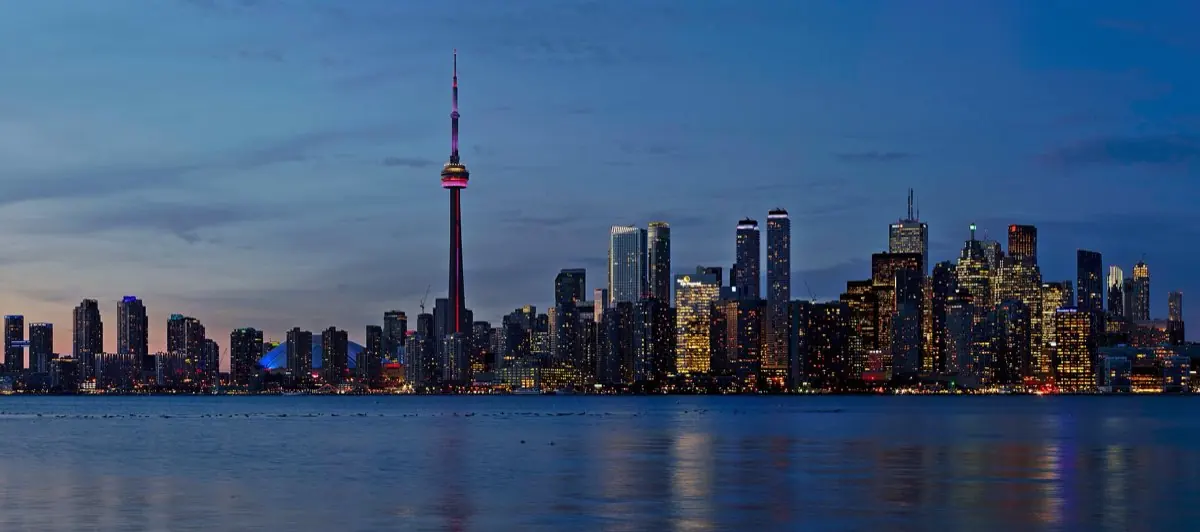
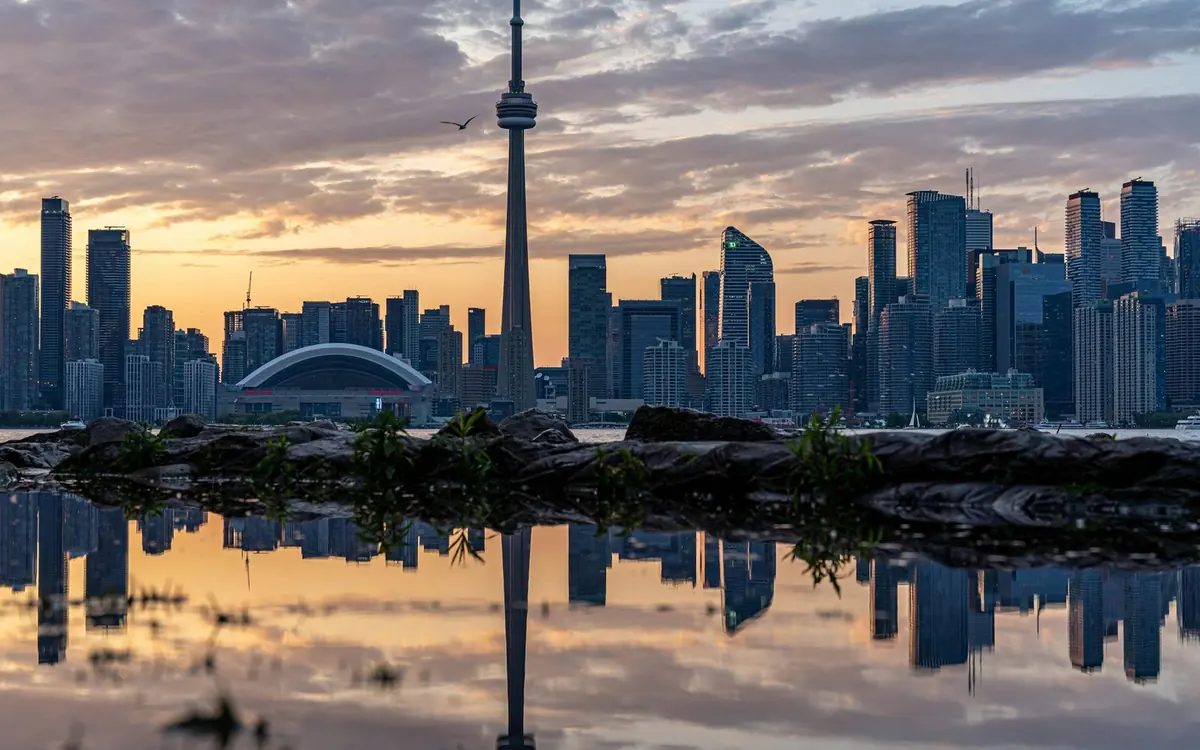
Toronto's defining landmark and, for decades, the tallest freestanding structure in the world.
Visitor guide
The CN Tower is a 553.3-metre (1,815-foot) concrete communications and observation tower beside Toronto's railway lands, and it has anchored the city's skyline since it opened on June 26, 1976. It is the tallest freestanding structure in the Western Hemisphere, and from 1975 until the Burj Khalifa passed it (the CN Tower's website dates this to 2009, while other sources say 2007) it was the tallest freestanding structure in the world.
Canadian National Railway conceived the tower in the late 1960s as a broadcasting hub. As new downtown office towers rose, they reflected TV and radio signals and cut the line of sight for microwave links, so a much taller transmitter site made sense. Work officially began on February 6, 1973. The foundation removed roughly 56,000 tonnes of earth and shale, and the concrete shaft was then raised with a hydraulically lifted slipform that climbed about six metres a day. The concrete portion topped out in April 1975, roughly 26 months after the start.
The final piece was the steel antenna, which was flown into place in 39 pieces by a Sikorsky helicopter, a job that took weeks rather than the months planned. The reported construction cost was about CA$63 million. The large commercial development the tower was meant to anchor was later scrapped, which is partly why it stands somewhat apart from the towers around it.
The original concept was a tripod of pillars, which evolved into a single hexagonal core with three legs flaring out below the main pod. Reported figures put the concrete at about 40,500 cubic metres, and plumb-bob checks have shown the shaft off true vertical by only a few centimetres. In 1995 the American Society of Civil Engineers listed it among the Seven Wonders of the Modern World, a ranking that is a professional-society honour rather than an official designation.
Public levels sit at different heights. The lower observation level, around 342 metres, has an outdoor terrace and the glass floor, installed in 1994, where you can stand over a sheer drop to the ground. The main indoor level is a little higher, and the 360 Restaurant, at about 351 metres, rotates slowly, completing a circuit in roughly 72 minutes. The highest public level, known as The Top (formerly the SkyPod), is at about 447 metres. On a clear day the view takes in Lake Ontario, the Toronto Islands and, in good conditions, far shorelines beyond.
EdgeWalk opened on August 1, 2011, a hands-free walk on a narrow ledge around the main pod roughly 356 metres up, with guests tethered to an overhead rail. The tower is also lit at night with LED lighting installed in 2007, and the display is reduced during spring and autumn bird migration.
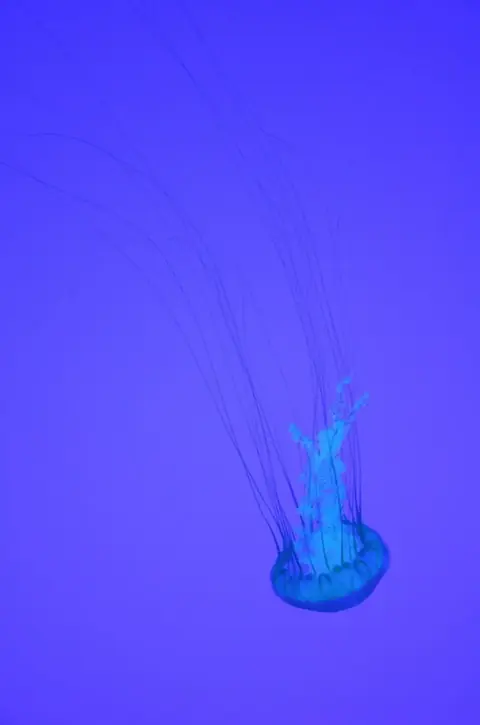
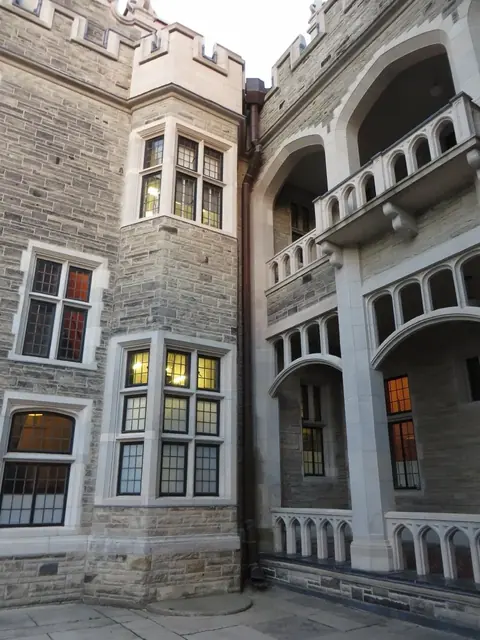
Ripley's Aquarium of Canada sits at the tower's base, and Rogers Centre is immediately beside it. On a Voyzo private tour, your driver can collect you at your hotel door and drop you close to the entrance, then be ready to move on to the Distillery District or Casa Loma when you finish.
The tower reads well from far away as well as up close: the skyline view from Toronto Island, the waterfront and the Don Valley lookouts are all part of how locals actually see it.
See every tour and attraction we cover in Toronto.