TorontoOntario · 36 tours
 Niagara FallsOntario · 25 tours
 New York CityNew York · 30 tours
 Las VegasNevada · 8 tours
 San FranciscoCalifornia · 16 tours
 VancouverBritish Columbia · 17 tours
 DubaiUAE · 54 tours
 Abu DhabiUAE · 5 tours
 Buenos AiresArgentina · 23 tours
 AthensGreece · 31 tours
 AucklandNew Zealand · 38 tours
 CancunMexico · 54 tours
No destinations match “”. Try searching all tours instead — that search understands full questions, not just place names.
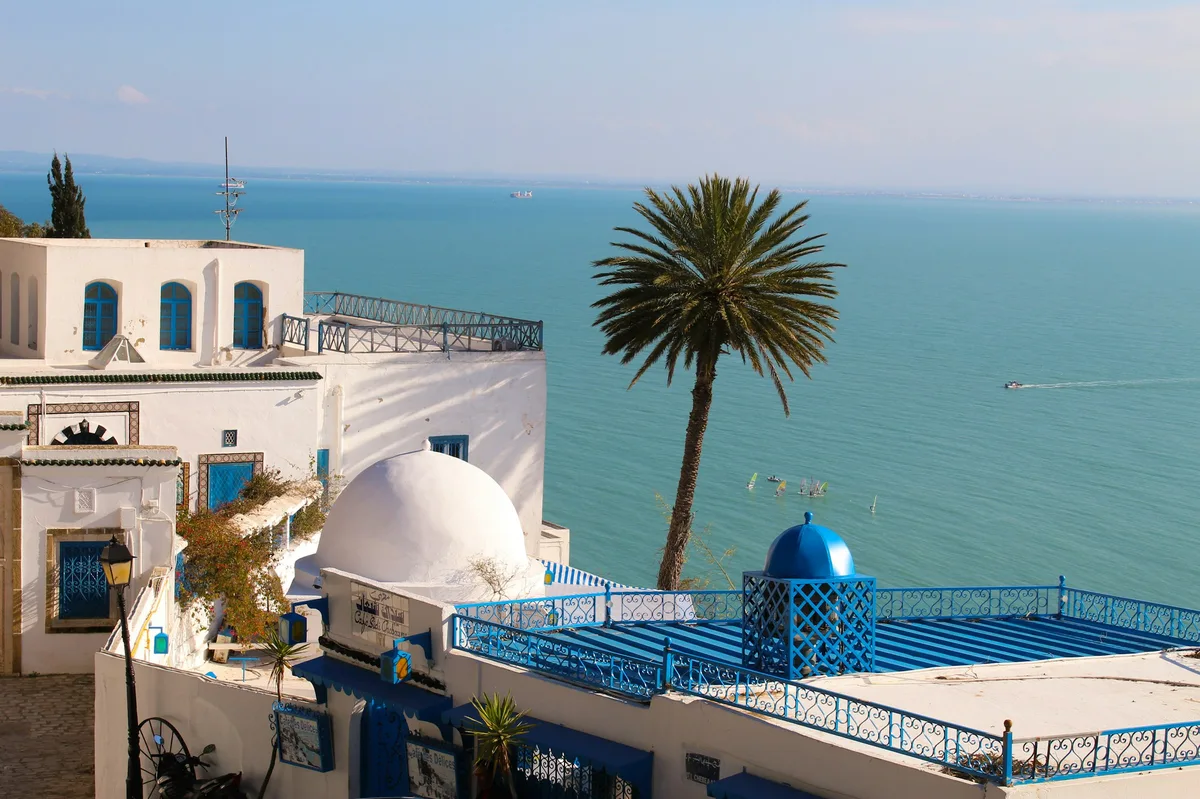
A hilltop village outside Tunis known for its whitewashed houses, blue-painted doors and shutters, and panoramic views over the Gulf of Tunis.
Visitor guide
Sidi Bou Saïd is a hilltop town in northern Tunisia, about 20 kilometres northeast of Tunis, in the Carthage delegation of Tunis Governorate. It is known for its blue-and-white colour scheme, its cliffside cafes and its views over the Gulf of Tunis, and it is reached from Tunis by the TGM train line that runs to La Marsa.
The town is named after the religious figure Abu Said al-Baji and was formerly known as Jbel el-Menar. According to Wikipedia, Abu Said established a sanctuary there in the 12th or 13th century and was buried at the site after his death in 1231. In the 18th century, wealthy citizens of the Beylik of Tunis built residences there, shaping the village that visitors see today.
In the 1920s Baron Rodolphe d'Erlanger popularised the town's blue-and-white colour scheme. His former residence, Ennejma Ezzahra, is now a museum of musical instruments and a concert venue for classical and Arabic music, also called the Palace of Baron d'Erlanger. Whitewashed walls, blue doors and shutters, and decorative ironwork set against the sea have become the town's visual identity.
The town drew painters and thinkers. Wikipedia lists Paul Klee, August Macke, Gustave-Henri Jossot and Louis Moillet among the artists associated with it, as well as Tunisian painters of the École de Tunis such as Yahia Turki, Brahim Dhahak and Ammar Farhat. Michel Foucault lived there while teaching at Tunis University, and André Gide owned a house. The fashion designer Azzedine Alaïa's former residence is now an art gallery.
Café des Nattes is known for mint tea with pine nuts, while Café des Délices sits on the cliffside with sea views and is referenced in a 1999 song by Patrick Bruel. Dar El Annabi is a preserved traditional Tunisian house museum. The town also has art galleries, artisan shops and access to the nearby Carthage archaeological sites.
The municipal area is 2.213 square kilometres. Wikipedia gives a population of 4,988 in 2024, down from 7,206 in 2014. The compact area and steep streets mean the best way to see the town is on foot, with the main lanes running uphill from the station.
Wikipedia notes that former president Beji Caid Essebsi and film director Moufida Tlatli were born in the town, and that Aleister Crowley is mentioned as a visitor. The Tunisian painters of the École de Tunis linked to Sidi Bou Saïd include Yahia Turki, Brahim Dhahak and Ammar Farhat. The cliffside setting above the Gulf of Tunis explains why so many artists chose to paint here.
Sidi Bou Saïd pairs naturally with Carthage and Tunis, and a private guide and driver can combine them in a flexible day. A guide can also explain the Baron d'Erlanger story and the artistic history behind the cafes and galleries.
See every tour and attraction we cover in Tunisia.