Facts about Toronto, Ontario, checked 26 October 2026 against the City of Toronto, Destination Toronto, Environment Canada and the Government of Ontario. Where sources differ, the figure and its source are named.
- Where
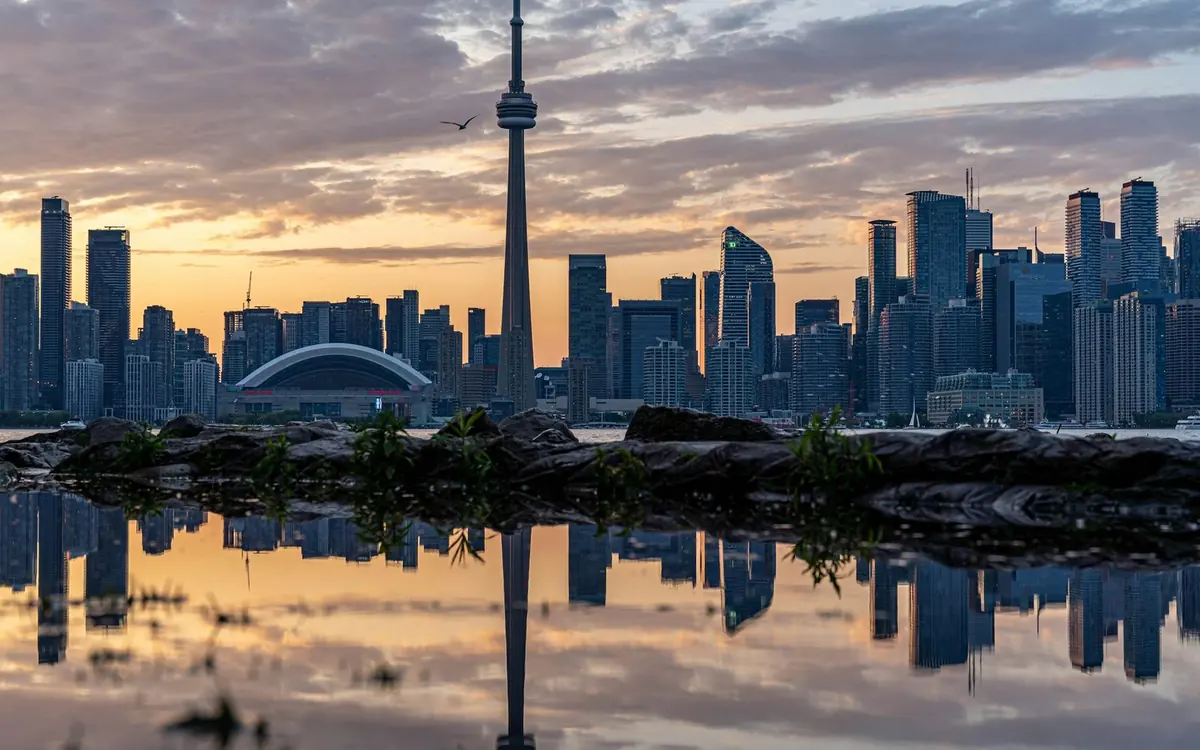
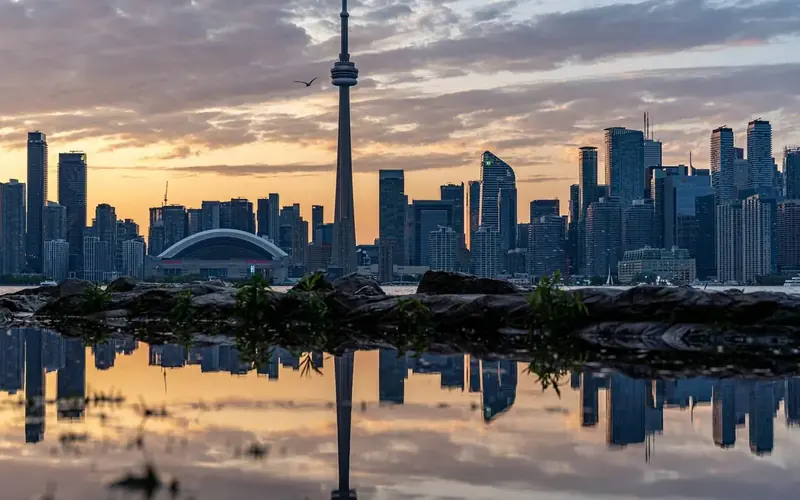
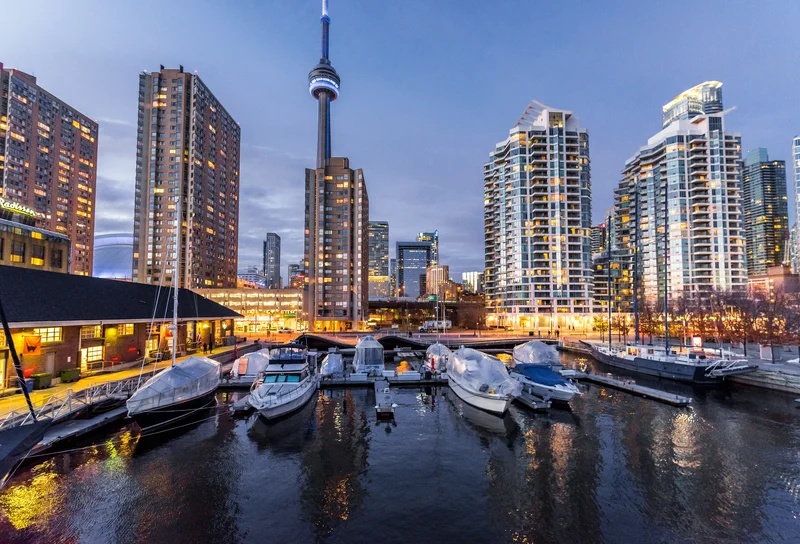
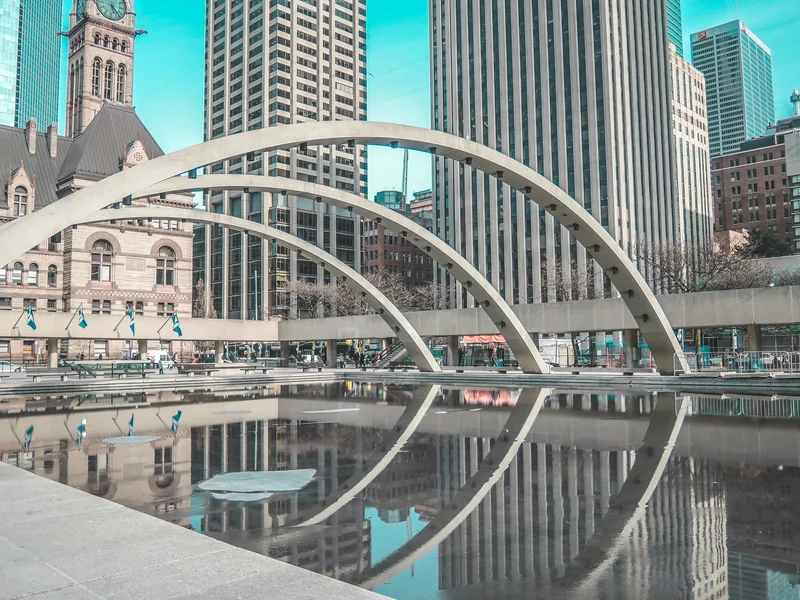
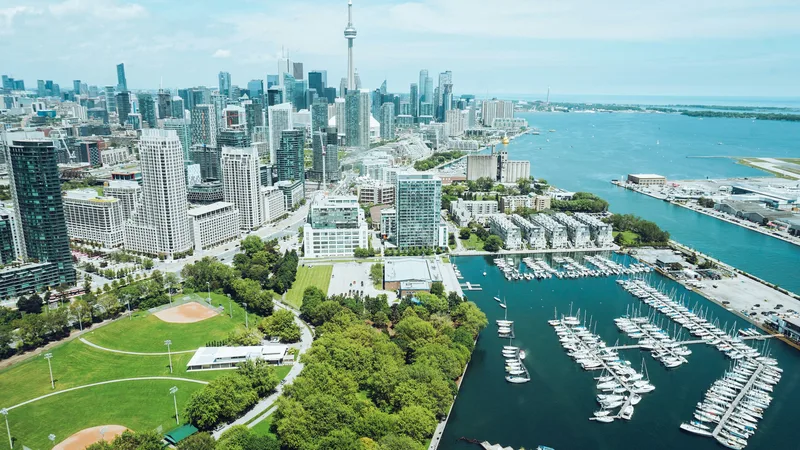
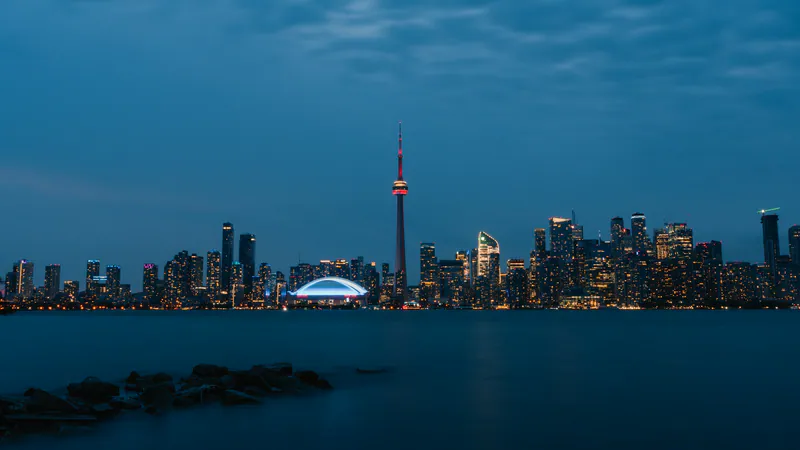
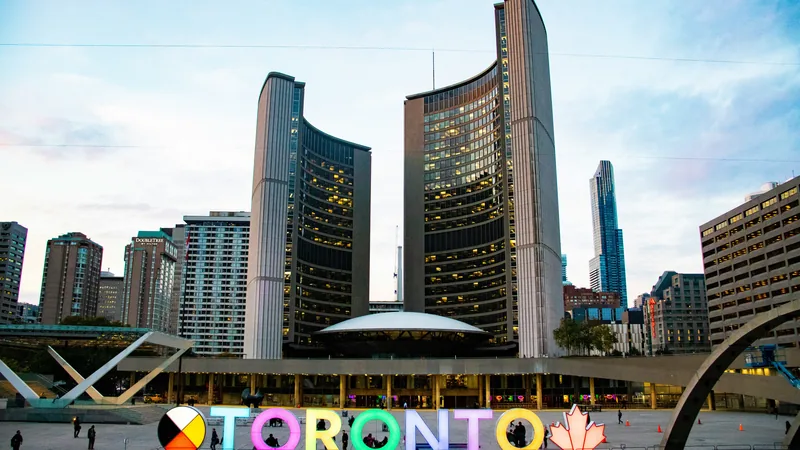
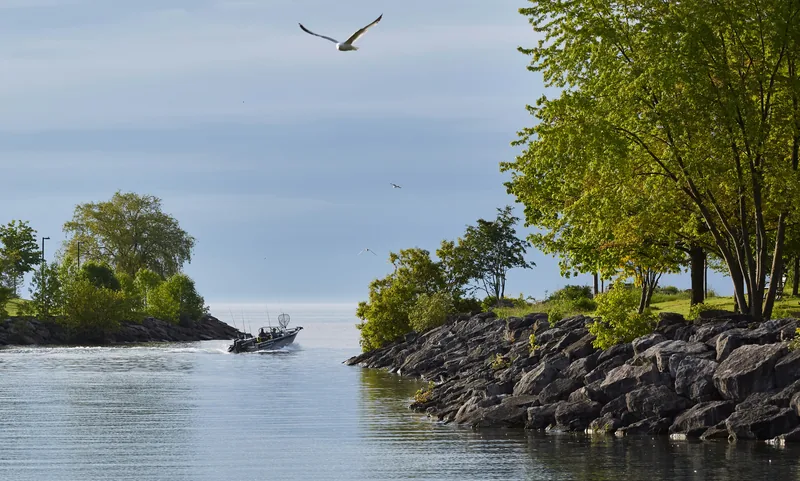
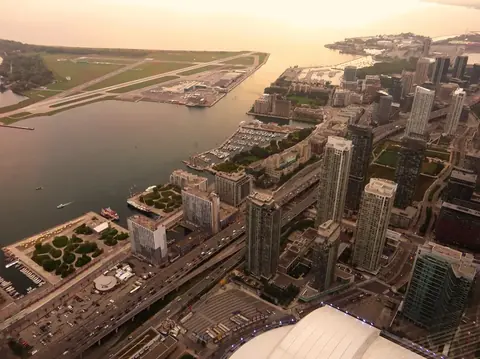
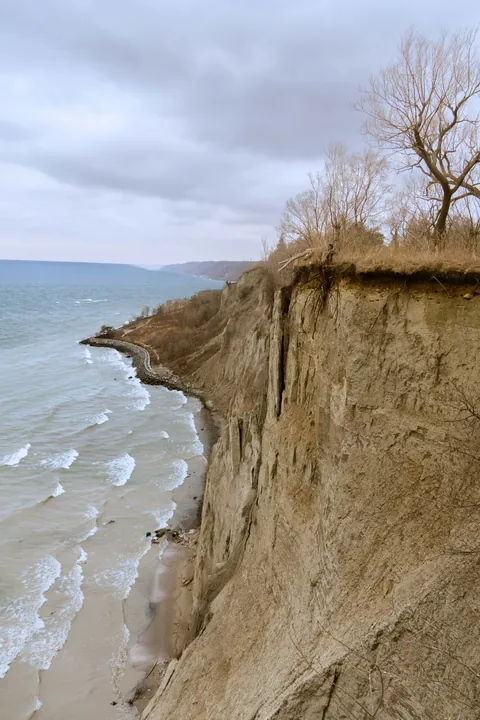
- The city of Toronto, in Ontario, on the Lake Ontario waterfront, with the Toronto Islands to the south. The City of Toronto describes City Hall as the seat of municipal government for Canada's largest city.
- People and languages
- The City says more than half of Toronto's population was born overseas and calls the city one of the most multicultural in the world. English and French are Canada's official languages, and 9-1-1 and 311 both offer help in 180 languages.
- Climate
- At the Toronto (City) climate station, Environment Canada's 1991–2020 normals give an annual mean of 9.7 °C and 822.7 mm of precipitation a year. The normal daily maximum is −0.3 °C in January and 27.0 °C in July; June is the wettest month (81.6 mm) and March the driest (52.8 mm).
- Skyline
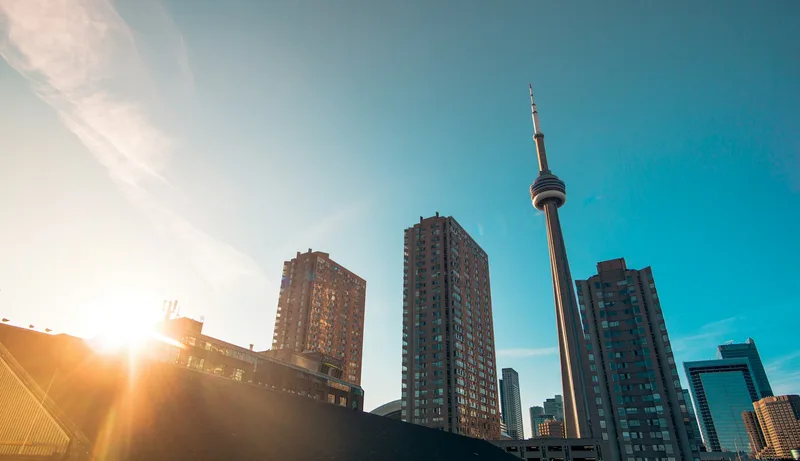
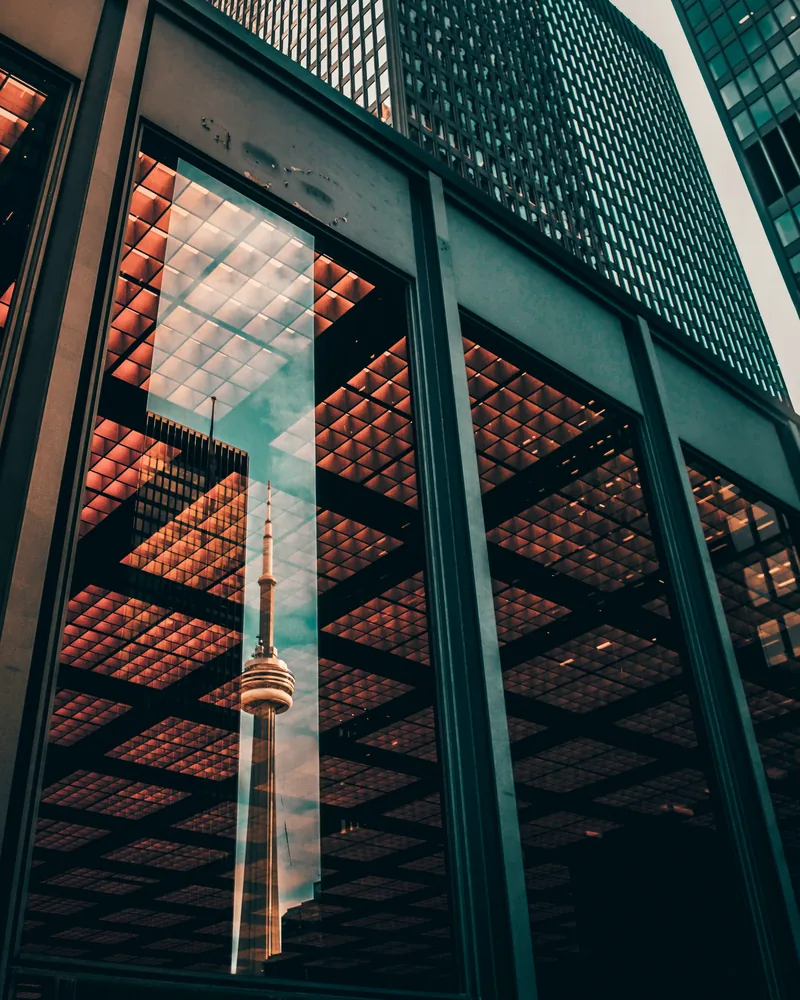
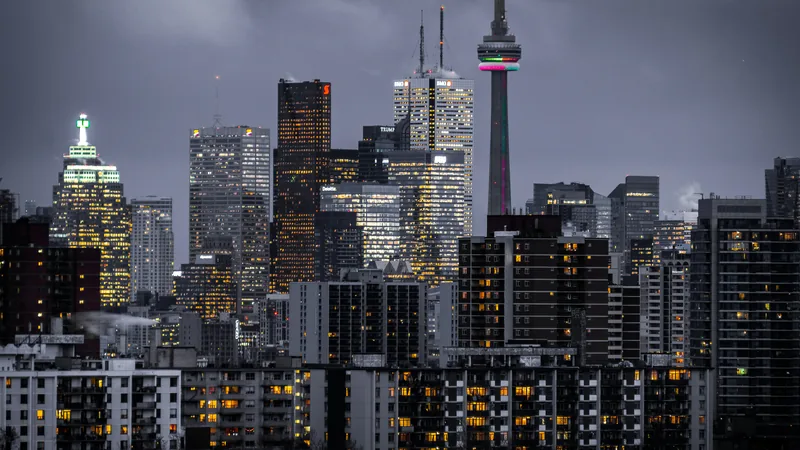
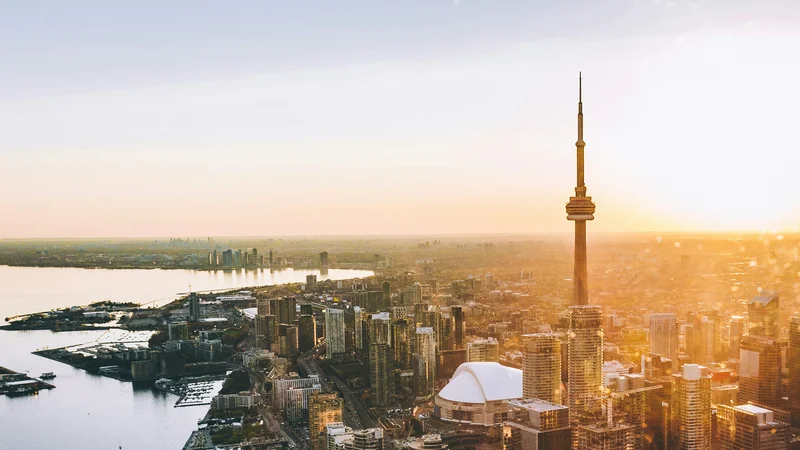
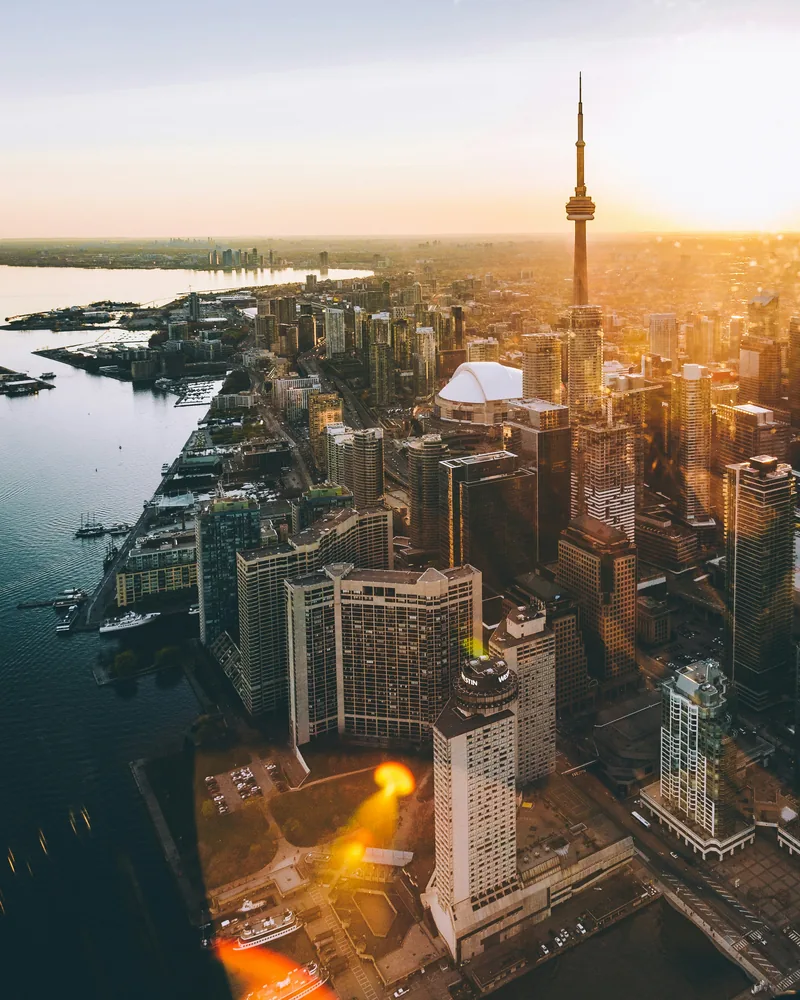
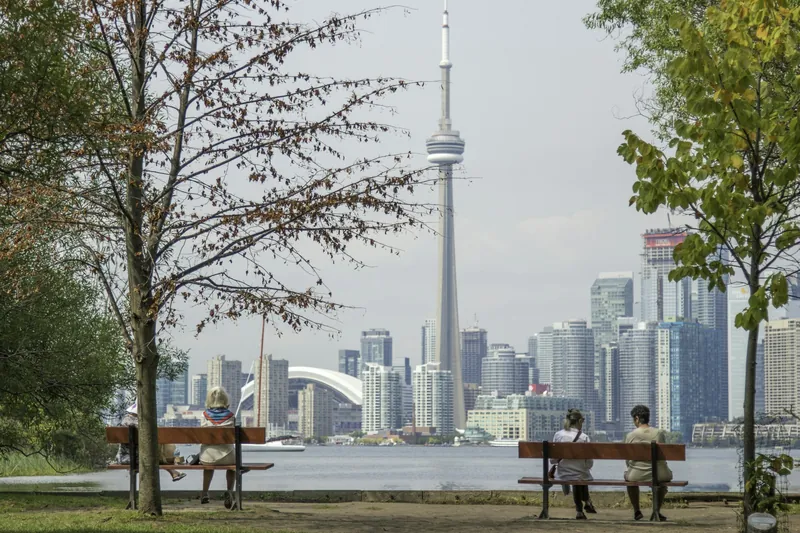
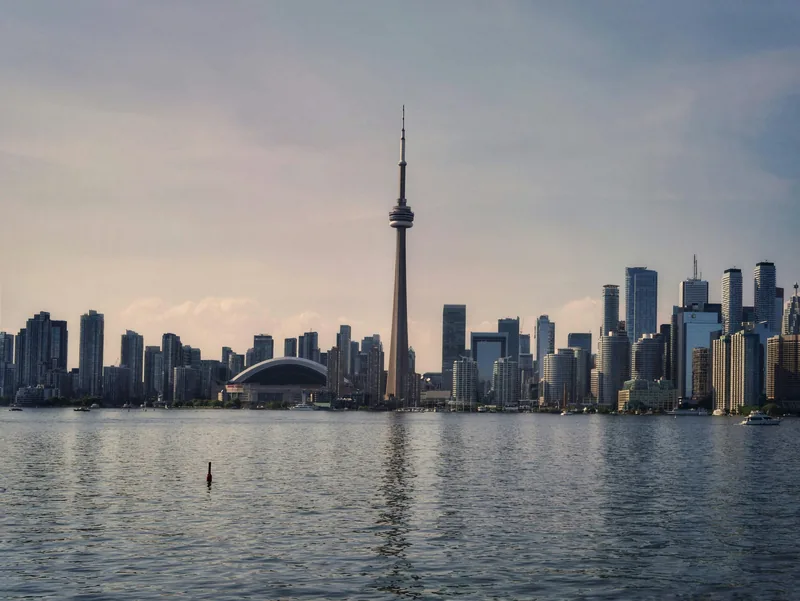
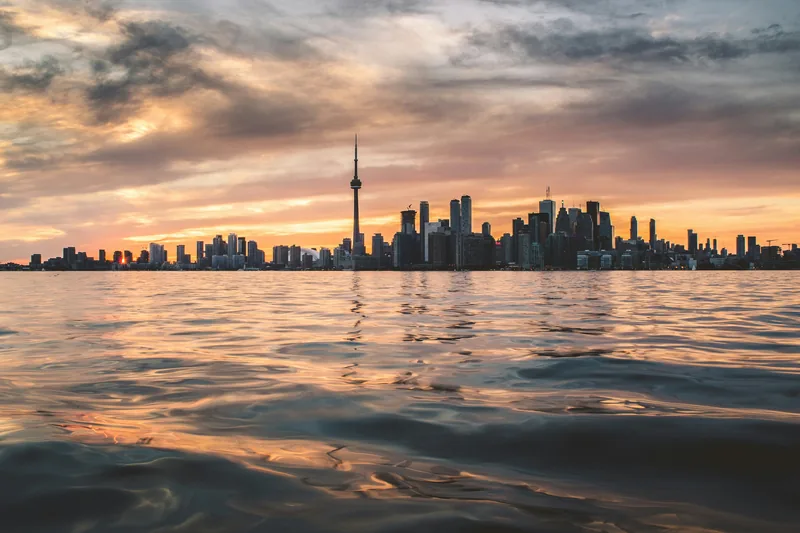
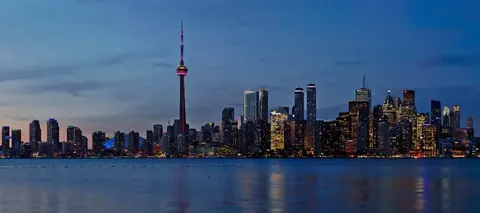
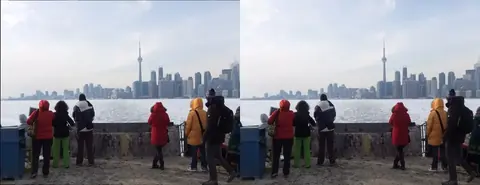
- The CN Tower is 553.33 metres (1,815.5 feet) from base to the top of the antenna and opened to the public on 26 June 1976, according to the tower.
- Airports
- Toronto Pearson takes long-haul international flights; Billy Bishop Toronto City Airport hosts only short-haul flights from Canada and the United States (City of Toronto). Hamilton, about 85 km southwest, is the next closest international airport.
- Rail and bus hub
- The City of Toronto calls Union Station Canada's largest and busiest multi-modal transit hub, used by more than a quarter of a million people a day. It connects GO Transit, the UP Express airport train, VIA Rail, Amtrak, the TTC and Ontario Northland.
- Street grid
- Yonge Street divides Toronto into east and west, and street numbers on both sides start at Yonge Street and rise from it.
- Time zone
- Eastern Time. Under the rule in Ontario's Time Act (e-Laws, current to 22 October 2026), clocks go back one hour at 2 a.m. on Sunday 1 November 2026 and forward one hour at 2 a.m. on Sunday 14 March 2027. The Act also holds a 2020 amendment that is not yet in force and would keep Ontario on one time all year if it is proclaimed.
- Money
- Canadian dollars. U.S. dollars are accepted in some places, but change is given in Canadian funds. Visa, Mastercard and American Express are accepted at retailers, and Apple Pay and Google Pay are widely used (City of Toronto, September 2026).
- Sales tax and hotel tax
- Ontario's Harmonized Sales Tax (HST) is 13% on most goods and services, and a non-resident visitor cannot claim a rebate of the GST/HST paid on purchases (Canada Revenue Agency). Toronto's Municipal Accommodation Tax on hotels and short-term rentals has been 6% of the room portion since 1 August 2026, with HST charged on it; the City's visitor page still printed the earlier 8.5% rate on 26 October 2026.
- Tipping
- The City's visitor guide says 15 to 20 per cent of the pre-tax bill is a standard tip at restaurants and on tours, and 10 to 15 per cent is customary for taxi and ride-share trips. The City notes that some restaurants add the gratuity automatically for large groups, usually six or more.
- Emergencies and help
- Call 9-1-1 for police, fire or paramedics. The Toronto Police non-emergency line is 416-808-2222 (*8-7-7, also written *TPS, from a mobile phone), 311 gives City information 24 hours a day, and 8-1-1 is for non-emergency health questions. INFOTOGO, the City's visitor information line, is 416-392-9300, 9 a.m. to 5 p.m. Eastern Time, Monday to Friday.
- Tap water
- Toronto's tap water is safe to drink, according to the City, which draws it from Lake Ontario and tests it continuously.