TorontoOntario · 36 tours
 Niagara FallsOntario · 25 tours
 New York CityNew York · 30 tours
 Las VegasNevada · 8 tours
 San FranciscoCalifornia · 16 tours
 VancouverBritish Columbia · 17 tours
 DubaiUAE · 54 tours
 Abu DhabiUAE · 5 tours
 Buenos AiresArgentina · 23 tours
 AthensGreece · 31 tours
 AucklandNew Zealand · 38 tours
 CancunMexico · 54 tours
No destinations match “”. Try searching all tours instead — that search understands full questions, not just place names.
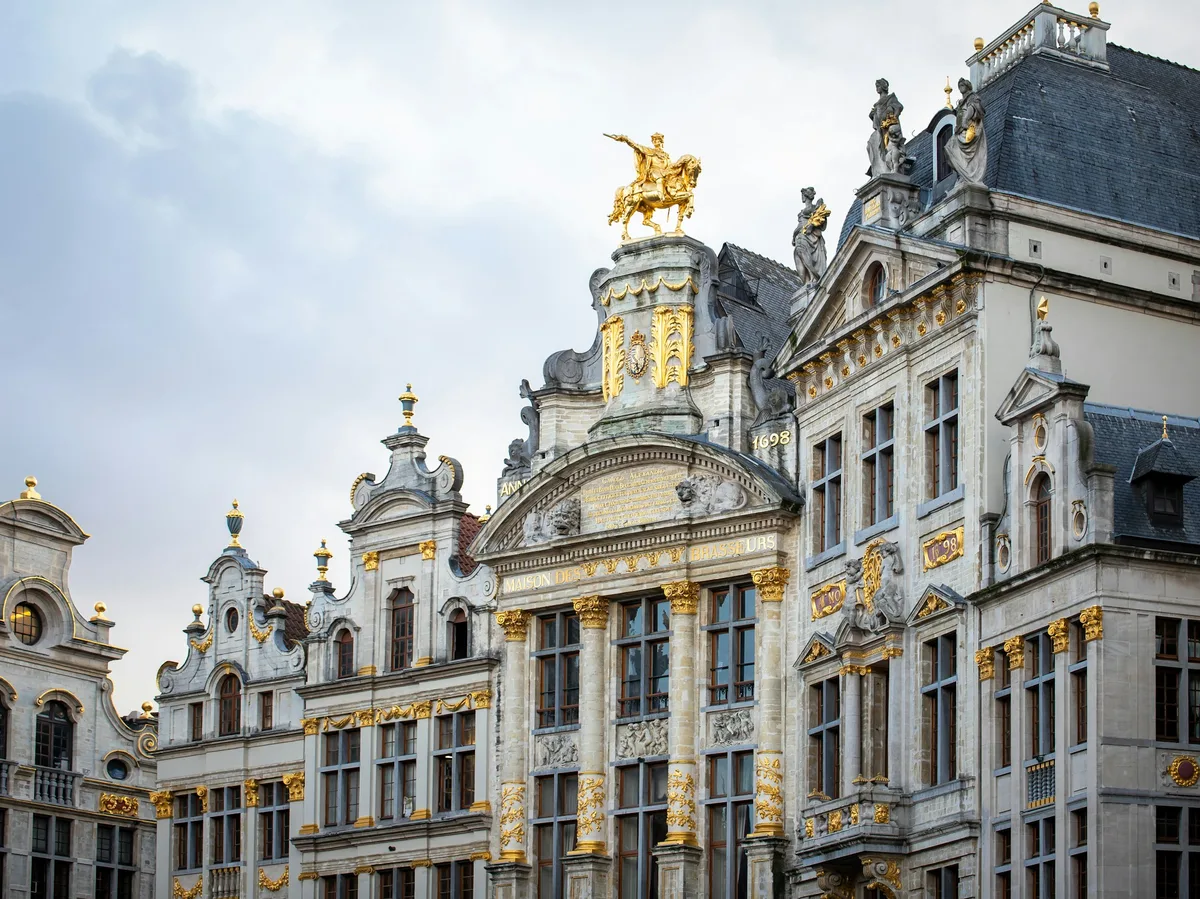
Brussels' UNESCO-listed central square, ringed by ornate guildhalls, the Gothic Town Hall, and the King's House — widely considered one of the most beautiful market squares in Europe.
 Multi-Day Tours Popular Pick
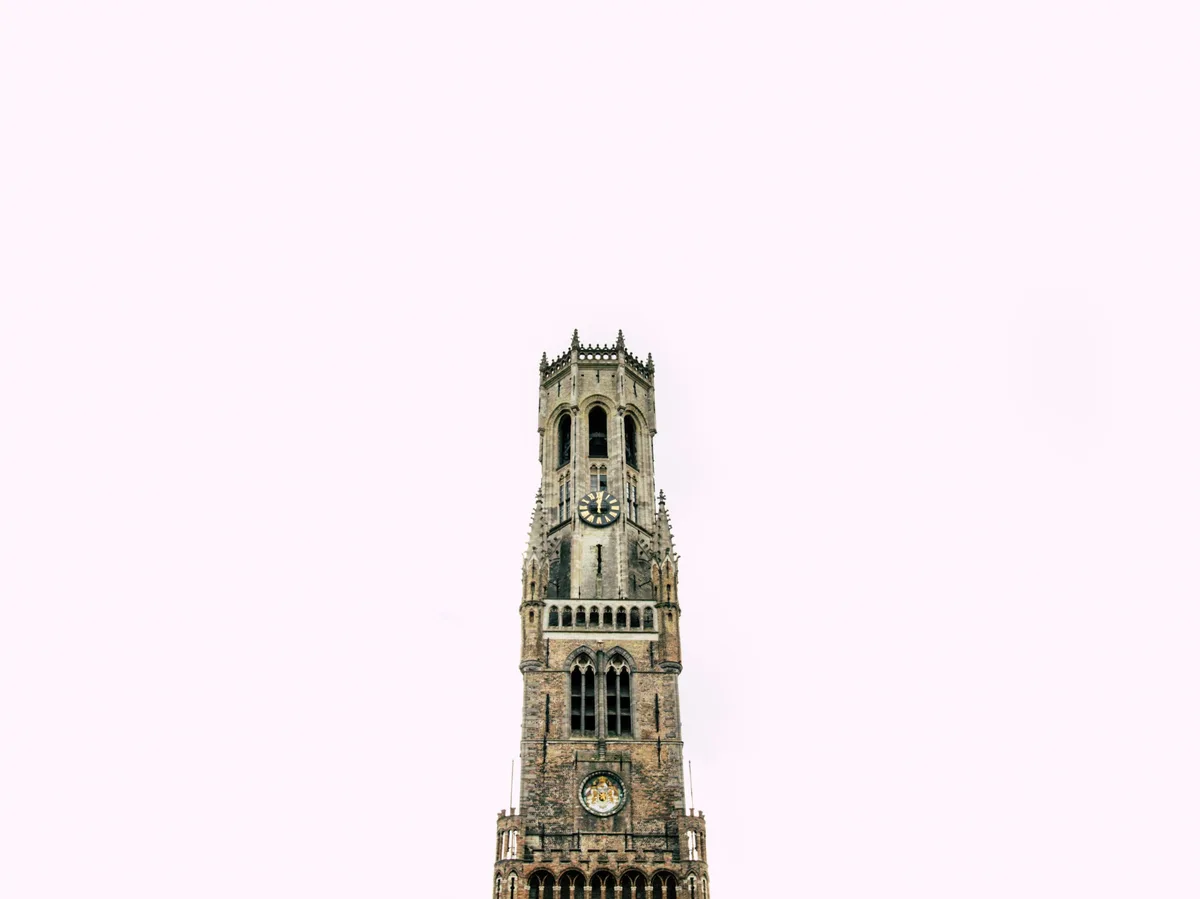
A 9-day private tour through Belgium's four great cities — Antwerp, Ghent, Bruges, and Brussels — built around guided walking and food tours, chocolate, and Flemish architecture, entirely within Belgium.
 Multi-Day Tours
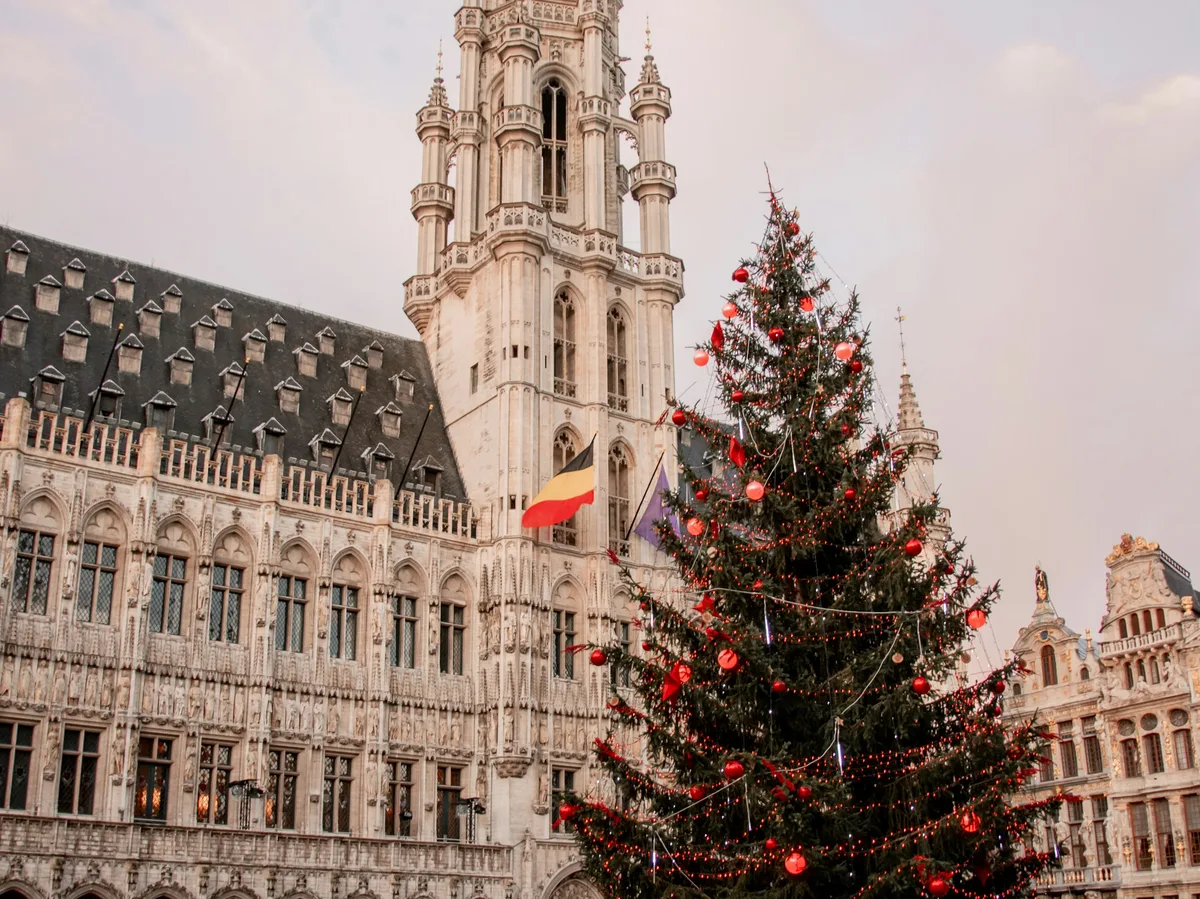
A 7-day private winter tour through Bruges, Ghent, and Brussels, timed to Belgium's Christmas markets — mulled wine, chocolate, ice skating, and Gothic squares lit up for the season.
Visitor guide
The Grand-Place (Grote Markt) is the central square of Brussels, Belgium, and one of the best-known historic squares in Europe. Fully paved and measuring roughly 68 by 110 metres, it is framed by the Gothic Town Hall, the King's House and dozens of Baroque guildhalls, and it has been a UNESCO World Heritage Site since 1998.
Wikipedia traces the square's origins to an open-air market that existed by the late 11th century. Covered meat, bread and cloth markets followed in the early 13th century, and in 1302 a large stone fountain was installed in front of the bread market. From the 14th century the city authorities grew in importance and began clearing and formalising the edges of the square, turning a trading ground into the ceremonial centre of Brussels.
The square was a working market until 1959 and was used as a car park in the 1960s. Cars were largely removed by 1990, when it was pedestrianised, which is why visitors today can walk its full cobbled surface without traffic.
On 13 August 1695, during the Nine Years' War, a French army of about 70,000 under Marshal Villeroy bombarded Brussels, and most of the square was destroyed. Only the Town Hall's facade and tower and some stone walls survived. Over the following four years the guilds rebuilt their houses under municipal and government oversight, producing the mixture of Gothic, Baroque and Louis XIV styles seen today.
The guilds were abolished in the 1790s and the square suffered neglect and damage. Restoration began in the mid-19th century under the mayor Charles Buls, after the 1853 demolition of one guildhall made the square's fragility plain.
The Town Hall on the south side was built in stages between 1401 and 1455 and is the only medieval building to survive on the square. Its Brabantine Gothic tower, attributed to Jan van Ruysbroek, rises about 96 metres and is topped by a gilded statue of Saint Michael. The building is asymmetrical, and many of the statues on its facade are 19th- and 20th-century works, with the originals kept in the Brussels City Museum.
Opposite stands the King's House, known in Dutch as the Broodhuis, which began as a wooden bread market. It was rebuilt in neo-Gothic style between 1874 and 1896 by Victor Jamaer and has housed the Brussels City Museum since 1887. The remaining 39 numbered houses are mostly Baroque, with Italian and Flemish influences. Their names evoke the guilds that owned them, such as Le Roy d'Espagne for the bakers, Le Cygne for the butchers, L'Arbre d'Or for the brewers and Le Pigeon for the painters.
In August of every even year the square is covered by a Flower Carpet made of roughly a million begonias or dahlias over about 1,800 square metres, a tradition first staged in 1971 and held every two years since 1986. The Ommegang, a costumed procession that has re-enacted the 1549 Joyous Entry of Charles V and Philip II since 1930, ends with a spectacle on the square, and UNESCO recognised it as Intangible Heritage in 2019. A Christmas tree has also stood here each year since the early 1950s.
The Grand-Place is best appreciated slowly, looking up at the gilded ornament of the guildhalls and then across to the Town Hall spire. A private guided visit suits it well, since each facade carries guild symbols and stories that are easy to miss without explanation. Evening light, when the gilding is illuminated, gives the square a very different character from the daytime market atmosphere of its past.
See every tour and attraction we cover in Belgium.