TorontoOntario · 36 tours
 Niagara FallsOntario · 25 tours
 New York CityNew York · 30 tours
 Las VegasNevada · 8 tours
 San FranciscoCalifornia · 16 tours
 VancouverBritish Columbia · 17 tours
 DubaiUAE · 54 tours
 Abu DhabiUAE · 5 tours
 Buenos AiresArgentina · 23 tours
 AthensGreece · 31 tours
 AucklandNew Zealand · 38 tours
 CancunMexico · 54 tours
No destinations match “”. Try searching all tours instead — that search understands full questions, not just place names.
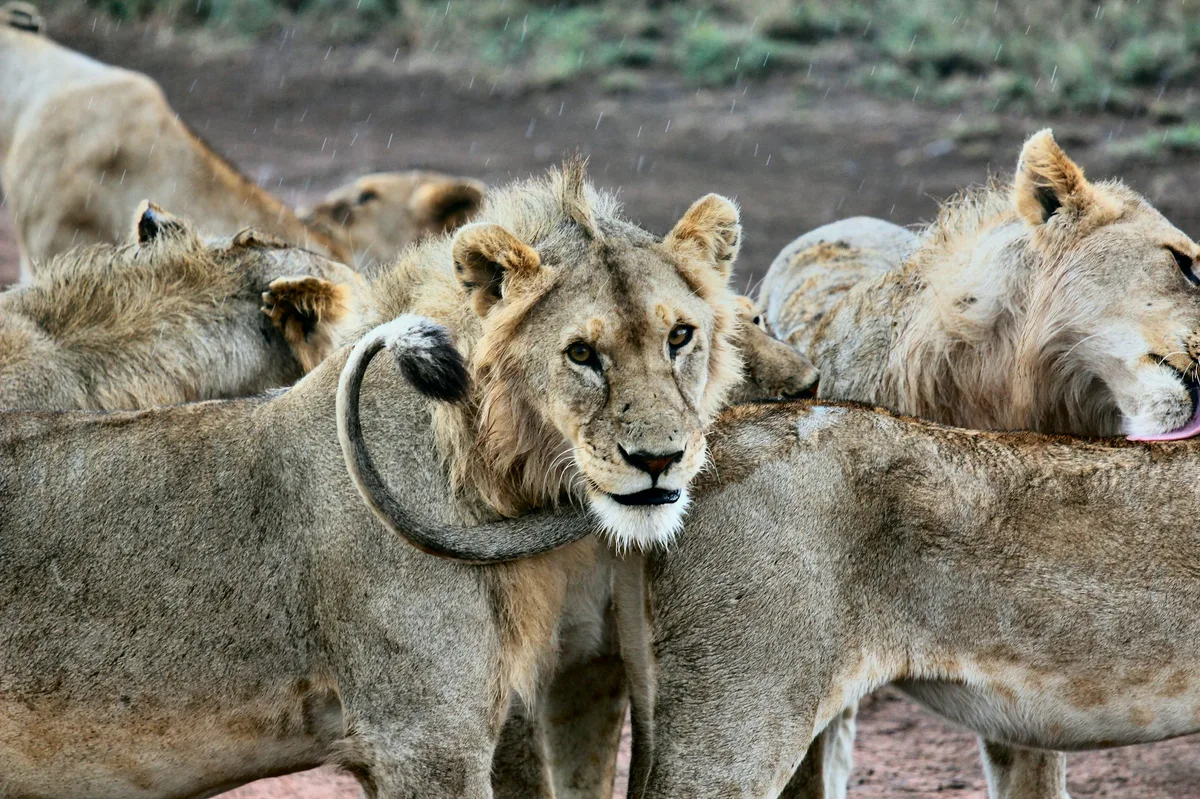
Tanzania's best-known reserve, famous for the annual wildebeest and zebra migration and for consistent Big Five sightings across its open plains.
Visitor guide
Serengeti National Park is a vast protected area of savanna, woodland and river forest in northern Tanzania, bordering Kenya's Maasai Mara. Covering roughly 14,750 square kilometres according to Wikipedia, it is a UNESCO World Heritage Site and the stage for the Great Migration of wildebeest and zebra.
The name is often linked to the Maasai word siringet, usually glossed as the place where the land runs on forever, although Wikipedia notes that the word does not appear in dictionaries of the Maasai language. In 1930 Major Richard Hingston proposed protecting the area as a national park, and it was formally designated in 1940, with stricter protection and a Board of Trustees following in 1948. Boundaries were finalised in 1951, and in 1959 a large eastern section of about 8,300 square kilometres was split off as the Ngorongoro Conservation Area so that Maasai could continue to use the land.
The 1959 book and documentary Serengeti Shall Not Die by Bernhard Grzimek and his son Michael helped draw international attention to the region, and a research institute was established at Seronera in 1966 to study the migration. UNESCO inscribed the park on the World Heritage list in 1981 under natural criteria vii and x.
Wikipedia describes the park in three broad parts. The southern Serengeti plains are largely treeless grassland growing on soils formed from volcanic ash, dotted with granite outcrops known as kopjes that predators use as lookouts. The western corridor follows the Grumeti and Mbalageti rivers, with riverine forest and flatter, more densely vegetated country. The northern Serengeti, stretching from Seronera towards the Mara River, is mostly open woodland and hills, and is remote and less visited.
The Mara River is described as the only permanently flowing river in the wider Serengeti ecosystem, while the Grumeti, Mbalageti and other rivers drain west towards Lake Victoria. Human habitation inside the park is limited to staff, researchers and the workers at lodges and camps, with Seronera as the main settlement.
The best-known spectacle is the annual movement of roughly 1.5 to 2 million wildebeest and some 250,000 plains zebras, joined by eland and Thomson's gazelles, in a circuit of roughly 800 to 1,000 kilometres between the Serengeti and the Maasai Mara. Calving takes place on the southern plains early in the year, and the herds later move north and west, crossing the Grumeti and Mara rivers where Nile crocodiles wait. Wikipedia gives conflicting timing for the western corridor crossings, so exact months vary by source and by year, and the herds follow rainfall rather than a fixed calendar.
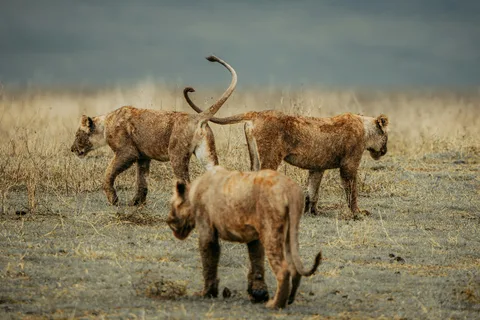
Beyond the migration, the park is part of a lion conservation unit with the Maasai Mara, and Wikipedia reports roughly 3,000 to 4,000 lions in this ecosystem. Elephants, buffalo, leopards, cheetahs, hippos, giraffes and the endangered black rhinoceros are also found, and African wild dogs returned to the park in 2012 after an absence. More than 500 bird species have been recorded, including secretarybirds, kori bustards and lesser flamingos.
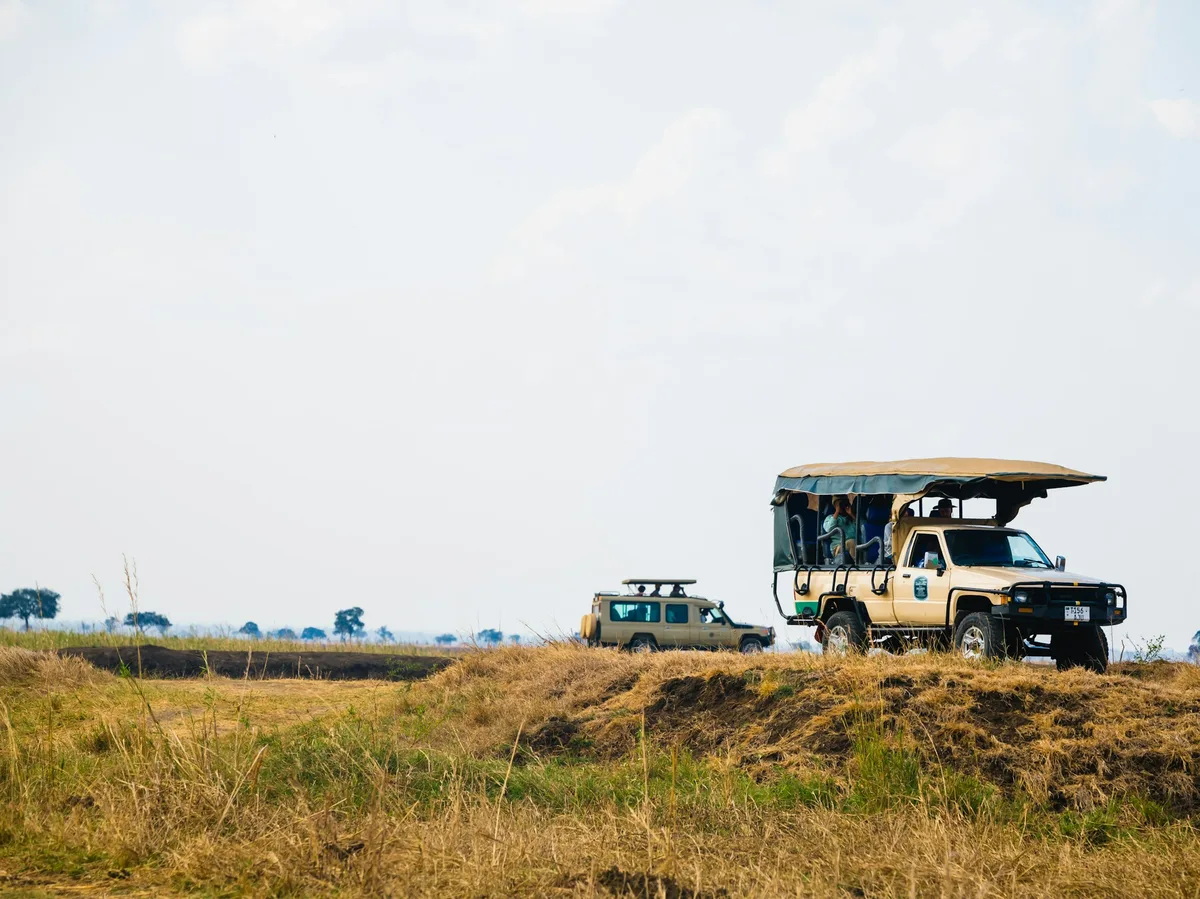
The park rests on ancient Archaean rock, with younger volcanic material in the southeast derived from Kerimasi and Oldoinyo Lengai. Conservation challenges noted by Wikipedia include pressure from settlement and livestock on the edges, changes to the Mara River's flow, invasive plants and debate over proposed road projects. Wildlife viewing in the park is usually done from a vehicle on tracks, and a private guided safari suits the Serengeti's scale, since the best areas change with the seasons and the herds.
See every tour and attraction we cover in Tanzania.