TorontoOntario · 36 tours
 Niagara FallsOntario · 25 tours
 New York CityNew York · 30 tours
 Las VegasNevada · 8 tours
 San FranciscoCalifornia · 16 tours
 VancouverBritish Columbia · 17 tours
 DubaiUAE · 54 tours
 Abu DhabiUAE · 5 tours
 Buenos AiresArgentina · 23 tours
 AthensGreece · 31 tours
 AucklandNew Zealand · 38 tours
 CancunMexico · 54 tours
No destinations match “”. Try searching all tours instead — that search understands full questions, not just place names.
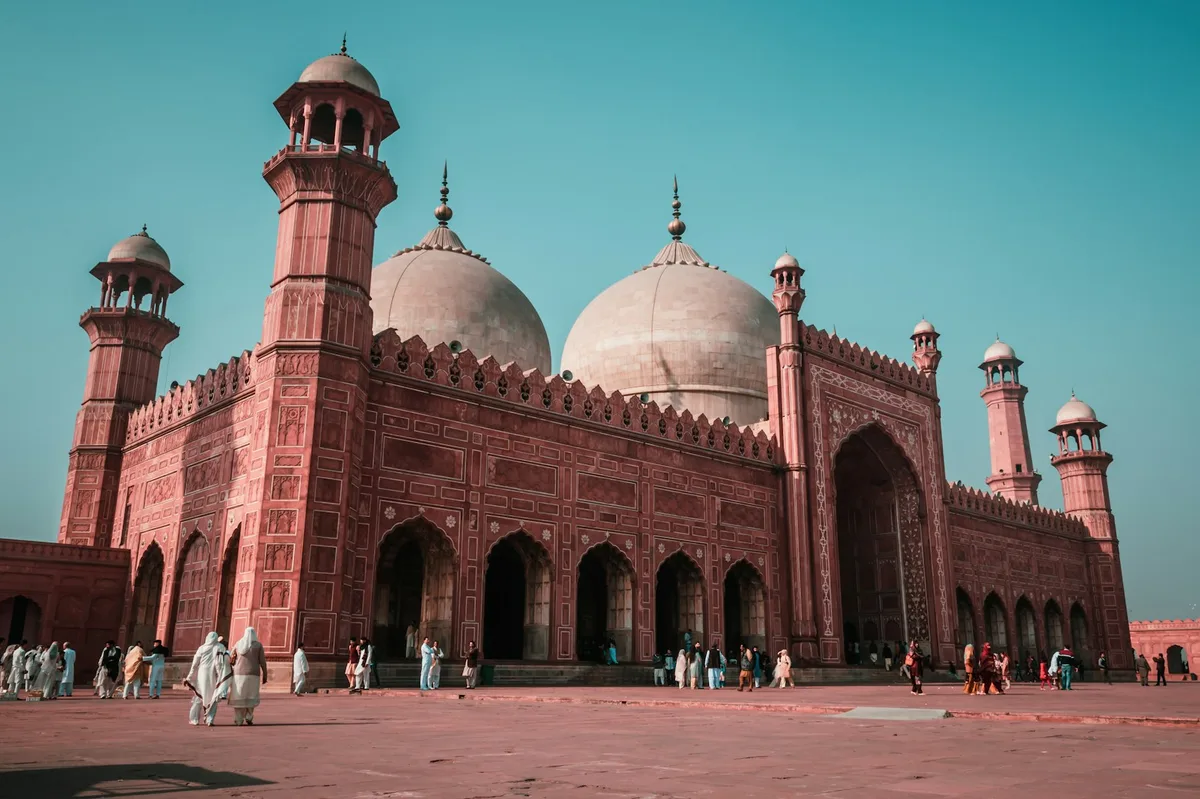
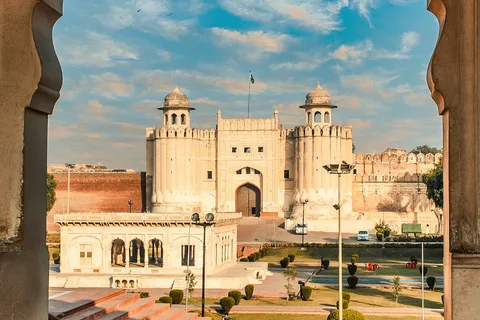
A 17th-century Mughal mosque in Lahore's Walled City, its red sandstone courtyard among the largest of any mosque built under the Mughal emperors.
 Multi-Day Tours
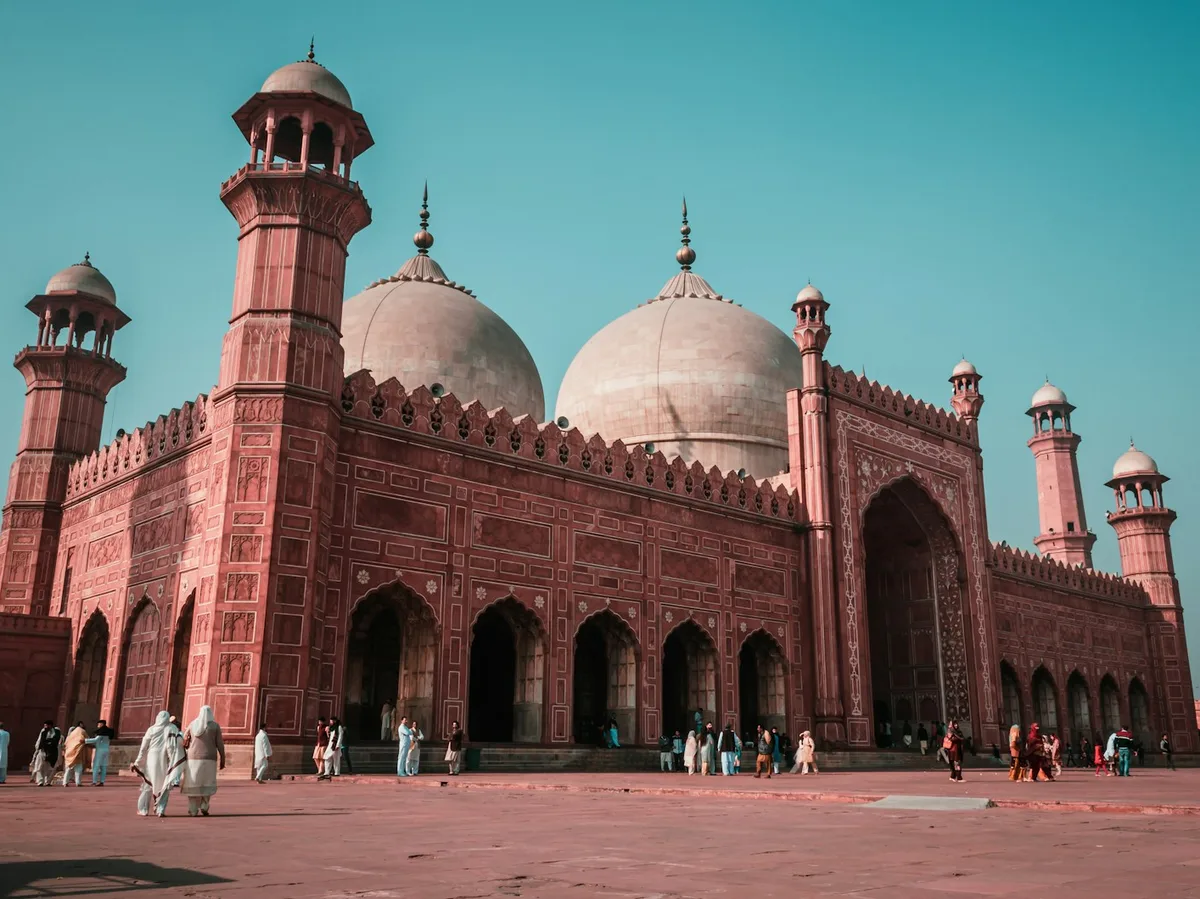
A 7-day private route through Lahore's walled city and South Punjab — Sufi shrines, the Wagah Border ceremony, a Cholistan Desert camel safari, and the ancient Indus Valley ruins at Harappa.
 Multi-Day Tours
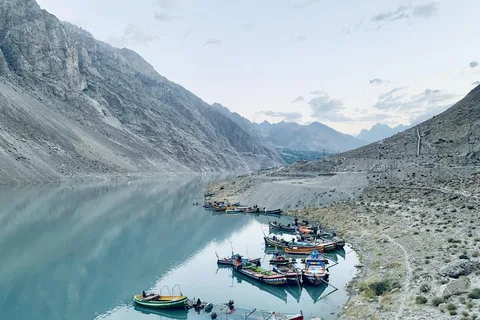
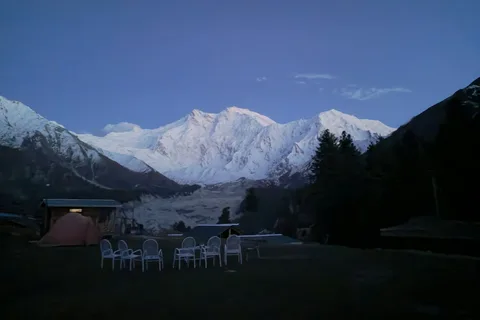
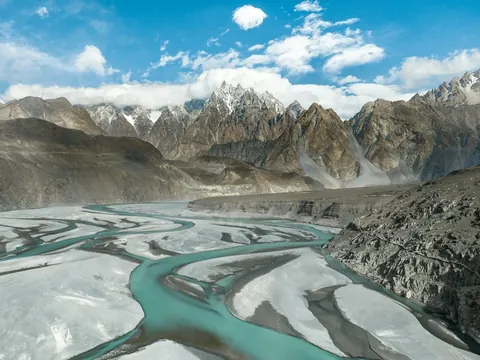
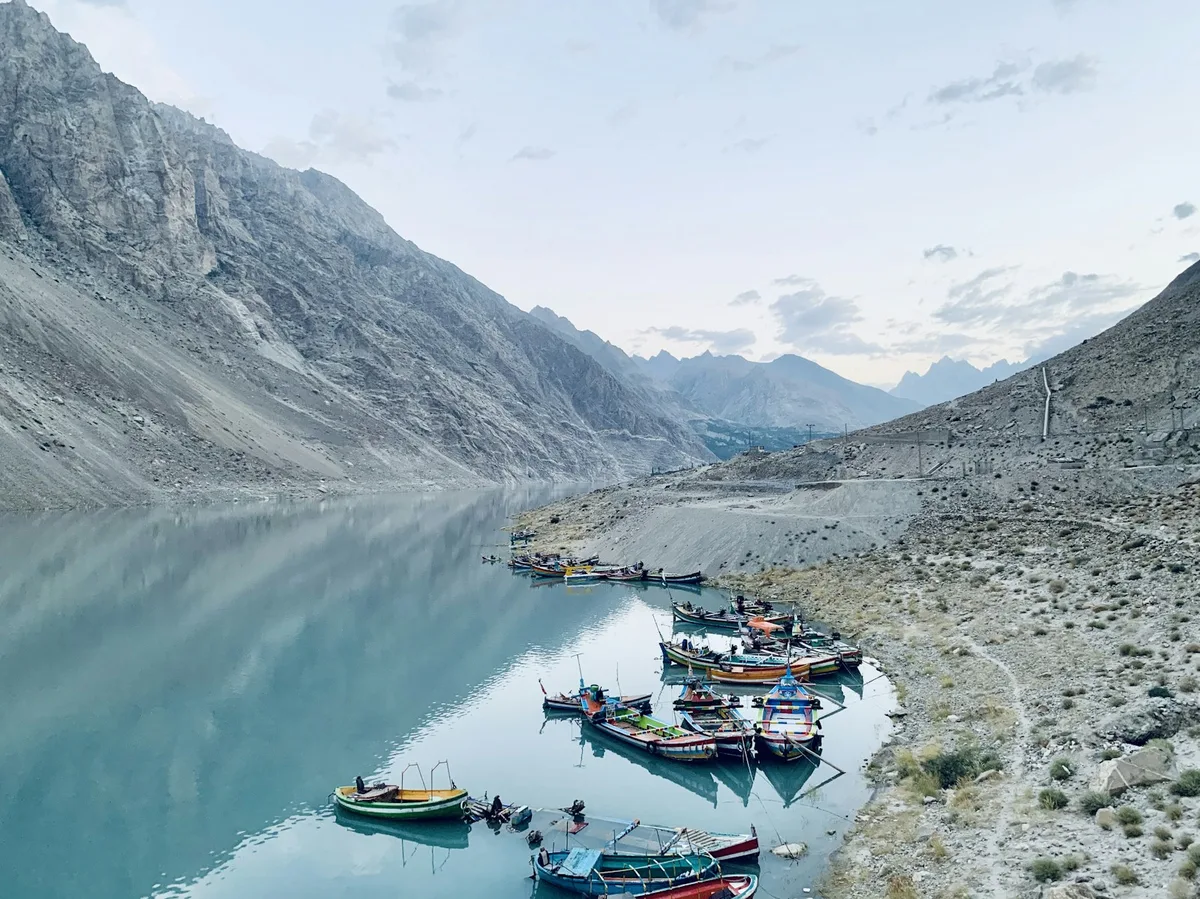
A 20-day private journey from Lahore's museums and forts through Peshawar and Swat's Buddhist sites, the Kalash Valley, Hunza's centuries-old forts, Fairy Meadows beneath Nanga Parbat, and the Skardu valleys, ending in Islamabad.
Visitor guide
The Badshahi Mosque is a Mughal-era imperial mosque in Lahore, Punjab, Pakistan, built in red sandstone with white marble inlay. It stands opposite the Lahore Fort at the northern edge of the Walled City and is regarded as one of the city's defining landmarks.
According to Wikipedia, the sixth Mughal emperor, Aurangzeb, commissioned the mosque in 1671 and it was overseen by his foster brother Muzaffar Hussein, governor of Lahore, also known as Fidai Khan Koka. It was completed and opened in 1673 or 1674, with other dates also given for consecration, so sources vary slightly. The article says it commemorated Aurangzeb's military campaigns in southern India. Its entrance faces east toward the Alamgiri Gate of the Lahore Fort across the rectangular Hazuri Bagh, a placement that tied the two monuments together. The full name inscribed in marble above the vaulted entrance is Masjid Abul Zafar Muhy-ud-Din Mohammad Alamgir Badshah Ghazi.
The complex measures roughly 170 by 170 metres. A two-storey red sandstone gateway, reached by a flight of 22 steps on a raised plinth, carries carved panels and muqarnas honeycomb vaulting, a feature first introduced into Mughal architecture at the nearby Wazir Khan Mosque. Beyond it, a sandstone-paved courtyard of about 25,600 square metres is enclosed by single-aisle arcades. Wikipedia says the courtyard can hold up to 100,000 worshippers when used as an Idgah, while the prayer hall holds around 10,000.
The prayer hall is built of red sandstone with white marble inlay and is topped by three marble domes, a large central one flanked by two smaller ones. Its central arched niche is flanked by five smaller niches, and the carved marble in floral Mughal designs inside and out is described as unusually fine. Four large octagonal, three-storey minarets stand at the corners of the main platform, each about 60 metres tall and capped with a marble canopy, with four smaller minarets at the corners of the main building. The plan is said to resemble Shah Jahan's Jama Masjid in Delhi on a larger scale, but with sandstone and marble in place of the glazed tilework seen at the Wazir Khan Mosque.
The mosque fell into disrepair after the Sikh army under Ranjit Singh took Lahore in 1799; the courtyard was used as a stable and the surrounding rooms as barracks and stores. In 1818 Ranjit Singh built the marble Hazuri Bagh Baradari facing the mosque. The British took Lahore in 1849 and kept the mosque as a garrison until John Lawrence formally returned it to the Muslim community in 1856. After 1857, the British replaced the 80 courtyard cells with open arcades. The Badshahi Mosque Authority was set up in 1852 to restore it.
Extensive restoration began in 1939, funded by Sir Sikandar Hayat Khan, and work continued after independence, being completed in 1960. In 2008, courtyard tiles were replaced with stone from the original source near Jaipur, Rajasthan. The mosque was placed on UNESCO's tentative list in 1993. A gallery holds about 27 relics associated with the Prophet Muhammad and his companions, according to Wikipedia. On 22 February 1974, during the Islamic Summit in Lahore, the heads of 39 Muslim states attended Friday prayers here.
The mosque is an active place of worship and is very busy during Eid and Ramadan, so a private guided visit with a driver is usually timed around prayer times, with modest dress and no shoes in the sacred areas.
See every tour and attraction we cover in Pakistan.