TorontoOntario · 36 tours
 Niagara FallsOntario · 25 tours
 New York CityNew York · 30 tours
 Las VegasNevada · 8 tours
 San FranciscoCalifornia · 16 tours
 VancouverBritish Columbia · 17 tours
 DubaiUAE · 54 tours
 Abu DhabiUAE · 5 tours
 Buenos AiresArgentina · 23 tours
 AthensGreece · 31 tours
 AucklandNew Zealand · 38 tours
 CancunMexico · 54 tours
No destinations match “”. Try searching all tours instead — that search understands full questions, not just place names.
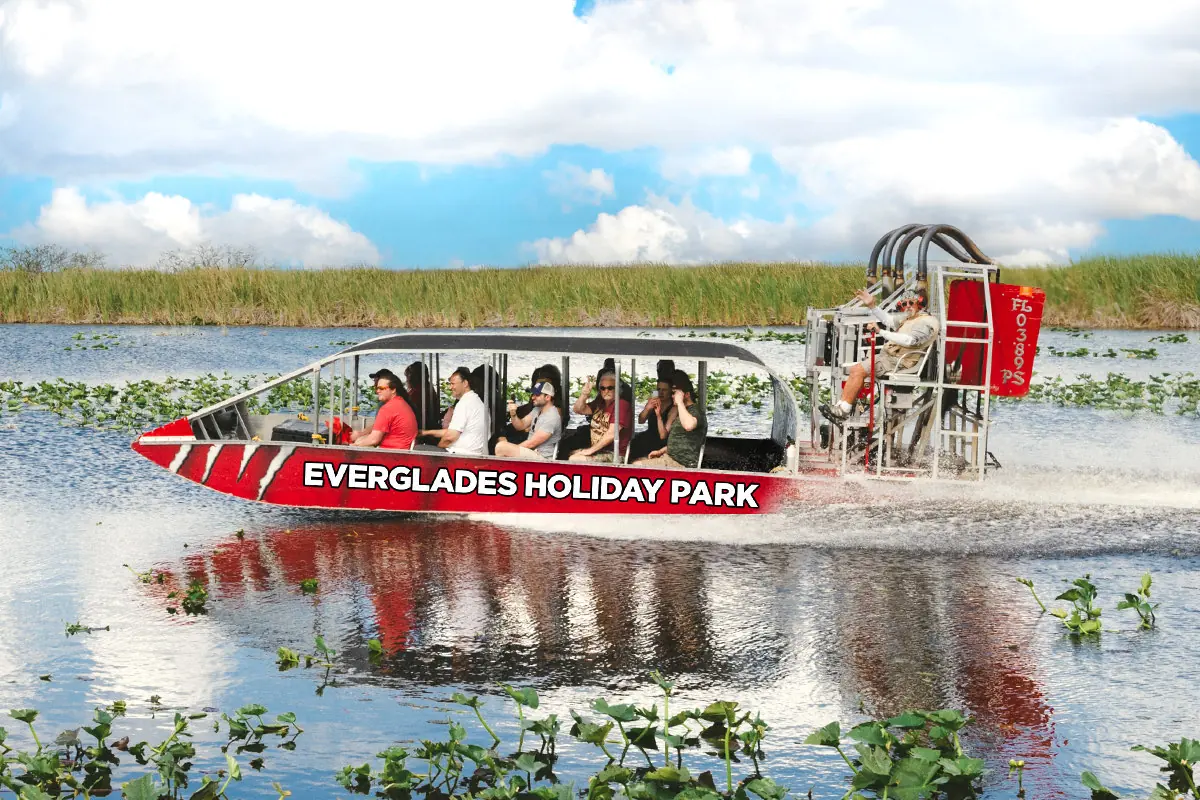
An airboat tour through the sawgrass marshes of the Everglades, home to alligators and native wildlife.
Visitor guide
An airboat ride is the standard way visitors from Fort Lauderdale get out onto the Everglades, a shallow, slow-moving sheet of fresh water and sawgrass that conventional propeller boats cannot cross. The flat-bottomed craft rides on top of the water, pushed by an aircraft-style propeller mounted above the stern, so it can skim over marsh only inches deep. Outfitters on the western edge of Broward County run most of the rides that start from the city.
The Everglades covers roughly 7,800 square miles of flooded grassland in southern Florida. The system begins far to the north with the Kissimmee River, which feeds Lake Okeechobee; in the wet season, water leaving the lake spreads into a slow sheet about 60 miles wide that drains south toward Florida Bay. That broad "sheetflow" is the reason Marjory Stoneman Douglas called the region a "River of Grass" in her 1947 book. Free-flowing channels such as Shark River Slough and Taylor Slough thread through the sawgrass, and the landscape also includes wet prairies, tropical hardwood hammocks, pinelands, cypress domes and mangroves.
Climate sets the rhythm. The wet season runs from May to October and delivers about 70 percent of the annual rain; the drier season from November to April concentrates wildlife around remaining water, which is why many guides and naturalists treat winter as the easier time for animal sightings. Alligators dig "gator holes" that hold water through droughts and shelter fish, turtles and birds, so the animals you see on a ride are part of how the marsh works.
Airboats predate the Everglades tours. Alexander Graham Bell's team built an experimental craft in Nova Scotia in 1905, and aviation pioneer Glenn Curtiss built an aircraft-engine boat called the Scooter in 1920 to help him get around Florida's backcountry. Airboats became popular in Florida in the 1930s, especially around the Everglades, where hunters, fishers and guides valued a boat that could cross sawgrass and mud. Florida registered more than 12,000 airboats as of late 2017, of which about 1,000 were commercial.
Typical airboats cruise at around 35 mph, though much depends on the operator and conditions. Because the hull glides on top of the water it is harder to slow than a normal boat and generally cannot reverse, so experienced pilots plan their turns early. Most of the noise comes from the propeller, which is why operators commonly offer ear protection and why quieter propeller designs have been developed.
Alligators are the headline, and sightings are common on the open channels and gator holes, though no operator can promise a particular animal on a particular day. Wading birds such as herons and egrets feed along the edges of the sawgrass, and turtles and fish are visible in clear shallow water. The National Park Service notes that Everglades National Park is a rare place where both American alligators and American crocodiles can be found; alligators favor fresh water while crocodiles tolerate salt water, so crocodiles are a coastal sight, not something to expect on a freshwater marsh ride out of Fort Lauderdale.
Airboat use inside Everglades National Park is restricted; according to the National Park Service, three authorized airboat businesses operate along the Tamiami Trail inside the park, while the park's wilderness area has long been closed to ordinary motorized access. Rides near Fort Lauderdale generally operate on lands outside the park boundary in the water-management areas to the west of the city, with Everglades Holiday Park at the end of Griffin Road off US 27 the best-known departure point. Exact areas, permits and rules change, so check the operator and the National Park Service compendium for current conditions.
See every tour and attraction we cover in Fort Lauderdale.