TorontoOntario · 36 tours
 Niagara FallsOntario · 25 tours
 New York CityNew York · 30 tours
 Las VegasNevada · 8 tours
 San FranciscoCalifornia · 16 tours
 VancouverBritish Columbia · 17 tours
 DubaiUAE · 54 tours
 Abu DhabiUAE · 5 tours
 Buenos AiresArgentina · 23 tours
 AthensGreece · 31 tours
 AucklandNew Zealand · 38 tours
 CancunMexico · 54 tours
No destinations match “”. Try searching all tours instead — that search understands full questions, not just place names.
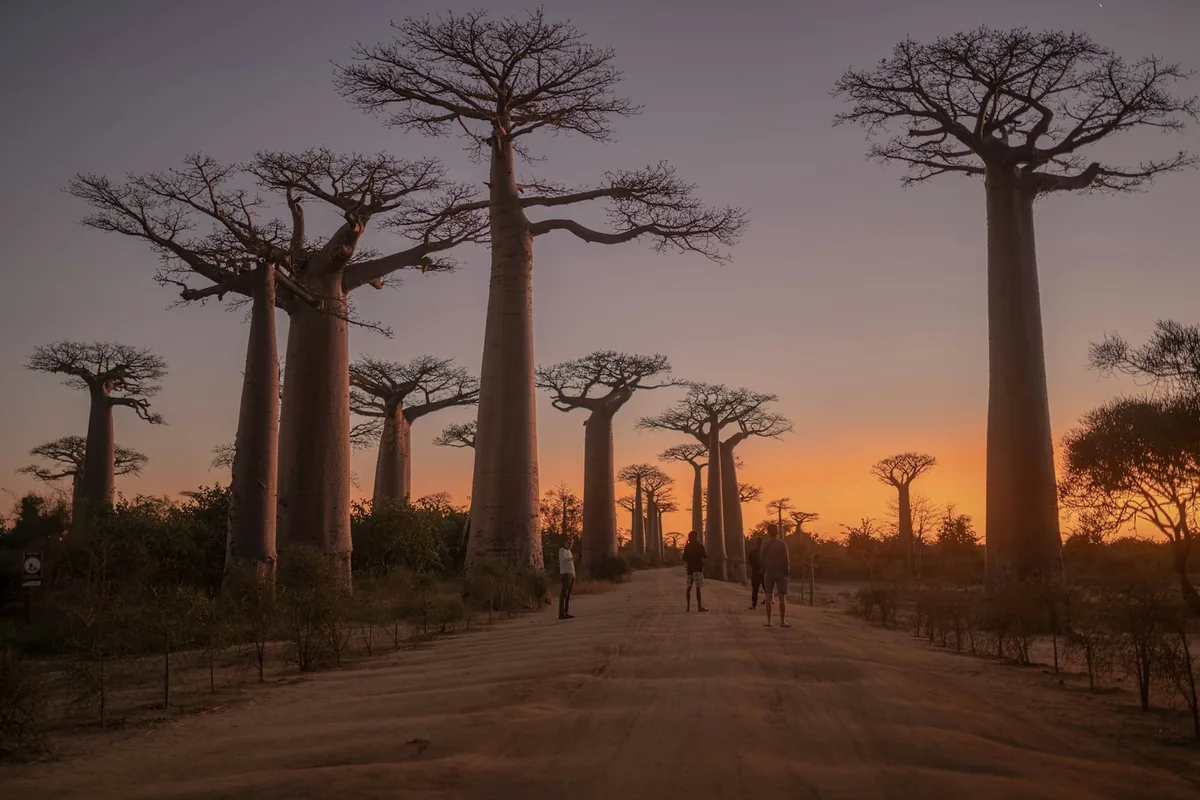
A dirt road near Morondava lined with towering Grandidier's baobabs, some of them centuries old — one of the best-known sights in Madagascar, especially at sunset.
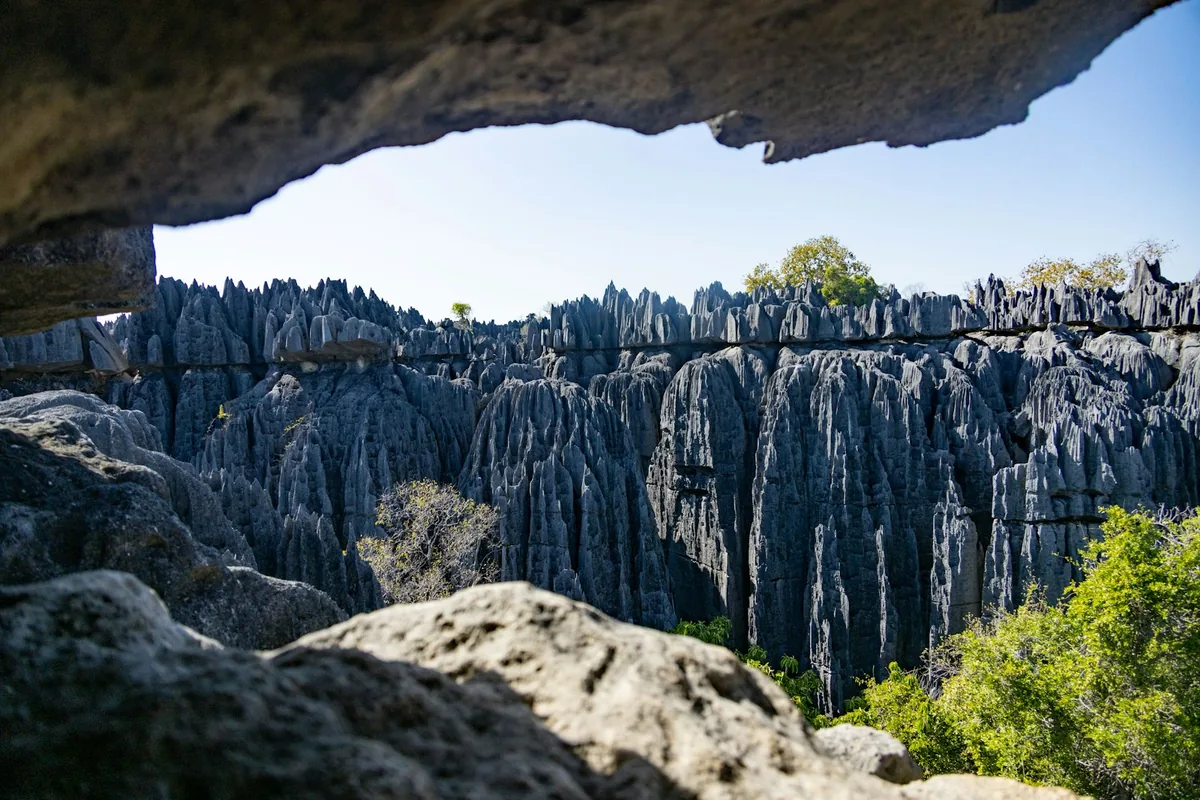 Multi-Day Tours
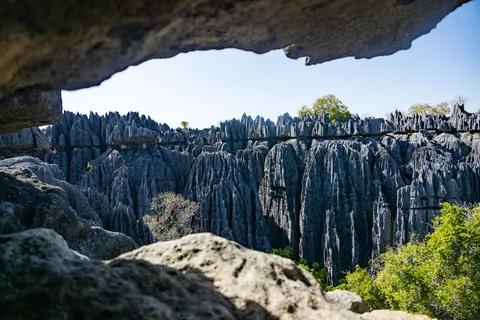
A 10-day circuit from Antananarivo to Morondava with a traditional canoe ride down the Tsiribihina River, night wildlife walks in Kirindy Forest, the karst pinnacles of Tsingy de Bemaraha, and a sunset stop at the Avenue of the Baobabs.
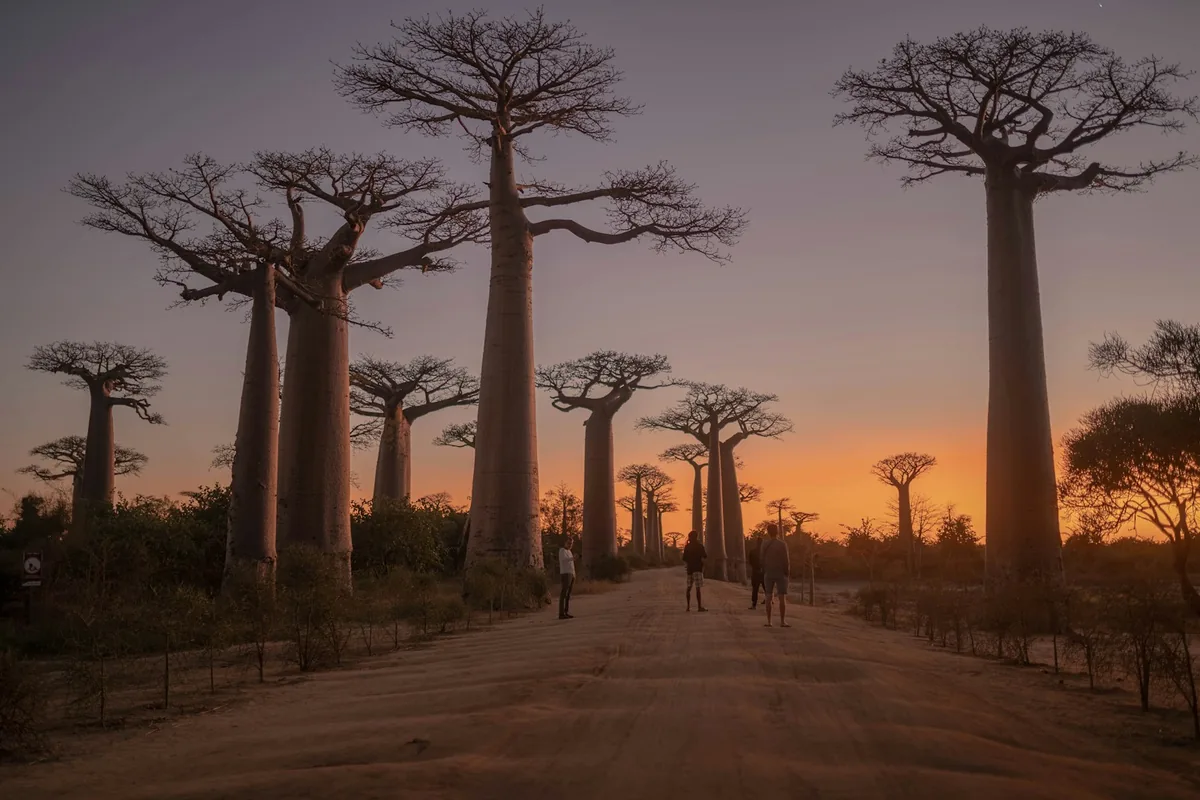 Multi-Day Tours
An 8-day, faster-paced version of our western Madagascar circuit — Kirindy Forest's nocturnal wildlife, the Tsingy de Bemaraha's limestone pinnacles, and a sunset stop at the Avenue of the Baobabs, without the extra river-canoe leg.
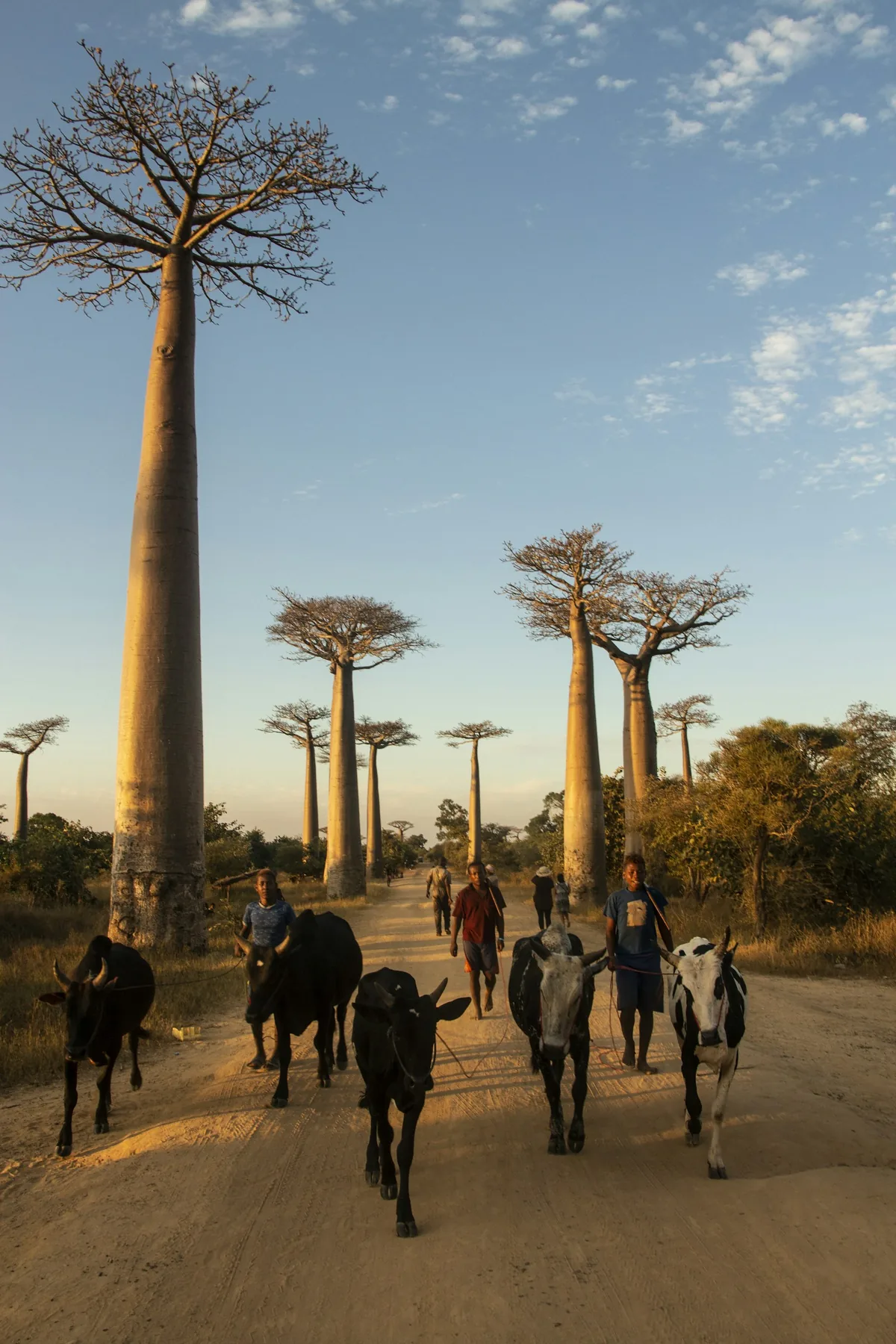 Multi-Day Tours
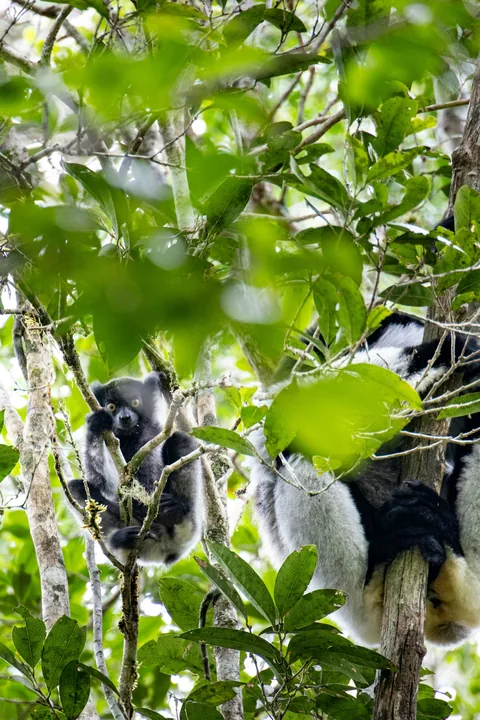
A 15-day, full-country circuit — the baobabs and tsingy of the west, Andasibe's rainforest, the Pangalanes Canal, and whale-watching off Sainte Marie island in the east.
Visitor guide
The Avenue of the Baobabs, also called the Alley of the Baobabs, is a stretch of unpaved road in the Menabe region of western Madagascar, lined with tall Grandidier's baobab trees. It lies on the road between Morondava and Belon'i Tsiribihina and is one of the best-known landscapes in Madagascar.
The trees are Grandidier's baobabs, Adansonia grandidieri, a species endemic to Madagascar. According to Wikipedia they stand about 30 metres tall. A grove of roughly 20 to 25 baobabs grows along a stretch of road about 260 metres long, and another 25 or so of the same species grow over nearby rice paddies and meadows within an area of around four hectares. Their straight, pale trunks and flat-topped crowns create a distinctive silhouette, especially when the light is low at sunrise and sunset.
Wikipedia does not give an age for the trees. Popular accounts often describe individual baobabs as several centuries old, but the Wikipedia article does not state a figure, so the exact ages are best treated as estimates.
The baobabs are not planted. Wikipedia explains that they are a remnant of the dense tropical forest that once covered the area. As the population grew, the surrounding forest was cleared for farming, and only the baobabs were left standing. Local people preserved them for their own sake as well as for their value as a source of food and building material. The local name, renala or reniala, is linked to the Malagasy phrase reny ala, meaning "mother of the forest".
The site was given temporary protected status in July 2007 by Madagascar's Ministry of Environment, Water and Forestry, as a step toward becoming the country's first natural monument. Wikipedia says it has been protected as a natural monument since July 2015. Threats to the trees include deforestation, runoff from expanding rice paddies, bushfires and forest fires. Since 2014 a Malagasy non-governmental organisation, Fanamby, has run an ecotourism project to support conservation and the local economy, and in 2018 it inaugurated infrastructure to help promote the site.
About seven kilometres to the north-west stand the Baobab Amoureux, two twisted baobabs of another endemic species, Adansonia za. According to local legend, they represent a couple who fell in love despite already being promised to other partners in their village. The legend says they asked their god for help, and the two trees grew together and stayed joined forever.
The avenue is near Morondava, a coastal town on the Mozambique Channel, and the road is a main route towards the Tsingy de Bemaraha area. A few small shops operate nearby.
Because the avenue is photogenic at the edges of the day, many visitors time their stop for late afternoon. Light, dust and the colour of the sky vary with the season. A private vehicle and driver suits a visit here, since it allows a flexible stop for the light and a safe place to pull over off the road.
See every tour and attraction we cover in Madagascar.