TorontoOntario · 36 tours
 Niagara FallsOntario · 25 tours
 New York CityNew York · 30 tours
 Las VegasNevada · 8 tours
 San FranciscoCalifornia · 16 tours
 VancouverBritish Columbia · 17 tours
 DubaiUAE · 54 tours
 Abu DhabiUAE · 5 tours
 Buenos AiresArgentina · 23 tours
 AthensGreece · 31 tours
 AucklandNew Zealand · 38 tours
 CancunMexico · 54 tours
No destinations match “”. Try searching all tours instead — that search understands full questions, not just place names.
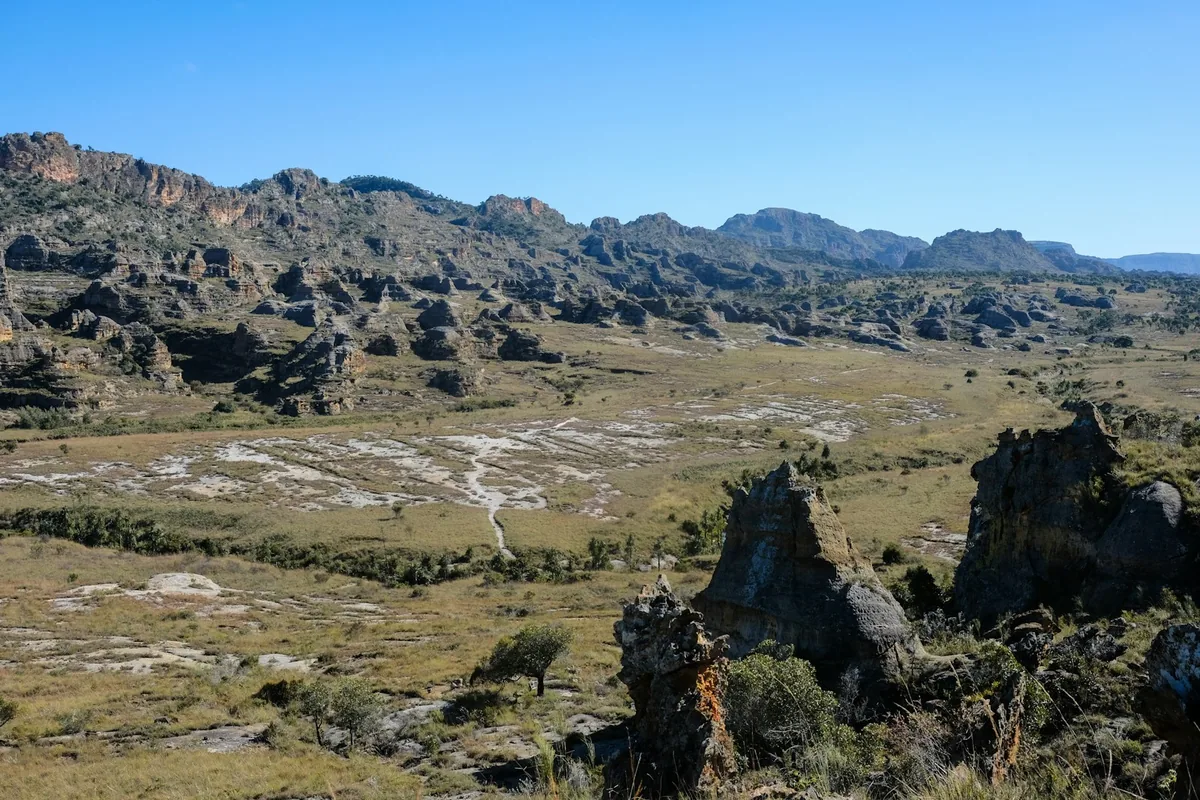
A canyon-and-sandstone massif in southern Madagascar, hiked for its natural swimming pools, striking rock formations, and the sunset viewpoint known as 'Giorgio's Window.'
 Multi-Day Tours
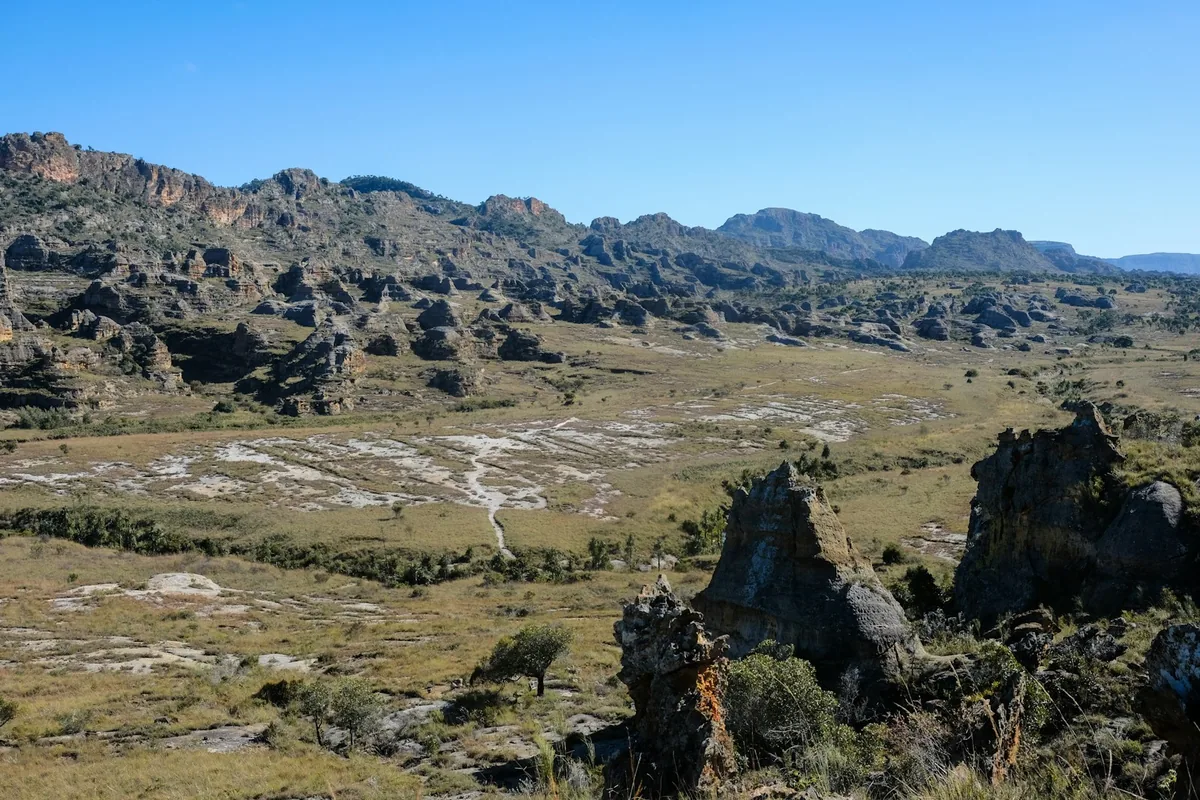
A 14-day circuit through Madagascar's central highlands — Andasibe's rainforest, Ranomafana's biodiversity, Isalo's canyon country, and the Zafimaniry craft villages around Ambositra.
 Multi-Day Tours
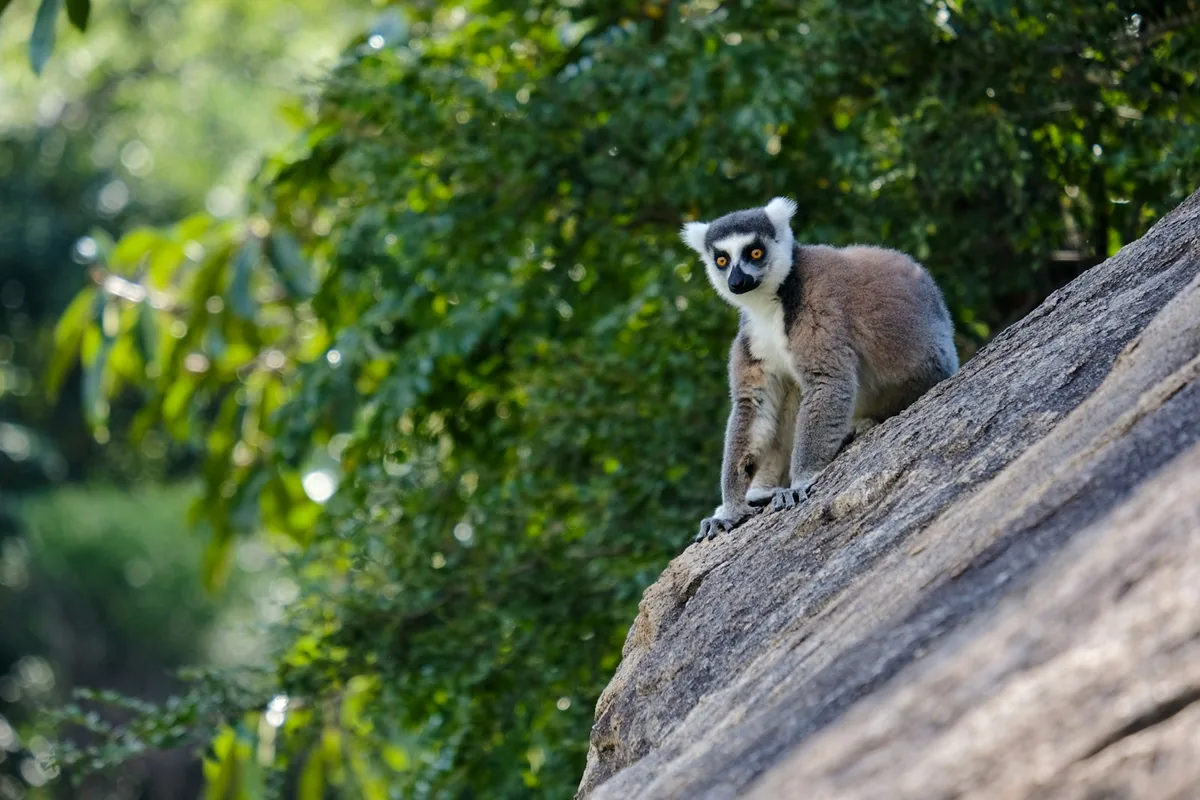
A 15-day route from Andasibe through the highlands, a ride on the historic FCE train to Manakara, Ranomafana's rainforest, Isalo's canyon country, and the spiny forest region near Ifaty.
Visitor guide
Isalo National Park is a protected area in the Ihorombe region of south-western Madagascar, covering about 815 square kilometres of sandstone massif, canyons and grassland. It is one of Madagascar's best-known parks for hiking, natural swimming pools and views of eroded rock formations.
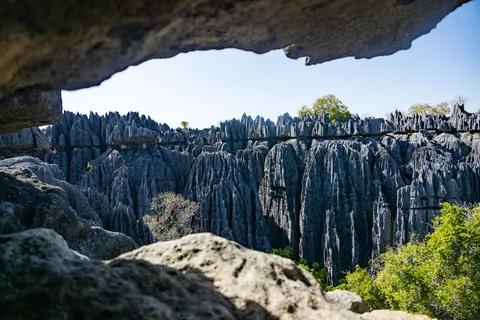
According to Wikipedia, the park sits on the Isalo Group, a thick formation of coarse sandstone laid down by braided streams in the Triassic to early Jurassic. Wind and water erosion have carved the rock into canyons up to 200 metres deep, sandstone domes, flat-topped mountains and so-called ruiniform massifs, with elevations ranging from about 510 to 1,268 metres. Permanent rivers and many seasonal streams run through it.
The climate is hot and dry, with a cooler dry season and a warmer wetter one. Wikipedia gives temperatures of roughly 15 to 32 degrees Celsius and average rainfall near the town of Ranohira of about 791 millimetres a year, with June the driest month and December through February typically the wettest.
More than 400 plant species have been documented, and over 70 percent of vascular plants are endemic to Madagascar, with 13 species known only from Isalo. Open woodlands are dominated by tapia trees, and other habitats include evergreen forest in canyons, pandanus thickets and grassland.
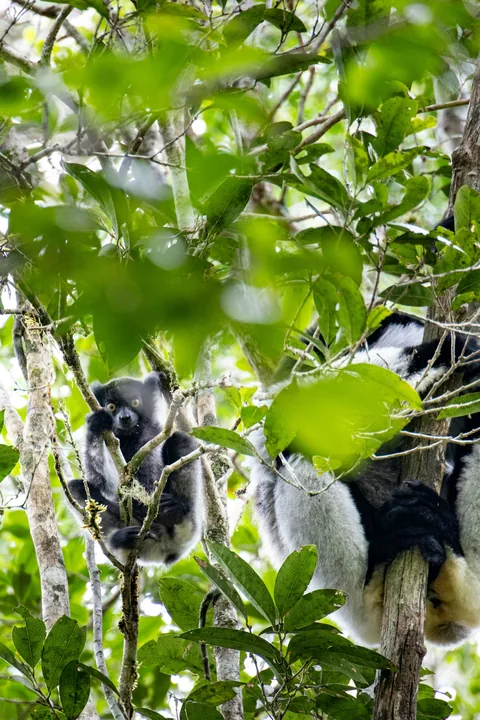
Animals include about 14 mammal species, among them ring-tailed lemurs and Verreaux's sifakas, which are seen by day, along with nocturnal mouse lemurs. More than 100 bird species, 47 reptile species and 24 amphibian species have been recorded. Wikipedia names Benson's rock thrush among the birds seen near the pools.
Natural pools set in sheltered canyons are among the most popular features, and Wikipedia's gallery includes a waterfall and a pool called the Piscine Naturelle. Travel sources describe a walk of about an hour to this pool through eroded cliffs and tapia woodland, though trail times vary. Other popular routes include Namaza Canyon, which leads to blue and black pools, and canyons associated with lemurs, but trail names and durations differ between sources.
A rock arch known as the Window of Isalo, near the southern end of the park, is a popular spot for watching the sunset, according to travel sources.
The Bara people have traditionally lived in this area, historically as cattle herders who depended on zebu. The park contains Bara burial sites, with tombs placed in natural caves high on rock faces. According to travel accounts, bones are moved to these tombs some years after a person's death. Wikipedia also mentions older burial sites associated with the Sakalava and a 2024 study of rock-cut niches at nearby Teniky dated to the tenth to twelfth centuries.
Wikipedia says visitors must hire a local guide, who can be arranged in Ranohira. Walks range from a few hours to several days. The main threat to the park's vegetation is illegal wildfire, set to expand grazing land. A private vehicle and driver suits the long distances between Isalo and neighbouring regions, while the cooler months are generally more comfortable for walking.
See every tour and attraction we cover in Madagascar.