TorontoOntario · 36 tours
 Niagara FallsOntario · 25 tours
 New York CityNew York · 30 tours
 Las VegasNevada · 8 tours
 San FranciscoCalifornia · 16 tours
 VancouverBritish Columbia · 17 tours
 DubaiUAE · 54 tours
 Abu DhabiUAE · 5 tours
 Buenos AiresArgentina · 23 tours
 AthensGreece · 31 tours
 AucklandNew Zealand · 38 tours
 CancunMexico · 54 tours
No destinations match “”. Try searching all tours instead — that search understands full questions, not just place names.
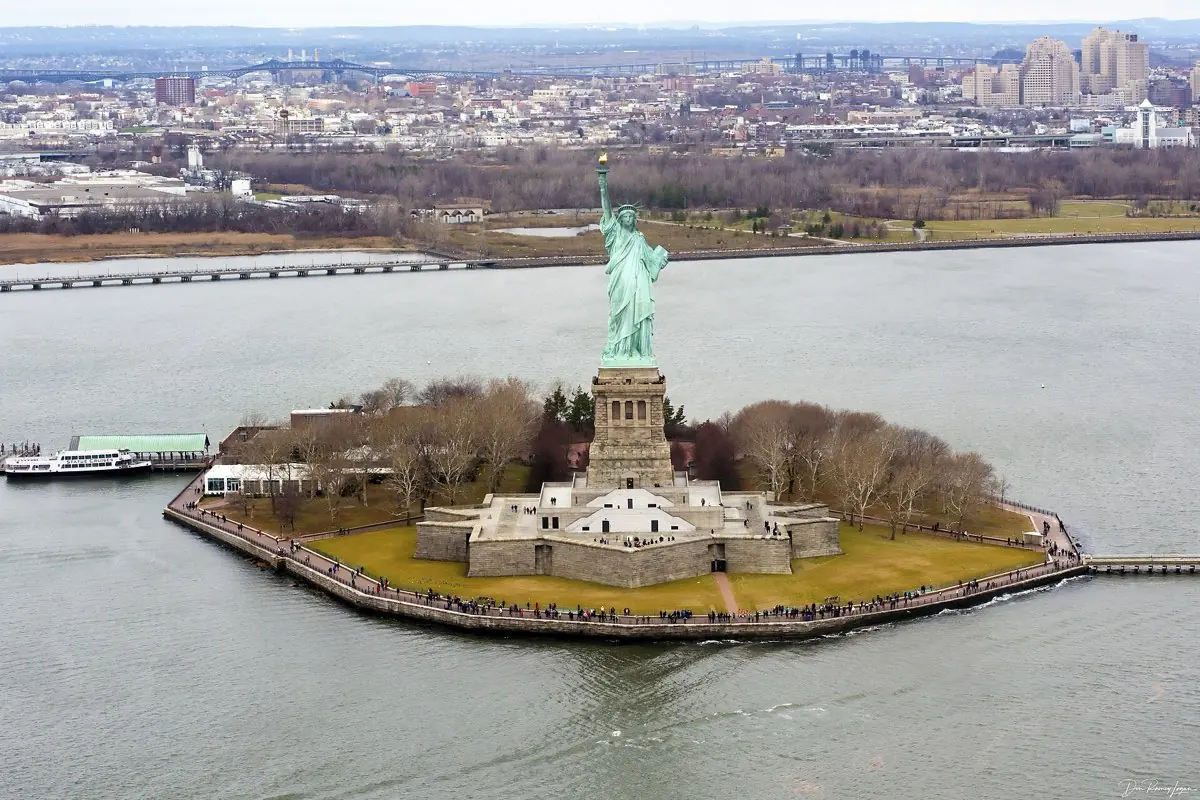
The iconic symbol of American freedom and the historic gateway for millions of immigrants.
Visitor guide
The Statue of Liberty and Ellis Island sit together in Lower New York Harbor and are managed as one unit, Statue of Liberty National Monument, by the National Park Service. The copper statue, a gift from France, was dedicated on October 28, 1886, and Ellis Island was the nation's best-known federal immigration station, where more than 12 million people were processed between 1892 and 1954.
French thinker Edouard de Laboulaye conceived the idea of a French gift around 1865. Sculptor Frederic-Auguste Bartholdi designed the statue, called "Liberty Enlightening the World," and Gustave Eiffel designed its internal framework. France built the copper figure between 1875 and 1884 while Americans funded and built the pedestal, designed by Richard Morris Hunt. Joseph Pulitzer's newspaper campaign helped rescue the pedestal fund in 1885. The statue arrived in New York on June 17, 1885, in 214 wooden cases and was reassembled on what was then Bedloe's Island, renamed Liberty Island in 1956.
Per the NPS, the statue stands 151 feet 1 inch from the top of its base to the torch, and 305 feet 1 inch from the ground to the torch tip. Its copper skin is 3/32 inch thick, about two pennies stacked, and the crown has 25 windows and seven rays. The tablet bears the date July IV MDCCLXXVI, July 4, 1776. At her feet are chains and a broken shackle. The torch was replaced in 1986 with a copper version covered in 24-karat gold leaf, and the original now sits in the Statue of Liberty Museum.
The statue's base stands inside Fort Wood, an army fort whose walls form an eleven-point star. Emma Lazarus's sonnet "The New Colossus" was added to a plaque in 1903, and the statue became a national monument in 1924. It joined UNESCO's World Heritage List in 1984.
The first Ellis Island station opened on January 1, 1892; its first recorded immigrant was Annie Moore, a 17-year-old from Cork, Ireland. A fire destroyed the original wooden buildings in June 1897 (NPS pages give both June 14 and June 15), and a fireproof Renaissance-style Main Building opened in December 1900. Newcomers underwent medical and legal inspection in the Registry Room, where inspectors asked 29 questions, and for most people the process took only a few hours.
Use of the station declined after the 1924 immigration law moved screening overseas, and it closed on November 12, 1954. After years of decay a major restoration project ran from 1986 to 1990, according to the National Park Service, and the Main Building opened as the Ellis Island Museum on September 10, 1990. Ellis Island was added to the national monument on May 11, 1965. The NPS says over 40 percent of Americans can trace their ancestry through the island, though such estimates are approximate.
Both sites are reached by ferry, and ticketing, crown or pedestal access, security screening and operating schedules are set by the NPS and its ferry operator, so check nps.gov/stli for current details before you plan.
On a Voyzo private tour, your private vehicle and driver provide door-to-door pickup in New York City and take you to the ferry departure point at your preferred time. Ferry tickets are booked separately with the official operator, and we build the rest of your day around your interests.
See every tour and attraction we cover in New York City.