TorontoOntario · 36 tours
 Niagara FallsOntario · 25 tours
 New York CityNew York · 30 tours
 Las VegasNevada · 8 tours
 San FranciscoCalifornia · 16 tours
 VancouverBritish Columbia · 17 tours
 DubaiUAE · 54 tours
 Abu DhabiUAE · 5 tours
 Buenos AiresArgentina · 23 tours
 AthensGreece · 31 tours
 AucklandNew Zealand · 38 tours
 CancunMexico · 54 tours
No destinations match “”. Try searching all tours instead — that search understands full questions, not just place names.
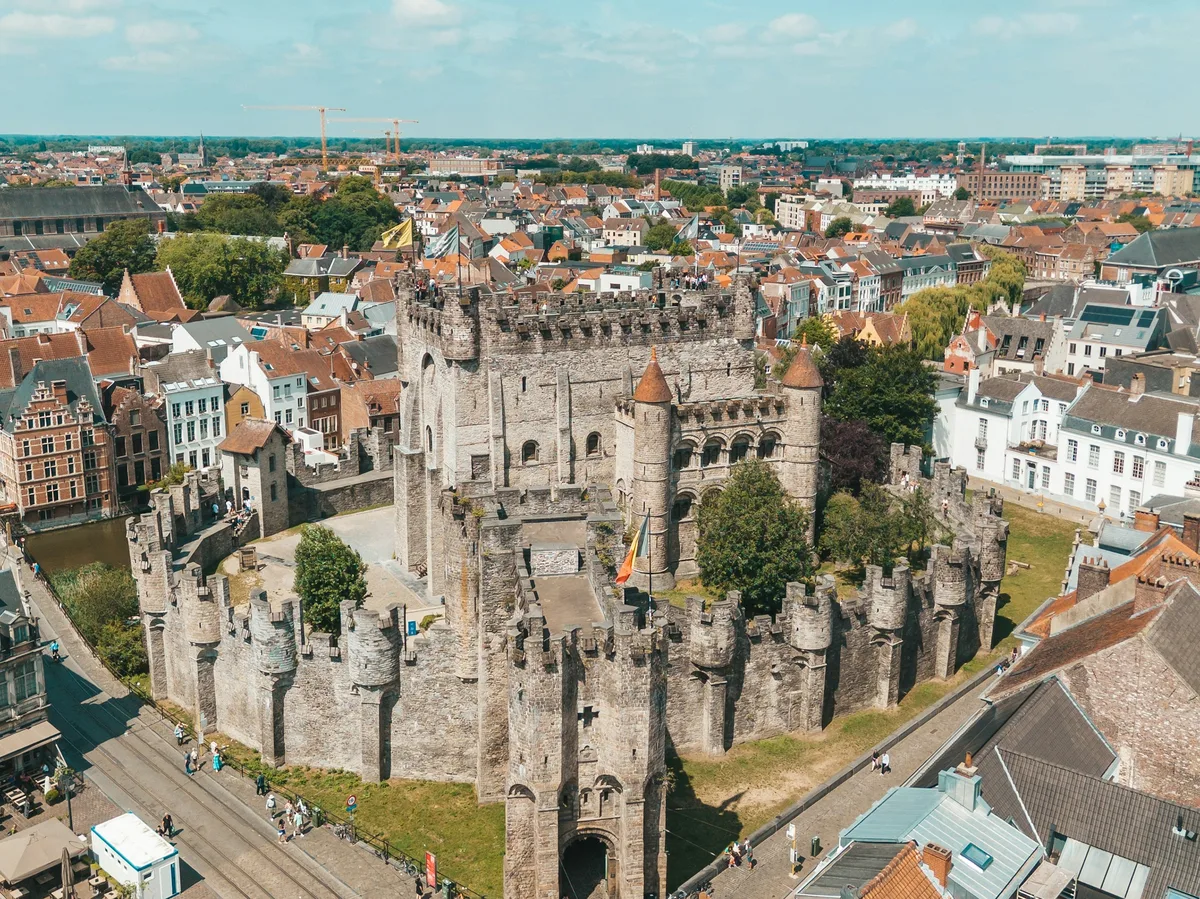
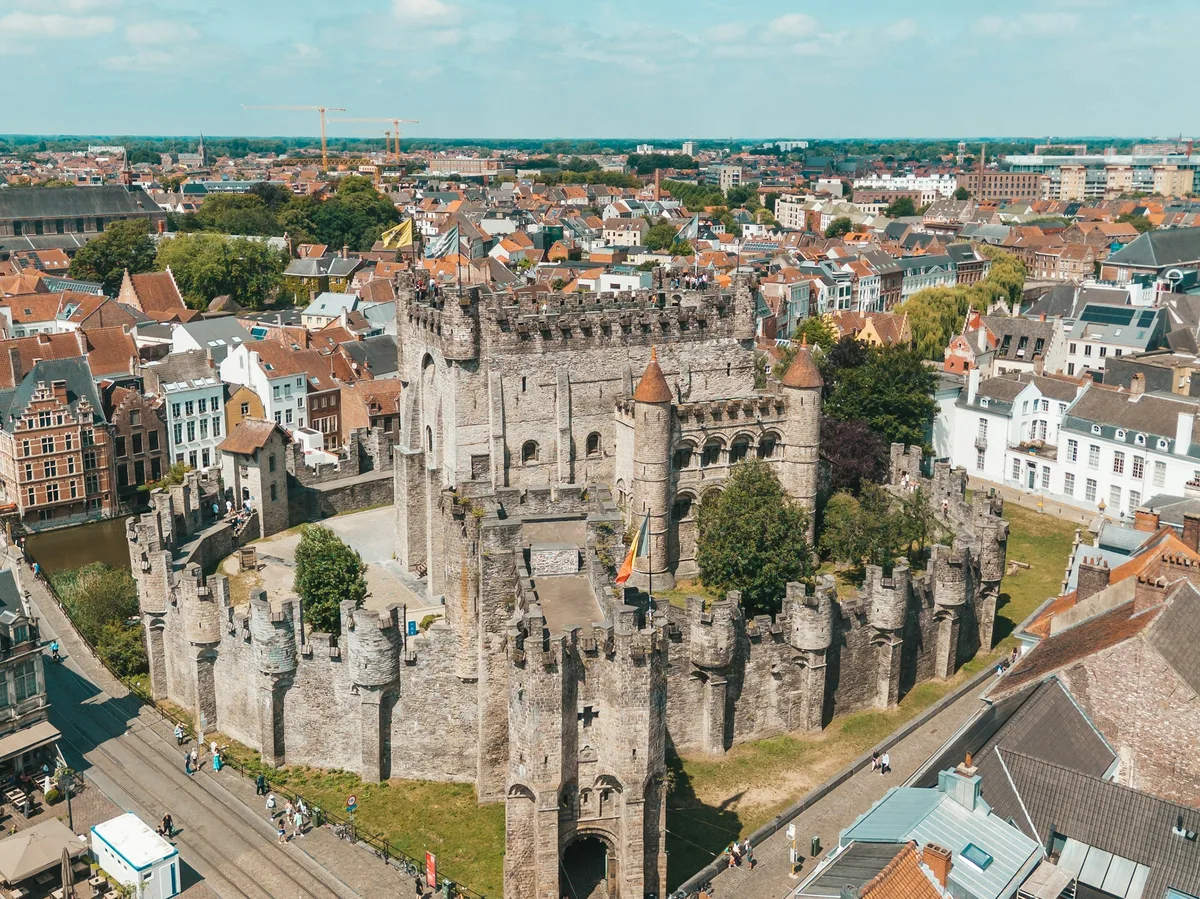
A medieval moated castle in the heart of Ghent, built around 1180 for the Counts of Flanders and still standing complete with its original defensive walls.
 Multi-Day Tours Popular Pick
A 9-day private tour through Belgium's four great cities — Antwerp, Ghent, Bruges, and Brussels — built around guided walking and food tours, chocolate, and Flemish architecture, entirely within Belgium.
 Multi-Day Tours
A 12-day, unhurried private circuit — six nights based in Amsterdam, then five nights based in Ghent with easy day trips to Antwerp and Bruges, built for travelers who prefer fewer hotel changes.
Visitor guide
Gravensteen, meaning the Counts' stone castle, is a medieval moated fortress in the centre of Ghent, in East Flanders, Belgium. Built in 1180 by Philip of Alsace, Count of Flanders, it is owned by the City of Ghent and is among the most complete medieval castles in the region.
The site dates to the reign of Arnulf I, who ruled the County of Flanders between 890 and 965. It sat between two branches of the River Lys and was first fortified around the year 1000, initially in wood and later in stone. That early fortification developed into a motte-and-bailey castle, which burned down around 1176. Philip of Alsace then built the present castle in 1180.
Wikipedia notes that its design may have been inspired by crusader castles that Philip saw during the Second Crusade. It was meant both as a protective citadel and as a way to intimidate the burghers of Ghent, who often challenged the counts' authority. A wolf's foot was once nailed to the gate, which the article cites as the last known archaeozoological evidence of wolves in Flanders.
The castle is built of sandstone and Tournai limestone. It has a large central donjon, a residence and various smaller buildings, all inside an oval fortified enclosure lined with 24 small corner turrets known as echauguettes. A sizeable moat fed by water from the Lys surrounds it, reinforcing the impression of a stronghold planted deliberately in the middle of the city.
The counts used Gravensteen as their residence from 1180 until 1353, when Louis of Male moved the court to the nearby Hof ten Walle. It continued as a court and prison until the 18th century and served as Ghent's mint between 1353 and 1491. Private buildings later rose against and over the medieval remains.
In the 19th century, during Ghent's industrial growth, the castle was converted into a cotton mill and was at one point scheduled for demolition. The city gradually bought parts of it back, and restoration under the architect Joseph De Waele began in 1893. Wikipedia gives the end date as 1903 in one place and 1907 in another. De Waele, influenced by Eugene Viollet-le-Duc, aimed to return the castle to an imagined 12th-century appearance, and some additions such as the flat roofs and the eastern outbuilding windows are not considered historically accurate.
The restored castle was the centrepiece of the Ghent World Fair of 1913, when the city centre was substantially reshaped. On 16 November 1949, 138 Ghent University students occupied the castle in protest at a new beer tax, lowering the portcullis and barricading the gate. They were removed and their campaign failed, but public sympathy meant none were prosecuted.
Today the castle is open to the public as a heritage site, and its courtyard, towers and ramparts give a clear view of how medieval power was displayed in an urban setting. A private guided visit can place the building in the wider story of the counts of Flanders and the independent-minded townspeople of Ghent.
See every tour and attraction we cover in Belgium.