TorontoOntario · 36 tours
 Niagara FallsOntario · 25 tours
 New York CityNew York · 30 tours
 Las VegasNevada · 8 tours
 San FranciscoCalifornia · 16 tours
 VancouverBritish Columbia · 17 tours
 DubaiUAE · 54 tours
 Abu DhabiUAE · 5 tours
 Buenos AiresArgentina · 23 tours
 AthensGreece · 31 tours
 AucklandNew Zealand · 38 tours
 CancunMexico · 54 tours
No destinations match “”. Try searching all tours instead — that search understands full questions, not just place names.
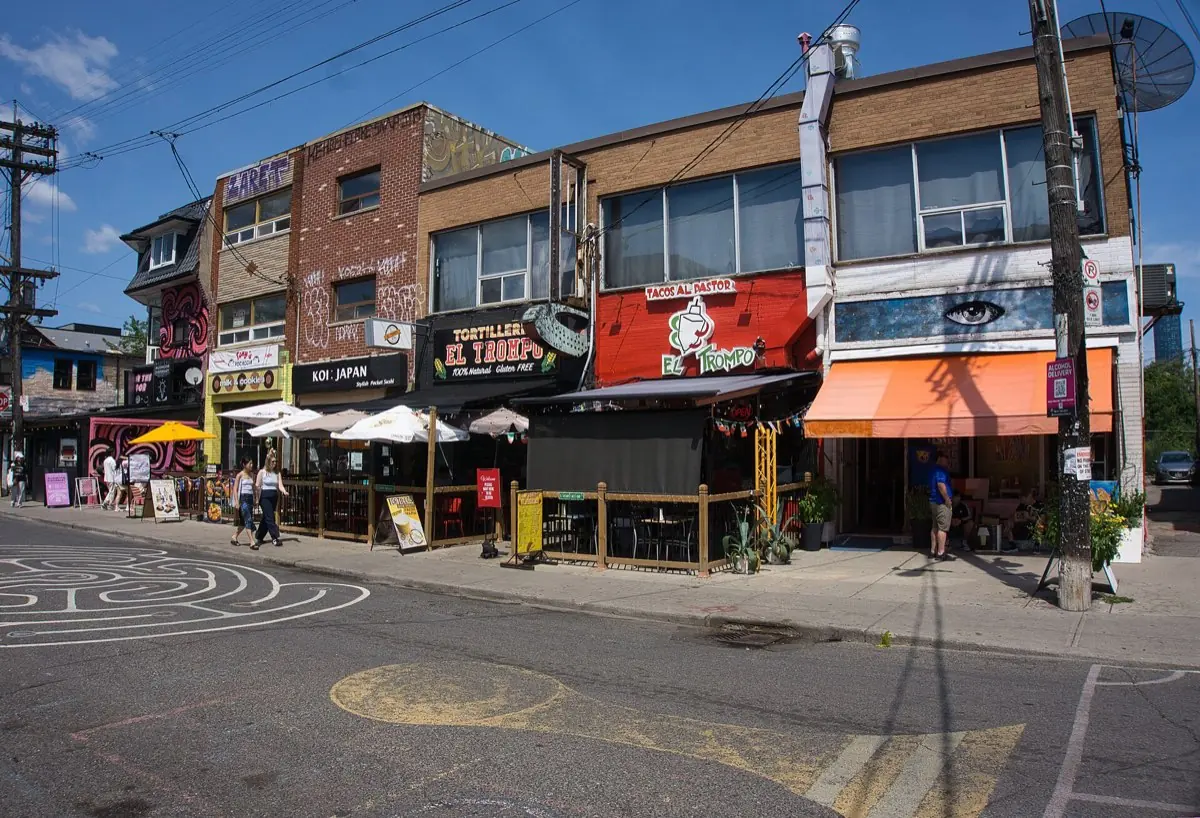
A bohemian, colourful patchwork of vintage shops, murals, and international food stalls.
Visitor guide
Kensington Market is a compact, lived-in neighbourhood west of Spadina Avenue in downtown Toronto, made up of narrow streets of converted Victorian row houses with shops, produce stands, and restaurants at ground level. It was designated a National Historic Site of Canada in November 2006, recognizing its long role as an immigrant gateway. It rewards slow walking more than any particular checklist.
The land was first part of a park lot; George Taylor Denison bought it in 1815 after serving in the War of 1812, and the open space now known as Bellevue Square Park served as a parade ground for his volunteer cavalry troop, later the Governor General's Horse Guards. A brewery operated near St Andrew Street and Kensington Avenue from 1837 until 1894. The Denison estate was subdivided in the 1850s, and in the 1880s small-lot Victorian row houses were built for Irish and Scottish labourers; some of those houses still define the streetscape.
In the early twentieth century, Eastern European Jewish families, along with some Italians, moved here from the crowded immigrant district known as The Ward. By the 1920s it was widely called the Jewish Market, with more than 30 synagogues in the surrounding area. Many families sold goods from their front rooms and yards. After the Second World War most of that community moved north or to the suburbs, and two synagogues, Anshei Minsk (opened 1927) and the Kiever, remain.
Later arrivals included Azorean Portuguese immigrants from the 1950s, Caribbean and East Asian communities, and, in the 1980s and 1990s, newcomers from Central America, Chile, Vietnam, Iran, and parts of East Africa. Wikipedia reports that Chinese residents are now the largest single group. Each wave added stores and restaurants without fully erasing the last, which is the main reason the neighbourhood looks so layered.
In the 1960s plans were floated to demolish the small houses for apartment-style housing, as had happened in nearby Alexandra Park. According to Wikipedia, those plans ended after David Crombie was elected mayor of Toronto, and the fine-grained street pattern survived.
The market's character comes from its independent businesses: vintage clothing shops, spice and dry-goods stores, cheese and fish merchants, bakeries, cafes, and taquerias. Latin American businesses moved into vacated storefronts in the late 1990s and have become part of the area's identity. Murals and handmade signs fill many lanes. The Garden Car, a public art piece and community garden, has been in place since 2007.
Pedestrian Sundays, which began in 2004, close parts of Augusta Avenue, Baldwin Street, and Kensington Avenue to cars for music, street performance, and vendors. The Kensington Market Festival of Lights, a winter solstice parade founded by Ida Carnevali in 1987, is another long-running neighbourhood tradition. Confirm the current schedule for each, as dates and seasons vary by year.
Chinatown along Spadina Avenue and Dundas Street West is immediately to the east, and the Art Gallery of Ontario, Queen Street West, and the University of Toronto campus are within reasonable reach. A private Voyzo tour can pair Kensington with those areas, with your driver waiting at a convenient edge of the neighbourhood while you explore on foot.
See every tour and attraction we cover in Toronto.