TorontoOntario · 36 tours
 Niagara FallsOntario · 25 tours
 New York CityNew York · 30 tours
 Las VegasNevada · 8 tours
 San FranciscoCalifornia · 16 tours
 VancouverBritish Columbia · 17 tours
 DubaiUAE · 54 tours
 Abu DhabiUAE · 5 tours
 Buenos AiresArgentina · 23 tours
 AthensGreece · 31 tours
 AucklandNew Zealand · 38 tours
 CancunMexico · 54 tours
No destinations match “”. Try searching all tours instead — that search understands full questions, not just place names.
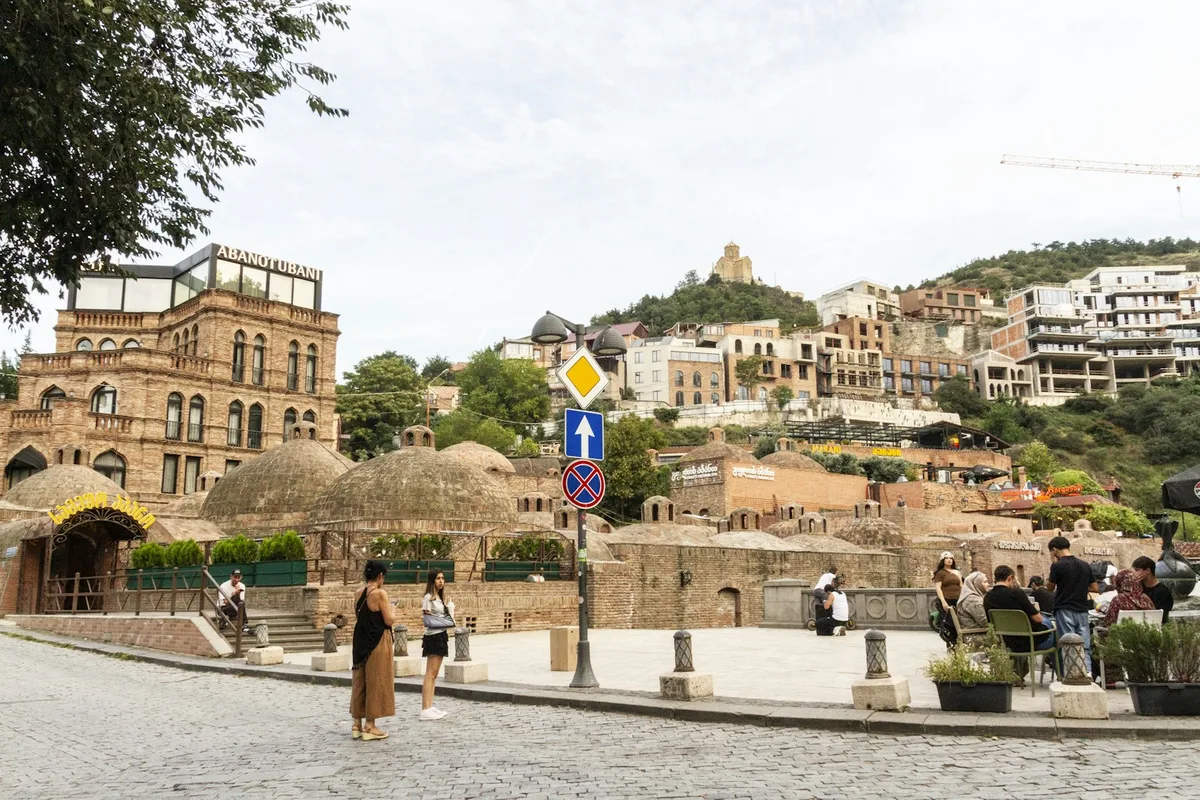
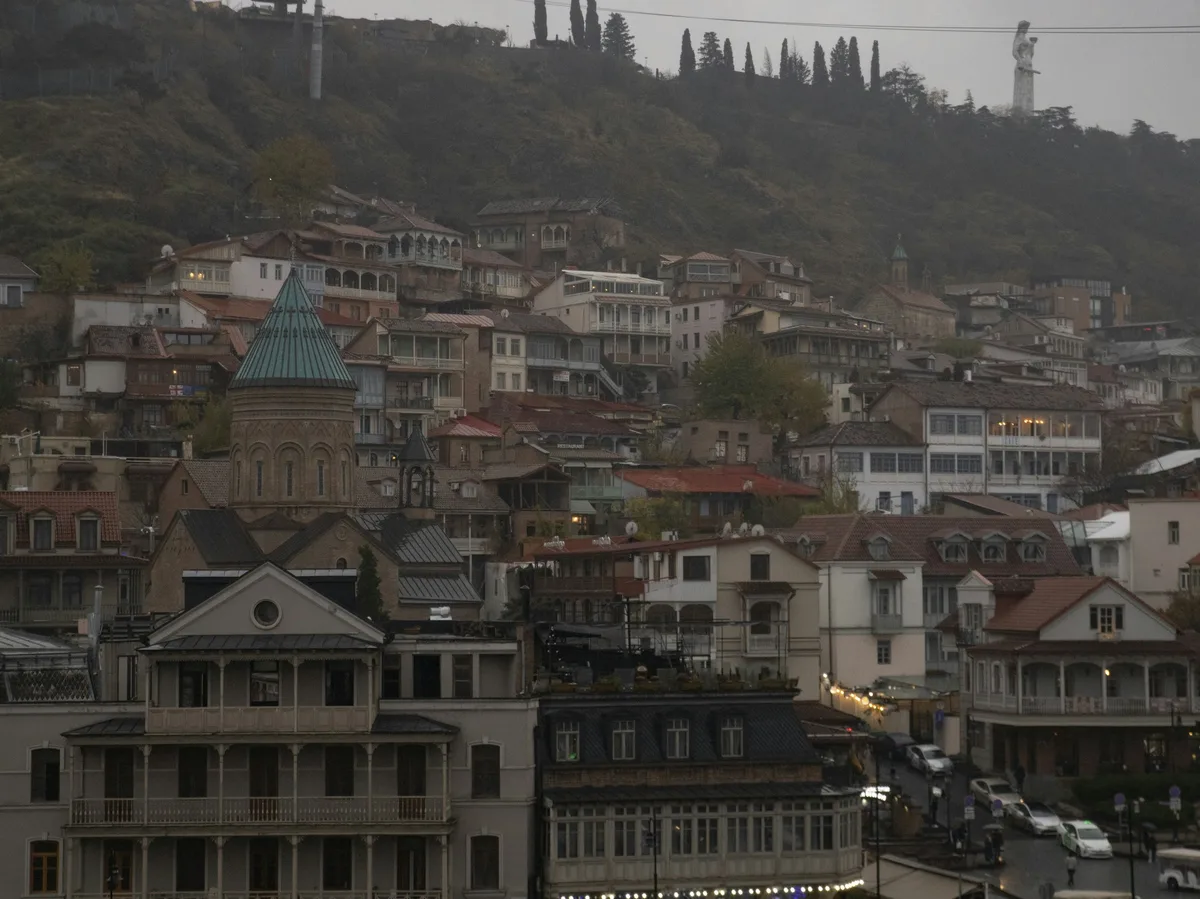
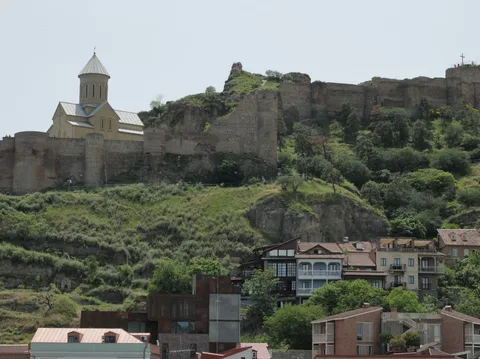
Tbilisi's historic bathhouse district, where brick-domed bathhouses built over natural sulfur springs have drawn bathers for centuries beneath the Narikala Fortress.
Visitor guide
Abanotubani is the historic bath district of Tbilisi, Georgia, set at the foot of Narikala fortress on the eastern bank of the Mtkvari River. Its name means bath district, and its low brick domes covering natural sulfur hot-spring baths are among the most recognisable sights of Old Tbilisi.
The city's own name is tied to these waters. The Georgian word tbili means warm, and the best-known origin story, which should be treated as legend, says King Vakhtang Gorgasali was hunting nearby when his falcon fell into a hot spring and was healed, leading him to found a new capital. Wikipedia's Tbilisi article places the founding legend in the 5th century.
Sources differ on how far back the baths go. Some say research indicates bathhouses were in use by the 3rd century, others say at least the 6th. Sources give about 65 baths recorded in Tbilisi in the 12th or 13th century, and at their peak there were over sixty bathhouses in the city, though around two dozen operate in Abanotubani today according to one guide.
The district suffered repeatedly. In 1795 the Iranian ruler Agha Mohammad Khan captured Tbilisi and left it in ruins, and the bathhouses were destroyed and later rebuilt. During the Persian period the district has been described as a city within a city, with dozens of domed bathhouses, markets and caravansaries. Most of the buildings standing today are much younger than the springs: guides date Chreli Abano and King Erekle's bath to the 17th century, while others, such as Gulo's Thermal Spa and the Royal Bath-House, date from the 19th century.
Architectural influences are described as a blend of Persian, Georgian and Byzantine styles, and later Persian and Ottoman influences added tiled interiors. The domes are often described as low brick buildings half submerged into the ground with only the roof visible from the street. Sources disagree on the purpose of the domes: one says they trap steam, another says they allow light in and let sulfurous steam escape.
Chreli Abano, also known as the Orbeliani Baths, is the showier above-ground building, with a blue-tile facade and pointed arches that recall Central Asian and Persian design. Alexander Pushkin is the most-cited famous visitor, reportedly in 1829, though the exact wording of his praise varies and could not be confirmed. Alexandre Dumas and Anton Chekhov are also named in some guides.
Guides say visitors can book private rooms or use public halls, and men and women use separate sections. Most people today come for the atmosphere rather than any remedial benefit, and visitors with health conditions should check with a doctor before using hot baths.
The district sits immediately below Narikala and within walking distance of the old town streets, so a guide can combine the baths with a walk through Old Tbilisi.
See every tour and attraction we cover in Georgia.