TorontoOntario · 36 tours
 Niagara FallsOntario · 25 tours
 New York CityNew York · 30 tours
 Las VegasNevada · 8 tours
 San FranciscoCalifornia · 16 tours
 VancouverBritish Columbia · 17 tours
 DubaiUAE · 54 tours
 Abu DhabiUAE · 5 tours
 Buenos AiresArgentina · 23 tours
 AthensGreece · 31 tours
 AucklandNew Zealand · 38 tours
 CancunMexico · 54 tours
No destinations match “”. Try searching all tours instead — that search understands full questions, not just place names.
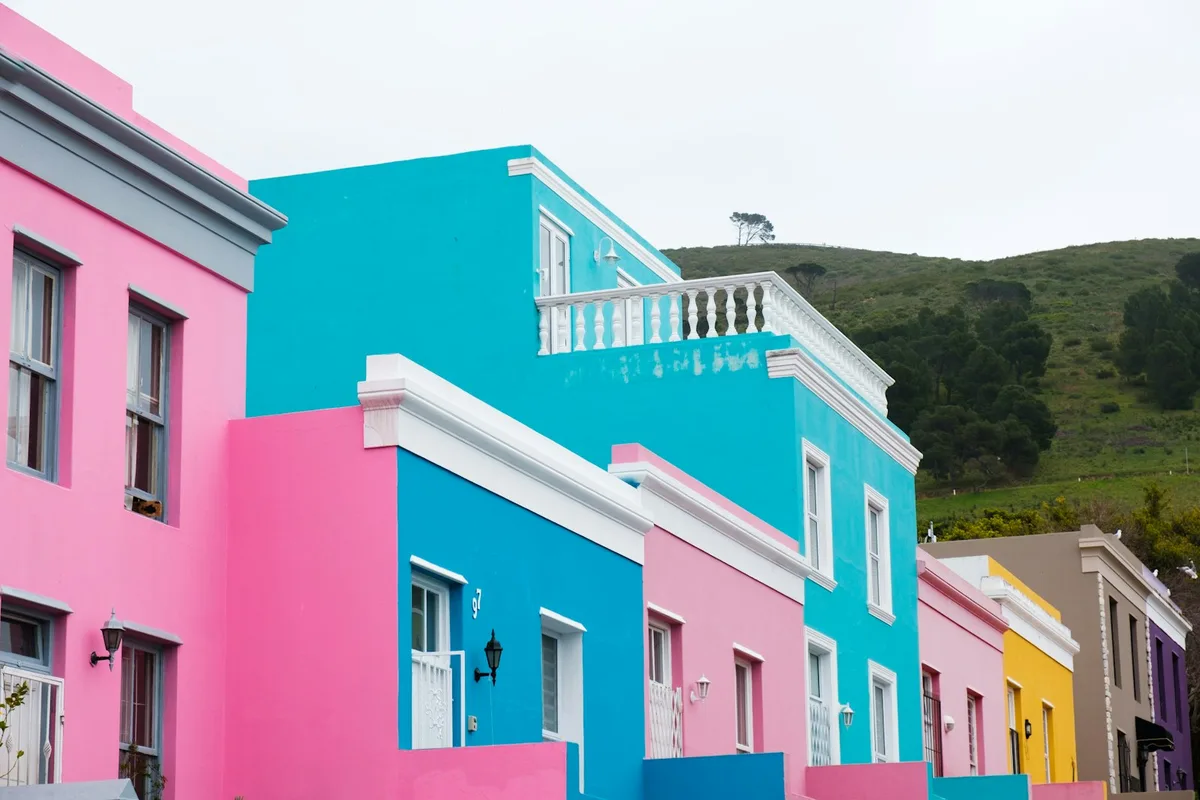
A Cape Town neighborhood on the slopes of Signal Hill, its cobbled streets lined with brightly painted 18th- and 19th-century houses built by the Cape Malay community.
Visitor guide
Bo-Kaap is a neighbourhood on the slopes of Signal Hill above central Cape Town, South Africa, known for its brightly painted houses and cobbled streets. Its name is Afrikaans for above the Cape, and it was formerly called the Malay Quarter. It remains a historical centre of Cape Malay culture.
According to Wikipedia, in 1760 Jan de Waal bought land at the foot of Signal Hill, and from 1763 he built small rental houses called huurhuisjes and leased them to his slaves. The first were at 71 Wale Street, now the Bo-Kaap Museum, and 42 Leeuwen Street. Skilled Muslim workers called Mardijkers moved to the Cape from Southeast Asia and settled in the area. The Malay label comes from enslaved people brought from Malaysia, Indonesia and parts of Africa. The Auwal Mosque on Dorp Street, built in 1794, was the first mosque in the area, and the Tana Baru cemetery was founded in 1804. Around 1820, political exiles from Java and Ceylon arrived. After emancipation in 1834, developers built many narrow rows of huurhuisjes for newly freed people.
Housing in the Cape Dutch and Cape Georgian styles was built between 1790 and 1825 for tradesmen and craftsmen. The South African Heritage Resources Agency says Bo-Kaap has the largest concentration of pre-1850 architecture in South Africa and is the oldest surviving residential neighbourhood in Cape Town. The bright colours are often linked to freed residents celebrating after houses were leased white, but Wikipedia notes this explanation is not firmly sourced and that the colourful tradition appears to date to the late twentieth century.
Muslim identity remains central to the community. Wikipedia reports that in 2011 the area had about 3,203 residents, of whom around 56.9 percent identified as Muslim, and that the Nurul Islam Mosque, established in 1844, is located there. The neighbourhood was historically multicultural, with Indian, Filipino, African, Portuguese and Italian residents at different times.
The museum occupies a building from the 1760s and is the oldest house in the area still in its original form. It showcases the contributions of early Muslim settlers, many of them tailors, carpenters, shoemakers and builders, with nineteenth-century furnishings including a Cape drop-leaf dining table and a bridal chamber. It is recognisable by its voorstoep, a front terrace with benches at each end.
Under apartheid, Bo-Kaap was not bulldozed like nearby District Six, but non-Malay residents were removed under the Group Areas Act. Restoration began in 1943 with 15 houses, part of the area became a National Monument in 1966, and the city restored houses through the 1970s. In March 2019 the City of Cape Town approved a Heritage Protection Overlay Zone covering about 600 privately owned properties, and on 30 April 2019 SAHRA declared 19 sites in the Bo-Kaap National Heritage Sites. Concern about gentrification and evictions of long-term residents continues to be reported.
The area is best explored on foot with respect for residents, since these are private homes and many people live and pray here. A private guided visit with a driver and a local guide can place Bo-Kaap alongside other Cape Town sights.
See every tour and attraction we cover in South Africa.