TorontoOntario · 36 tours
 Niagara FallsOntario · 25 tours
 New York CityNew York · 30 tours
 Las VegasNevada · 8 tours
 San FranciscoCalifornia · 16 tours
 VancouverBritish Columbia · 17 tours
 DubaiUAE · 54 tours
 Abu DhabiUAE · 5 tours
 Buenos AiresArgentina · 23 tours
 AthensGreece · 31 tours
 AucklandNew Zealand · 38 tours
 CancunMexico · 54 tours
No destinations match “”. Try searching all tours instead — that search understands full questions, not just place names.
A major national museum documenting Canada's military history, on the Ottawa River.
Visitor guide
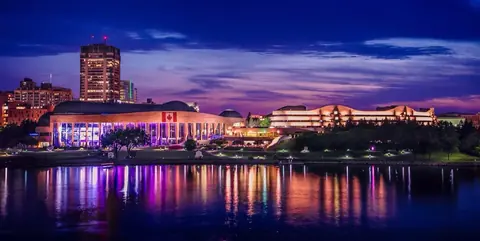
The Canadian War Museum is Canada's national museum of military history, in a low, angular concrete building at 1 Vimy Place on LeBreton Flats, southwest of Parliament Hill. It opened there on 8 May 2005, the 60th anniversary of Victory in Europe Day. Its galleries emphasize the human experience of war, from early conflicts on Canadian soil to the Cold War and after.
The museum traces its roots to 1880, when a military museum was established at Cartier Square in Ottawa, and its early collection was mostly militia artifacts. After that museum closed in 1896, a War Trophies Building was built in 1924 and the Canadian War Museum formally opened in January 1942. It later passed through several federal homes, and in 1990 came under the Canadian Museum of Civilization Corporation, now the Canadian Museum of History. A new site at LeBreton Flats, a former industrial area that had been contaminated, was chosen in 2001, and the Moriyama & Teshima and Griffiths Rankin Cook design won that year. Groundbreaking was in November 2002, and the total project cost was about C$135 million, of which the building itself was about C$96 million.
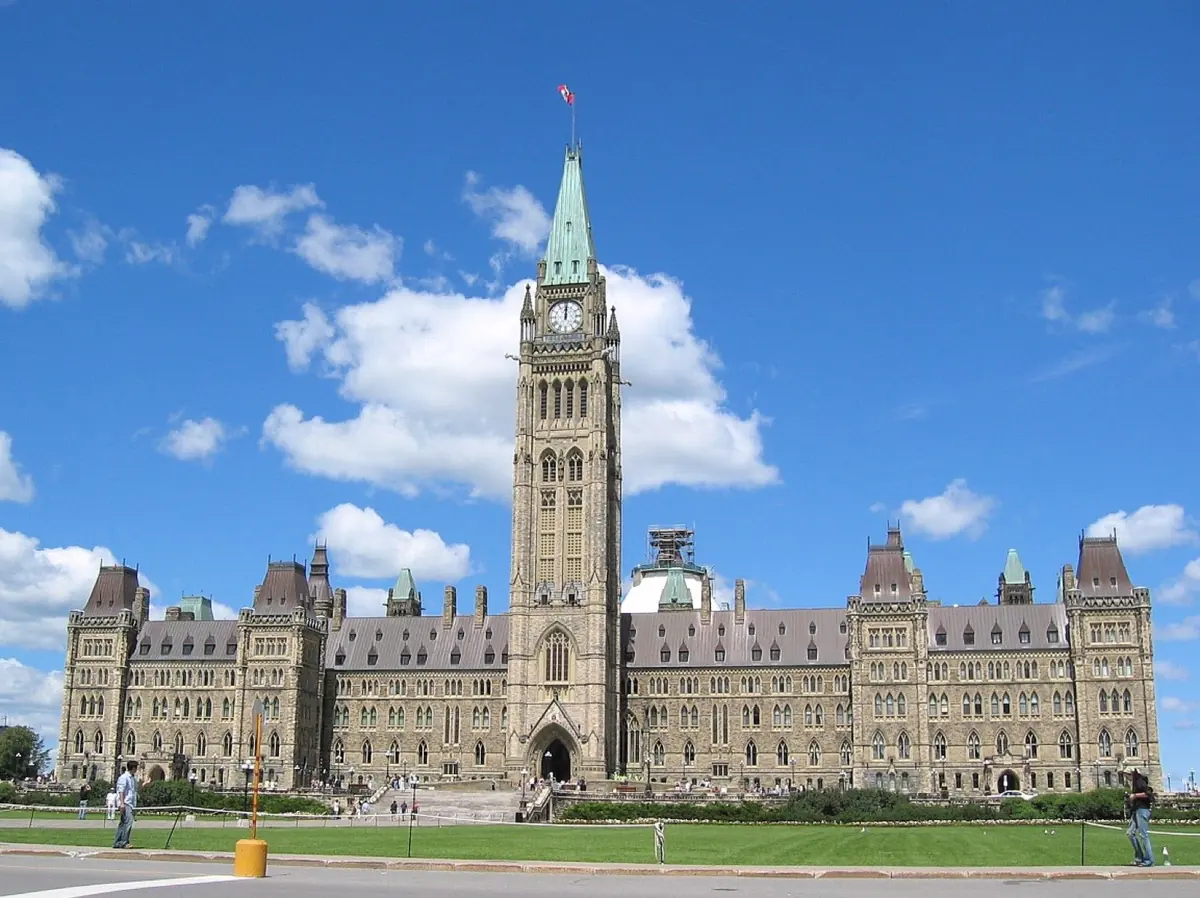
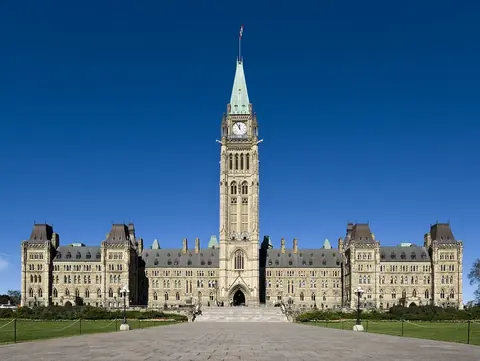
The building's theme is regeneration. Its sloped, rough-textured concrete walls suggest instability and trauma, and a green roof of about 10,684 square metres, which the museum calls one of the largest of its kind in Canada, tops it. The highest point, at 24 metres, faces the Peace Tower on Parliament Hill, and Morse code windows on the north peak spell 'lest we forget'. Memorial Hall is a quiet, nearly empty room that holds one artifact: the original headstone of the soldier later reburied at the Tomb of the Unknown Soldier. The room is oriented so that sunlight falls on the headstone only at 11 a.m. on 11 November, the moment the 1918 Armistice took effect.
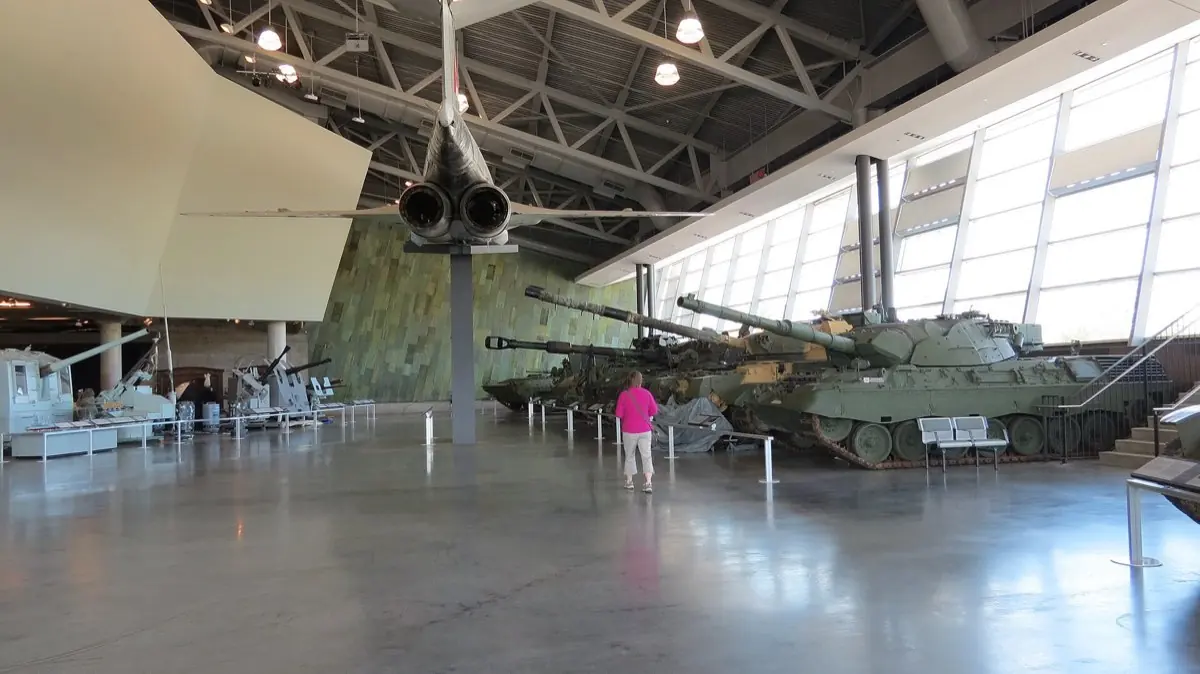
Four chronological Canadian Experience galleries cover about 5,000 square metres: Early Wars in Canada, South African and the First World War, Second World War, and From the Cold War to the Present. The LeBreton Gallery has large vehicles and artillery, including a McDonnell CF-101 Voodoo jet. Regeneration Hall holds the original models for the Canadian National Vimy Memorial and Charles Sims's painting Sacrifice, and the Royal Canadian Legion Hall of Honour centres on the original plaster model of the National War Memorial.
The museum's own site says it holds more than three million artifacts, specimens, artworks, documents and recordings, including the Beaverbrook Collection of War Art, which it cites at about 14,000 works. Counts differ between sources (Wikipedia gives over 500,000 items), so treat figures as approximate. It also holds a substantial share of the Victoria Crosses awarded to Canadians. The Military History Research Centre houses the George Metcalf Archival Collection and the Hartland Molson Library.
Shortly after opening, a label on the Combined Bomber Offensive in the Second World War gallery drew complaints from veterans, a Senate subcommittee reviewed it, and the label was replaced. The incident is a useful reminder that how war is interpreted is itself a live public question in this museum.
Check warmuseum.ca for current hours, tickets, exhibitions and any gallery closures. Allow time for Memorial Hall even if you skip the main galleries.
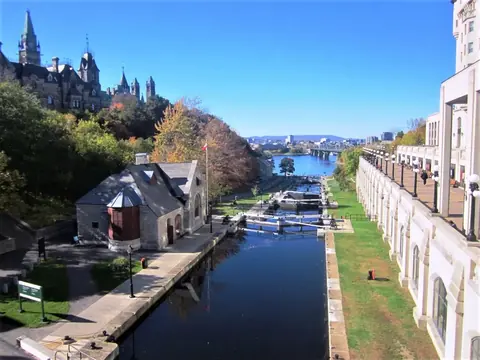
The museum is close to the Ottawa River pathways and the Ottawa Locks area. A Voyzo private driver can collect you at your hotel door and take you straight to the entrance, then continue on to Parliament Hill or the Rideau Canal when you are ready.
See every tour and attraction we cover in Ottawa.