TorontoOntario · 36 tours
 Niagara FallsOntario · 25 tours
 New York CityNew York · 30 tours
 Las VegasNevada · 8 tours
 San FranciscoCalifornia · 16 tours
 VancouverBritish Columbia · 17 tours
 DubaiUAE · 54 tours
 Abu DhabiUAE · 5 tours
 Buenos AiresArgentina · 23 tours
 AthensGreece · 31 tours
 AucklandNew Zealand · 38 tours
 CancunMexico · 54 tours
No destinations match “”. Try searching all tours instead — that search understands full questions, not just place names.
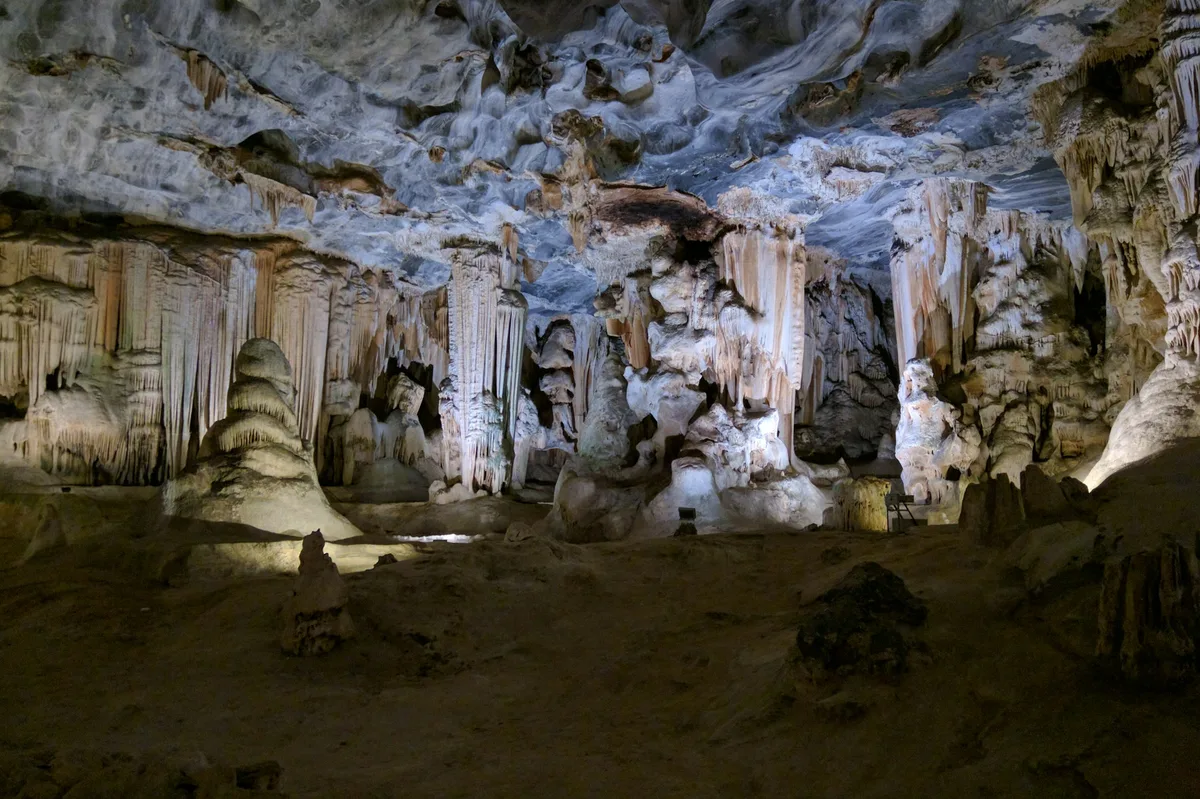
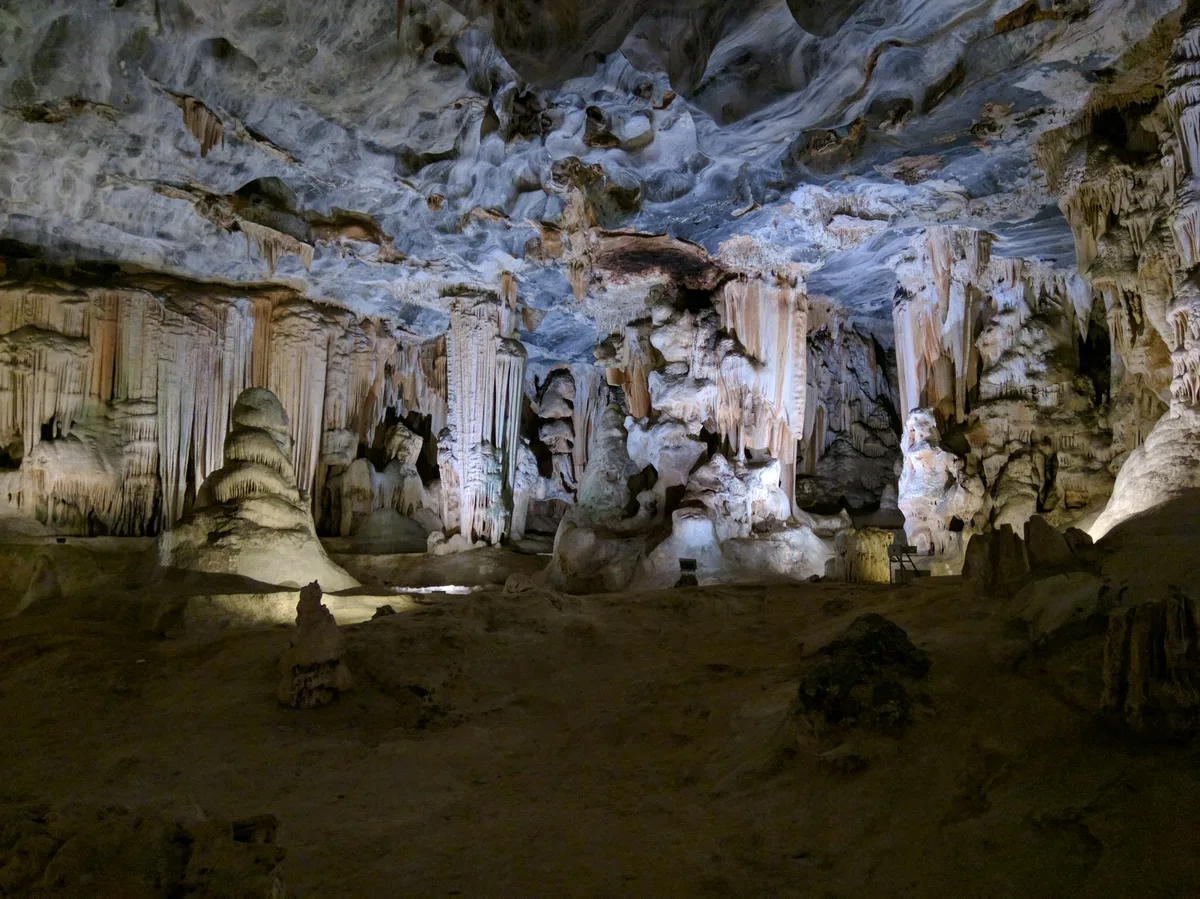
A vast limestone cave system near Oudtshoorn in the Klein Karoo, its chambers of stalactites and stalagmites among the largest and best-known in South Africa.
Visitor guide
The Cango Caves are a limestone cave system in South Africa's Western Cape, in the foothills of the Swartberg mountains near the town of Oudtshoorn. Known for large chambers filled with stalactites and stalagmites, they are among the best-known caves in the country.
Oudtshoorn is the largest town in the Klein Karoo, between the Swartberg mountains to the north and the Outeniqua Mountains to the south. It was founded in 1848 and is known as the ostrich capital of the world, with ostrich feather booms in the 1860s and again between 1900 and 1914 that funded grand houses known as feather palaces. The Cango Caves are one of the area's main tourist attractions, alongside ostrich farms and the Cango Wildlife Ranch. The caves lie in Precambrian limestone.
Wikipedia says the caves were rediscovered in modern times in 1780 by a local farmer named Jacobus van Zyl. The first chamber he entered, now called Van Zyl's Hall, is said to be as long as a football field. A second chamber was found in 1792, and a rough survey in 1897 mapped the first 26 chambers. Later exploration in 1972 and 1975 found further sections known as Cango II and Cango III. Cave paintings and artefacts show use during the Middle and Later Stone Ages, and a 1930 test excavation by A. J. H. Goodwin recovered stone artefacts. A legend says that a guide named Johnny van Wassenaer walked for 29 hours to a far end of the caves in 1898, but this is presented as legend rather than record.
The known tunnels and chambers extend over 4 kilometres, but only about a quarter is open to visitors, and only in guided groups. Sources differ on the size of the largest chamber, with figures in the region of 200 to 300 metres in length. The caves contain halls and speleothems, the limestone formations created over long periods by dripping water. The closest point to the surface is at the top of a shaft in the Devil's Kitchen, about 52.6 metres above the floor.
Two tours are described. The Standard Tour lasts about an hour, while the Adventure Tour lasts about an hour and a half and involves crawling through narrow passages and climbing over rock formations, so it is not suitable for everyone. Day-to-day management falls to the Oudtshoorn municipality.
Oudtshoorn has warm summers, with average daily highs around 29 degrees Celsius in January, and cool winters, with lows around 6 degrees in July. Rainfall averages about 371 millimetres a year. The surrounding region is also known for a diverse range of succulent plants.
A private guided visit with a driver can combine the caves with an ostrich farm and a drive over the Swartberg, depending on the route chosen. Tours inside the caves are run by the site's own guides.
See every tour and attraction we cover in South Africa.