TorontoOntario · 36 tours
 Niagara FallsOntario · 25 tours
 New York CityNew York · 30 tours
 Las VegasNevada · 8 tours
 San FranciscoCalifornia · 16 tours
 VancouverBritish Columbia · 17 tours
 DubaiUAE · 54 tours
 Abu DhabiUAE · 5 tours
 Buenos AiresArgentina · 23 tours
 AthensGreece · 31 tours
 AucklandNew Zealand · 38 tours
 CancunMexico · 54 tours
No destinations match “”. Try searching all tours instead — that search understands full questions, not just place names.
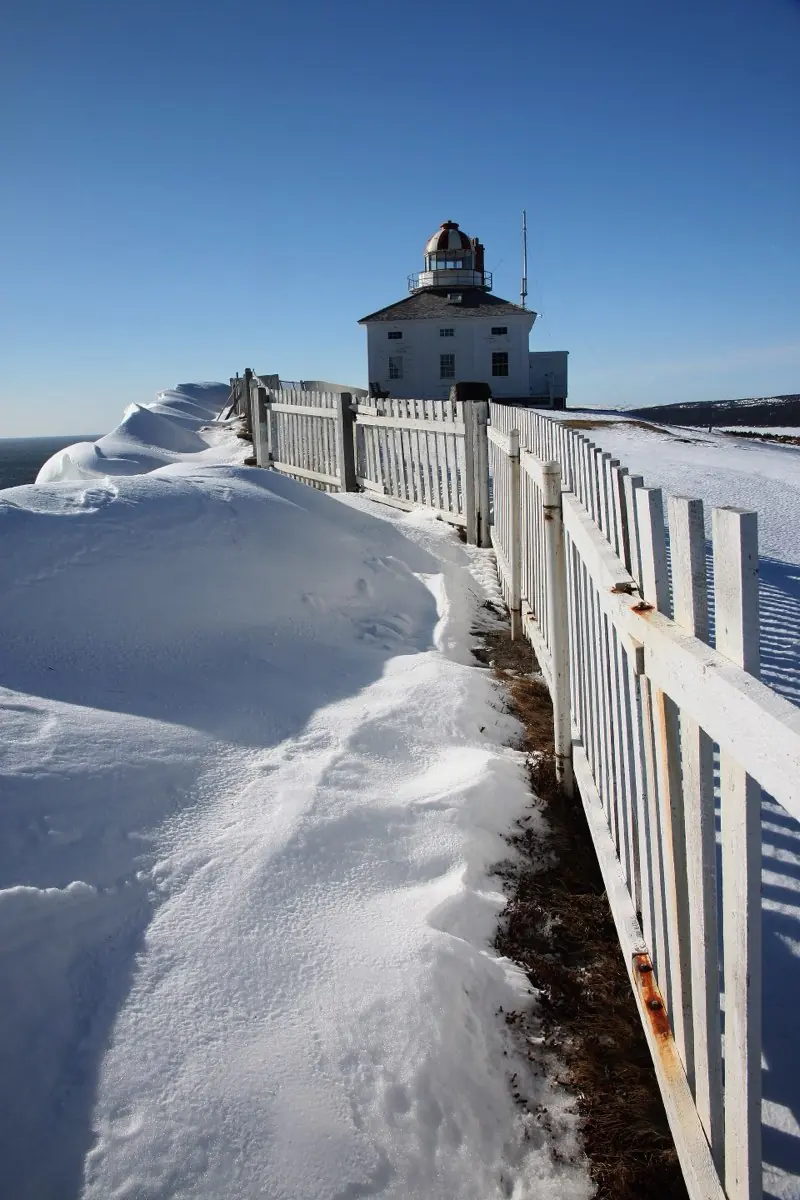
The easternmost point in North America, home to Newfoundland's oldest surviving lighthouse.
Visitor guide
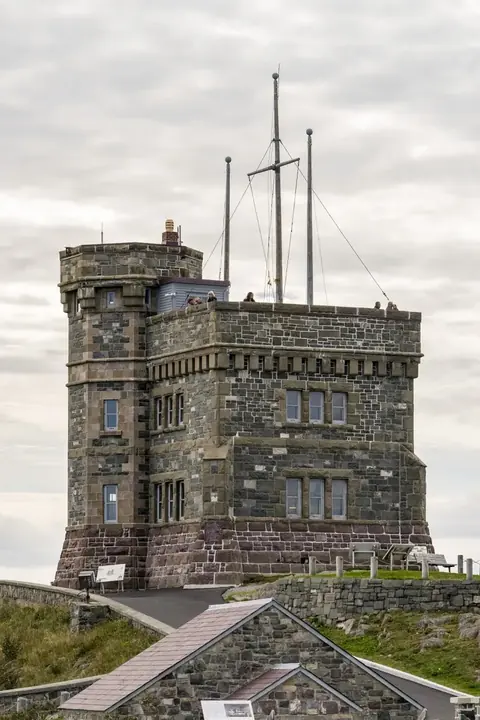
Cape Spear is a rocky headland on the Avalon Peninsula, within the city of St. John's roughly 12 km from downtown. At about 52°37' W it is generally cited as the most easterly point of land in Canada and in North America excluding Greenland. The site is Cape Spear Lighthouse National Historic Site, home to the oldest surviving lighthouse in Newfoundland and Labrador.
The headland is thought to take its name from the Portuguese Cabo da Esperança ('cape of hope'), which became Cap d'Espoir in French and eventually 'Cape Spear'. Wikipedia lists its elevation at about 75 m. It is also a trailhead for two sections of the East Coast Trail. The coast here is exposed, and Parks Canada has warned visitors that large, unpredictable waves have swept people off the rocks, so keep well back from the water.
The colonial legislature set up a lighthouse board in 1832 and authorised funding in 1834. St. John's builders Nicholas Croke and William Parker began work that year, using plans drawn from the Northern Lighthouse Board in Scotland, and Parks Canada says the light was operational by September 1836. Wikipedia says it was the second lighthouse built in Newfoundland, after Fort Amherst in 1810. The square, neoclassical building has a domed light tower rising from its centre, and it was first lit with whale oil. A foghorn was added in 1878 and the light was electrified in 1930.
The light was kept by only a few families. Emanuel Warre served from 1836 to 1846, and then James Cantwell took over; he reportedly won the post after guiding a ship through fog, and kept the light until 1879. Members of the Cantwell family stayed on as keepers for well over a century, with two interruptions, and Gerald Cantwell was keeper until 1997 according to Wikipedia. Those later dates cover the new tower, since the original lighthouse stopped being the active light in 1955.
In 1955 a concrete octagonal tower about 13.7 m high was built nearby and the historic lens moved into it; it remains the working light, operated for navigation. The Department of Transport reportedly planned to demolish the old building, but protests by local heritage supporters saved it. It was recognised as a National Historic Site in 1962 (Wikipedia also notes a separate designation under the Heritage Lighthouse Protection Act in 2016). Parks Canada restored the lighthouse to its appearance of about 1839 as a light keeper's residence; its management plan says the site was acquired in 1964 and established as a national historic site in 1975, and other sources give different restoration and opening dates.
Convoys passed this coast during the Second World War, so a Canadian-manned gun battery was installed to guard the harbour entrance, with two 10-inch guns on disappearing carriages that were ex-US Lend-Lease equipment. Barracks and underground passages connected the gun positions, and the gun barrels remain in place today. A US Army radar station was also built in 1942 and operated until 1945. Parks Canada interprets both the 1830s keeper's life and wartime Cape Spear.
See every tour and attraction we cover in St. John's.