TorontoOntario · 36 tours
 Niagara FallsOntario · 25 tours
 New York CityNew York · 30 tours
 Las VegasNevada · 8 tours
 San FranciscoCalifornia · 16 tours
 VancouverBritish Columbia · 17 tours
 DubaiUAE · 54 tours
 Abu DhabiUAE · 5 tours
 Buenos AiresArgentina · 23 tours
 AthensGreece · 31 tours
 AucklandNew Zealand · 38 tours
 CancunMexico · 54 tours
No destinations match “”. Try searching all tours instead — that search understands full questions, not just place names.
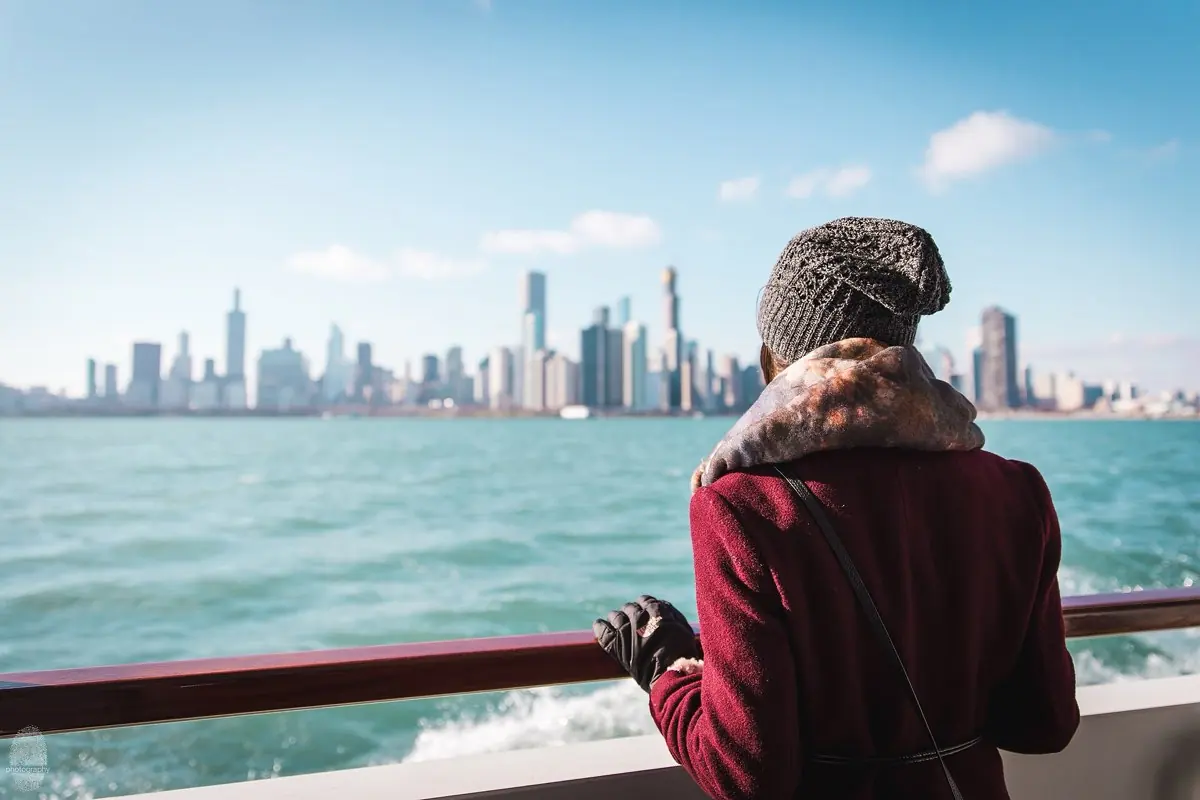
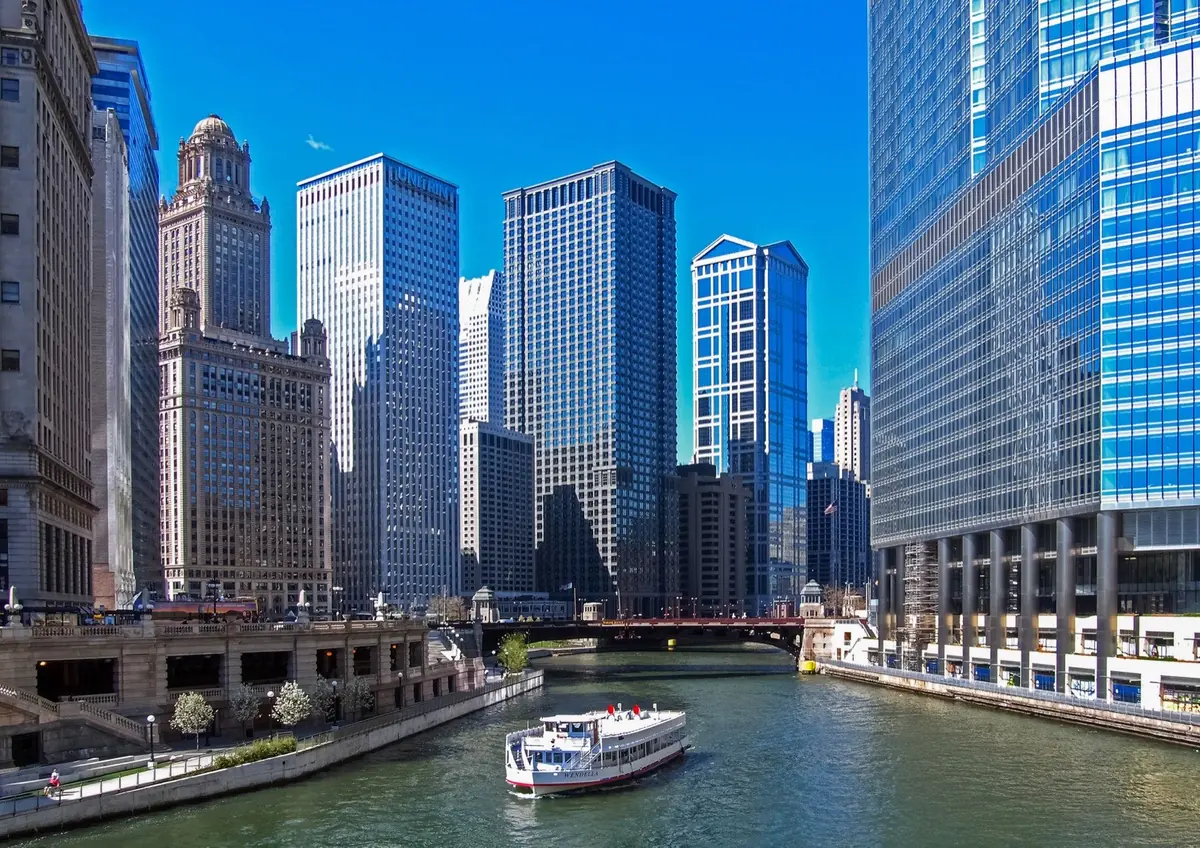
A boat tour on the Chicago River narrating the city's landmark architecture.
Visitor guide
The Chicago Architecture Center's river cruise is a docent-narrated boat tour of the Chicago River's downtown corridor, run by the Center together with Chicago's First Lady Cruises. It grew out of a one-off private charter in 1983 and has become the Center's best-known public tour, a water-level lesson in how the city built, rebuilt and reimagined itself around its river.
According to the Center's own history of the program, the international design convention NeoCon, held at the Merchandise Mart, asked the organization in 1983 to guide a private boat tour so attendees could see Chicago from the water. Bob Irving, a member of the Center's 1971 docent class, led it. A 2008 trade-press article quoting the organization under its earlier name tells the story slightly differently, saying a rug company chartered a boat and wanted commentary for visiting clients; both versions credit Irving with adapting the content from the foundation's existing architecture walking tours.
That first trip was reportedly one-way, with passengers bussed back to the dock. In 1984 the organization secured a 50-foot boat, the Betty Jane, for a weekly public architecture cruise, and departures multiplied over the following years. The Center itself began in 1966 as the Chicago School of Architecture Foundation, formed to save H. H. Richardson's Glessner House; the Center describes itself as originally the Chicago Architecture Foundation, and it took its current name, the Chicago Architecture Center, in 2018.
The cruise makes more sense once you know the river. The main stem flows west from Lake Michigan to Wolf Point, where the North Branch joins and the South Branch heads south and west. Around 1900 the Sanitary District of Chicago reversed the flow of the main stem and South Branch so that the river drains away from the lake into a new canal, an engineering feat the American Society of Civil Engineers later named a Civil Engineering Monument of the Millennium in 1999. Decades of sewage and industrial waste had left the river badly polluted; cleanup accelerated in the 1990s, and the Center's history notes that by the 1970s and 1980s architects were beginning to design buildings in relation to the water rather than turning their backs on it.
Fort Dearborn, established in 1803, once stood near the present-day Michigan Avenue Bridge. That bridge opened in 1920 as part of Daniel Burnham's 1909 Plan of Chicago and was designated a Chicago Landmark in 1991; its bridge houses, designed by Edward Bennett with Pihlfeldt and Young, are a good example of the river's movable-bridge architecture. Chicago's river has 38 movable bridges today, down from a peak of 52, according to Wikipedia's river article.
The route runs through the heart of the downtown river corridor, where skyscrapers rise straight from the banks. Two of the best-known neighbors are the Wrigley Building and Tribune Tower, both part of the Michigan-Wacker Historic District near the Michigan Avenue Bridge; Tribune Tower became a Chicago Landmark in 1989. Docents trace how styles shift from Beaux-Arts and Gothic Revival towers of the 1920s to later glass-and-steel designs, and explain why so many buildings turn to face the river today. The south bank is lined by the Chicago Riverwalk, developed in stages since the early 2000s with roots in the 1909 Burnham plan.
The Center says its certified docents receive hundreds of hours of training, and that depth shows in the commentary, which blends engineering, social history and design. The Center says the cruise departs multiple times daily from March to November; check the Center and Chicago's First Lady Cruises for current schedules, boarding locations and conditions.
Because the Center's public cruise is run on fixed departures, a private-vehicle itinerary is best used to arrange timing around it. With Voyzo, your private driver and vehicle can collect you door to door and position the day around your boarding time, and then continue to nearby sights afterward. For anyone curious about the Center's exhibits, its 2009 Chicago Model, a 3D-printed scale model of central Chicago, is on permanent display at its building on East Wacker Drive, according to Wikipedia.
See every tour and attraction we cover in Chicago.