TorontoOntario · 36 tours
 Niagara FallsOntario · 25 tours
 New York CityNew York · 30 tours
 Las VegasNevada · 8 tours
 San FranciscoCalifornia · 16 tours
 VancouverBritish Columbia · 17 tours
 DubaiUAE · 54 tours
 Abu DhabiUAE · 5 tours
 Buenos AiresArgentina · 23 tours
 AthensGreece · 31 tours
 AucklandNew Zealand · 38 tours
 CancunMexico · 54 tours
No destinations match “”. Try searching all tours instead — that search understands full questions, not just place names.
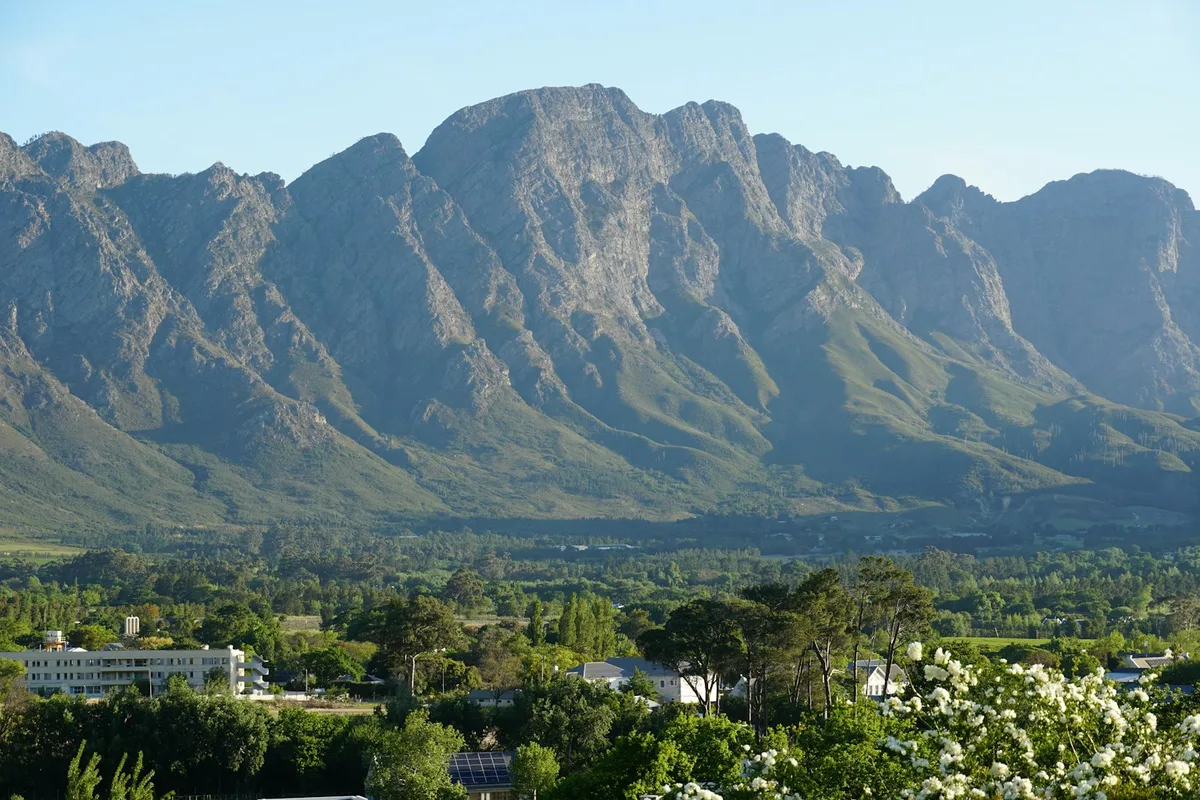
A Cape Winelands town founded by French Huguenot refugees in the 1680s, its valley ringed by mountains and dense with wine estates along the scenic Franschhoek Pass.
Visitor guide
Franschhoek is a small town in South Africa's Western Cape, about 75 kilometres from Cape Town, set in a mountain-ringed valley. Founded by French Huguenot refugees in the late seventeenth century, it is now a centre of wine estates, Cape Dutch architecture and a food culture that draws on its French roots.
The name is Afrikaans for French Corner. Wikipedia notes it was once called Oliphants hoek, after the elephants that roamed the valley. After Louis XIV banned Protestantism in France in 1685, many Huguenots fled, and almost 300 are said to have arrived at the Cape of Good Hope in 1688 and been given the valley to settle, though that detail is flagged as needing a citation. Settlers named many farms after regions they had left, such as La Motte, Champagne, Bourgogne and La Provence. Many of those farms became wineries. French surnames common in the area include Theron, Du Toit, Marais and Du Plessis. Over time, Dutch and British colonial schooling gradually replaced the settlers' language.
The Huguenot Monument stands at the end of the town, next to the Huguenot Memorial Museum, which displays tools used for winemaking, clothing and material on Huguenot culture. Cape Dutch architecture remains largely intact because renovation and construction are restricted. A railway branch line from Paarl opened in 1904 to help farmers reach markets and closed in the 1990s, and it was reinstated in 2012 as the Franschhoek Wine Tram, which uses double-decker trams to carry visitors between wine estates.
Franschhoek is one of the main areas of the Cape Winelands, alongside Stellenbosch and Paarl. Wikipedia says the village has more than 30 wine farms against the Franschhoek and Drakenstein mountains. Its restaurants include the Tasting Room, and the Haute Cabriere vineyard is among its estates. The Bastille Festival has been held every July since 1994.
The wider Cape Winelands, locally called the Boland or uplands, are described by Wikipedia as the largest wine-producing area in South Africa, with six main wine regions: Constantia, Stellenbosch, Franschhoek, Paarl, Robertson and Wellington. Wine-making in the country is recorded from 2 February 1659, when Jan van Riebeeck produced the first wine noted in South Africa. Western Cape wines range from sturdy Rhone-style reds to aromatic Sauvignon blancs from vineyards cooled by Atlantic breezes, and Franschhoek's estates sit within that wider tradition. The valley is framed by the Franschhoek and Drakenstein mountains, which give the town its enclosed, scenic feel.
The town has a hot-summer Mediterranean climate, with warm, dry summers and mild to cool, wet winters. Because it lies inland in a valley, it is more continental than Cape Town, with colder winter lows and hotter summer highs. Average annual rainfall is about 716 millimetres.
The town proper has about 1,000 residents, and the wider area, including Groendal and Wemmershoek, has slightly over 20,000. Since 2000 it has been part of Stellenbosch Municipality.
Visitors usually come for tasting, dining and the scenery of the surrounding passes. A private guided visit with a driver means tasting is not limited by driving, and tastings are generally booked ahead. The route from Cape Town can be combined with Stellenbosch or Paarl on the same day.
See every tour and attraction we cover in South Africa.