TorontoOntario · 36 tours
 Niagara FallsOntario · 25 tours
 New York CityNew York · 30 tours
 Las VegasNevada · 8 tours
 San FranciscoCalifornia · 16 tours
 VancouverBritish Columbia · 17 tours
 DubaiUAE · 54 tours
 Abu DhabiUAE · 5 tours
 Buenos AiresArgentina · 23 tours
 AthensGreece · 31 tours
 AucklandNew Zealand · 38 tours
 CancunMexico · 54 tours
No destinations match “”. Try searching all tours instead — that search understands full questions, not just place names.
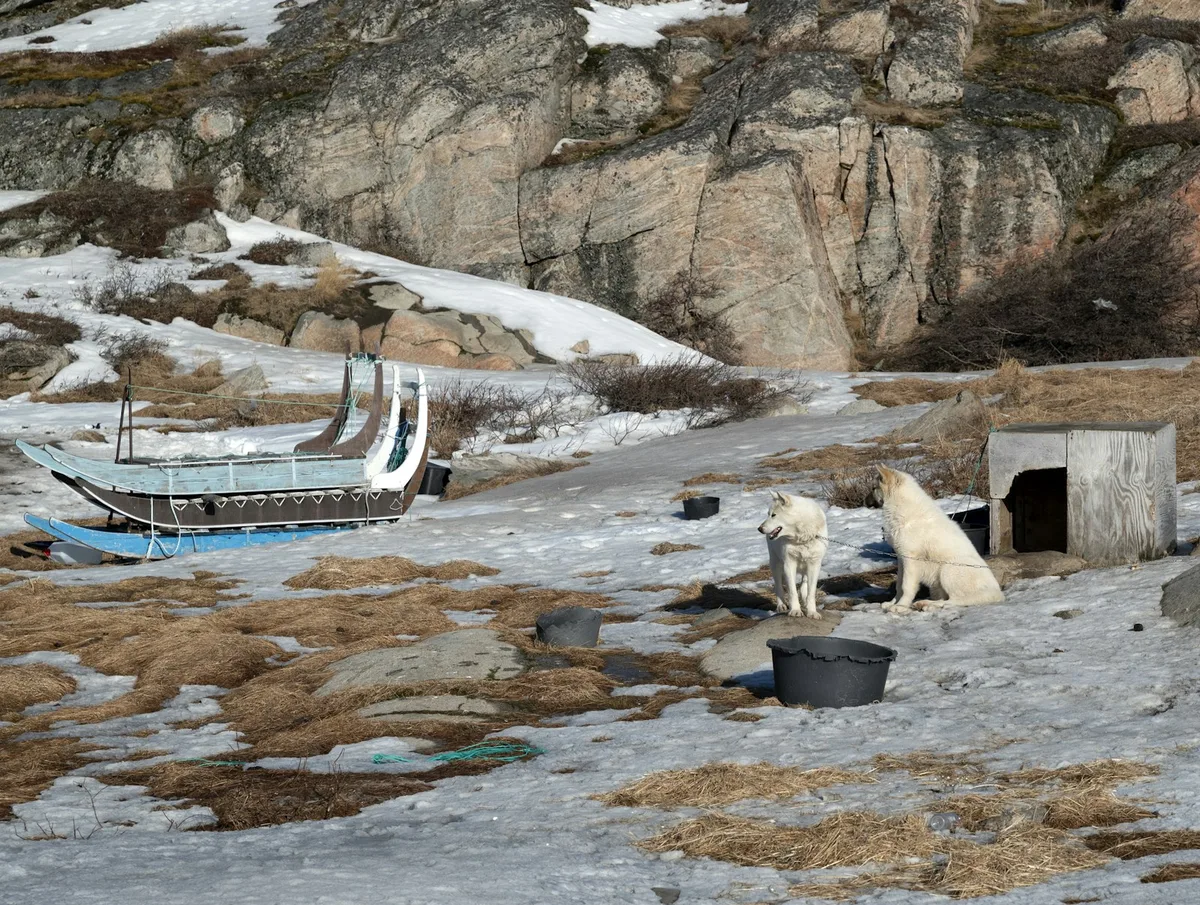
Ilulissat is home to more Greenland sled dogs than people, kept chained on the outskirts of town and raised from puppies to pull sledges once the winter sea ice sets in.
Visitor guide
Sled dogs are central to life in Ilulissat, a town on Greenland's west coast where, according to Wikipedia, there are almost as many sled dogs as people. The Greenland dog, called Kalaallit Qimmiat in Greenlandic, is a large husky-type working breed with a long history in the Arctic.
Wikipedia says dogs first appeared in Greenland around 4,000 years ago, and that the Greenland dog's ancestors came from Siberia with the Thule people about 1,000 years ago, a lineage shared with the Canadian Eskimo Dog. A 2020 genetic study found that Greenland sled dogs remained genetically isolated from other breeds after arriving with the Inuit about 850 years ago, tracing back to a roughly 9,500-year-old ancestor from Zhokhov Island in Siberia. The breed has been a draught animal in the Arctic for centuries, and Roald Amundsen used Greenland dogs on his 1912 South Pole expedition.
The breed is powerful and heavy-built, with a broad wedge-shaped head, small triangular ears and a thick double coat with a woolly inner layer and water-repellent outer layer. The tail is usually rolled over the back. Males stand at least 60 centimetres at the withers and females at least 55 centimetres. Any colour from fawn to black is accepted under the standard.
Travel sources say traditional hunters still use dogs to reach remote areas for long-line fishing, hunting and transport, and that the dogs can reach places a snowmobile cannot. Ilulissat's native son Knud Rasmussen used sled dog teams on his polar expeditions. The nearby icefjord is also a place where fishing and hunting happen on the ice in winter, and Wikipedia notes that dogsleds are the usual transport for residents who fish and hunt in the fjord, though ice clearance linked to climate change is allowing more boat use.
Researchers cited by news reports say sled dog numbers in Greenland fell by about half over 20 years, from roughly 25,000 to 13,000, while the Wikipedia article on the breed gives a drop from about 15,000 in 2016 to about 12,000 in 2021. The figures differ by source. Less sea ice and the use of snowmobiles and boats are cited as reasons. Dogs are a protected heritage: in western Greenland north of the Arctic Circle and all of eastern Greenland, importing dogs is illegal with limited exceptions, and since 2017 all dogs must be microchipped and registered.
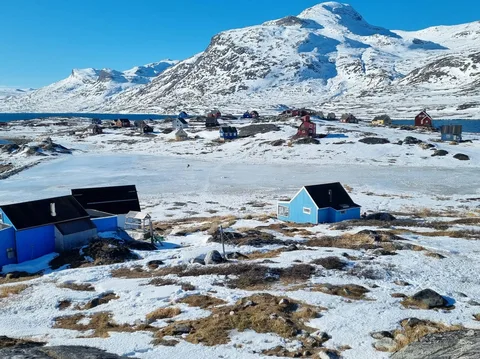
The pattern is visible in the smaller settlements around Disko Bay too. A heritage account of Ilimanaq says about 50 people live there alongside roughly twice as many sled dogs, with dog numbers declining as all-terrain vehicles and snowmobiles replace them. Ilulissat's dog area, known as Hundebyen, lies about a kilometre from the town centre according to one travel guide. Wikipedia's breed article notes that the breed is culturally important to Greenland and that dog sledding knowledge is part of that heritage, which helps explain why the restrictions on importing outside dogs exist.
Tour operators describe dogsledding near Ilulissat from roughly November through May. Sled dogs are working animals rather than pets, so operators advise keeping a respectful distance from teams in the town.
See every tour and attraction we cover in Greenland.