TorontoOntario · 36 tours
 Niagara FallsOntario · 25 tours
 New York CityNew York · 30 tours
 Las VegasNevada · 8 tours
 San FranciscoCalifornia · 16 tours
 VancouverBritish Columbia · 17 tours
 DubaiUAE · 54 tours
 Abu DhabiUAE · 5 tours
 Buenos AiresArgentina · 23 tours
 AthensGreece · 31 tours
 AucklandNew Zealand · 38 tours
 CancunMexico · 54 tours
No destinations match “”. Try searching all tours instead — that search understands full questions, not just place names.
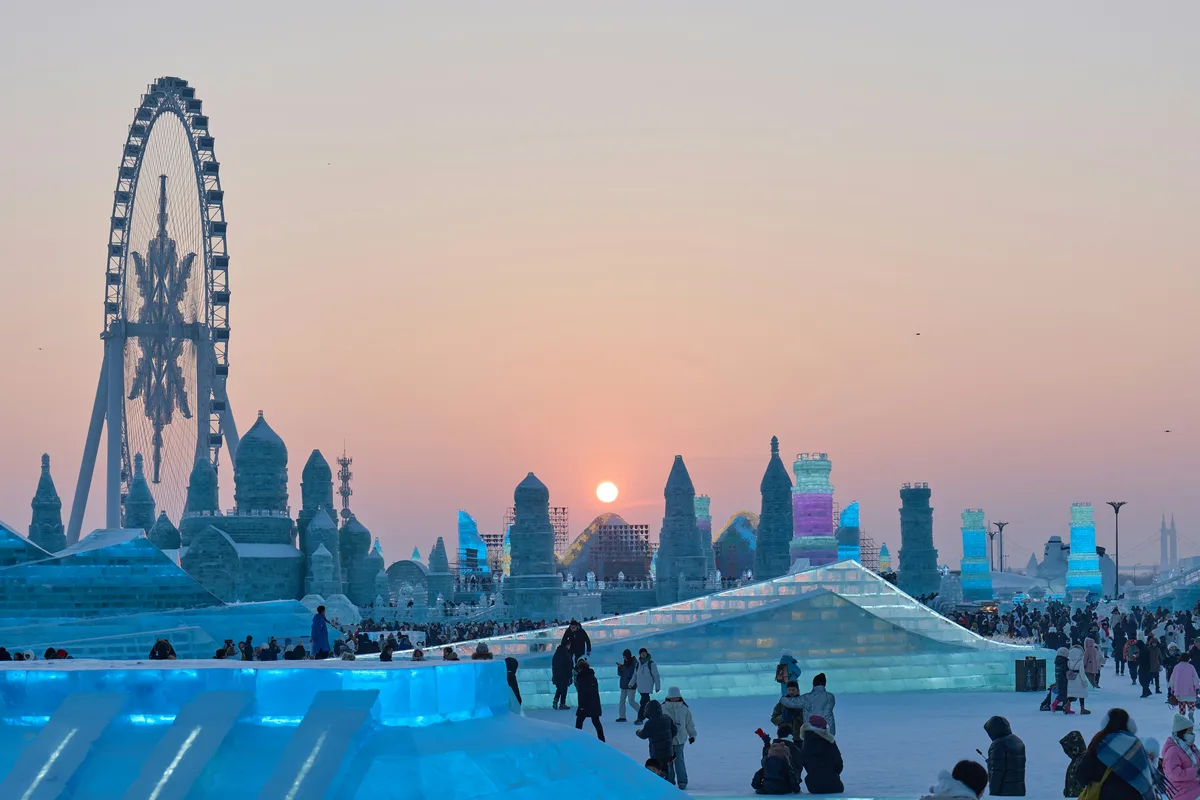
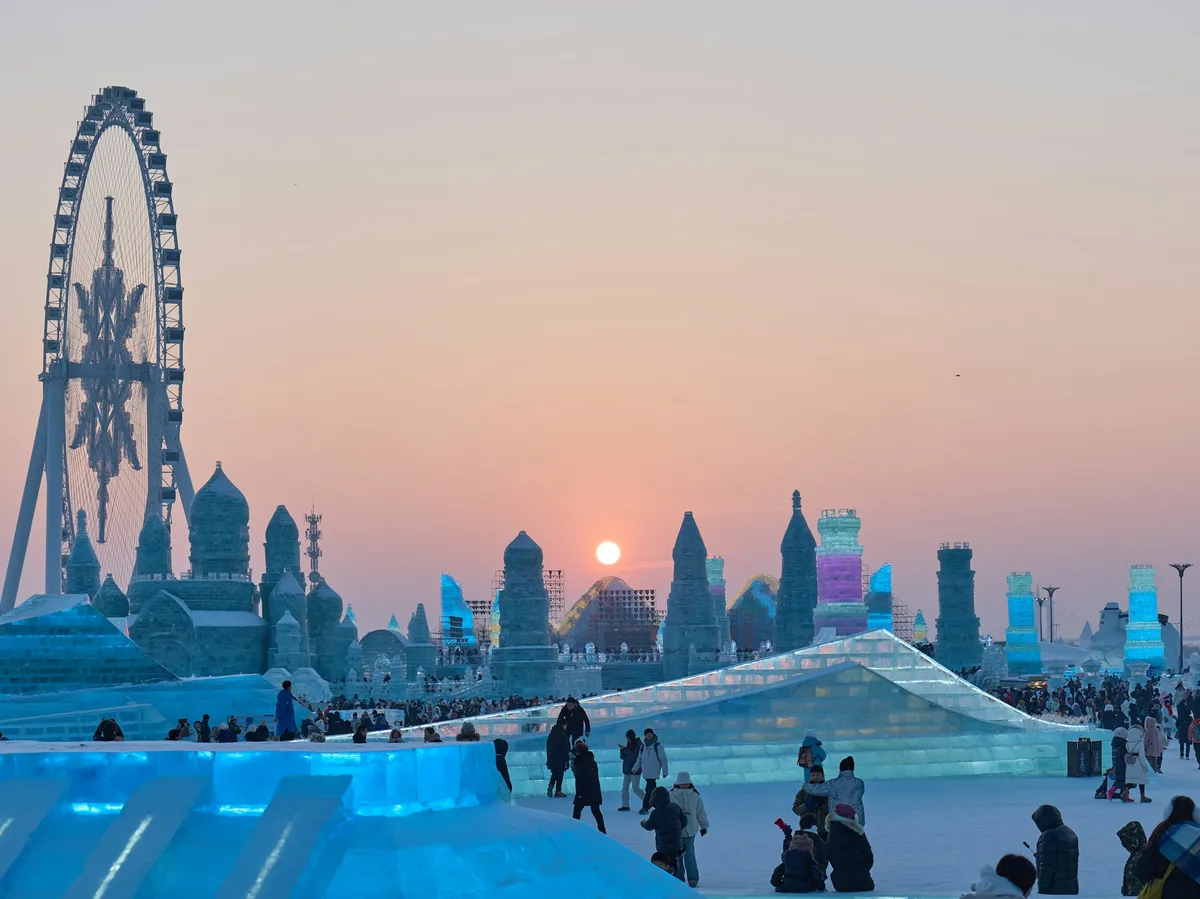
One of the world's largest winter festivals, held each winter in China's far north, where entire building-sized structures are carved from ice and lit from within after dark.
Visitor guide
The Harbin International Ice and Snow Sculpture Festival is an annual winter festival in Harbin, in the far northeast of China. Exhibits typically run from late December to late February, so the festival is not limited to a single month, and the main attractions are illuminated structures built of ice and snow.
The festival grew out of Harbin's winter ice lantern show and garden party, which began in 1963. The Cultural Revolution interrupted the event for several years, and a 1985 announcement of an annual event at Zhaolin Park marked its resumption. In 2001 the Harbin Ice Festival merged with Heilongjiang's International Ski Festival and took its current formal name. Wikipedia notes that the festival was part of the cultural programme for the 2009 Winter Universiade and the 2025 Asian Winter Games.
Ice and Snow World is open in the afternoons and at night. It has illuminated full-size buildings made of ice blocks 2 to 3 feet thick, cut from the Songhua River, and it first opened to the public in 1999 to mark the millennium. It is rebuilt every year with new designs. Sun Island, a recreation area across the Songhua River from the city, features an expo of very large snow sculptures. Ice lantern displays take place in many city parks, and Zhaolin Garden hosts an ice-lantern exhibition. Other winter activities include alpine skiing at Yabuli and winter swimming in the Songhua River.
Wikipedia gives some figures for the scale. In 2019 Ice and Snow World exceeded 600,000 square metres and had over 100 landmarks, built from 110,000 cubic metres of ice and 120,000 cubic metres of snow, with ice artists from 12 countries competing. In 2007 a Canadian-themed snow sculpture honouring Norman Bethune earned a Guinness record as the world's largest snow sculpture, measuring 250 metres long and 8.5 metres high. The article describes the festival as the largest ice and snow festival in the world, a claim made on the page itself, and it ranks alongside the Sapporo Snow Festival in Japan and the Quebec Winter Carnival.
Swing saws cut blocks from the frozen surface of the Songhua River, and sculptors work with chisels, ice picks and saws, often day and night before opening. Deionised water can produce crystal-clear ice instead of the translucent kind. Multicoloured lights illuminate the ice, especially at night, and common designs include buildings and monuments in many architectural styles, animals, people, mythical creatures, ice slides and lanterns. A replica of the Great Sphinx of Giza was built for the 2010 edition.
Harbin receives cold winds from Siberia. The average winter temperature is about minus 16.8 degrees Celsius, and annual lows of minus 25 degrees Celsius are not unusual. Visitors should plan warm layers, and a private tour with a driver reduces time spent outdoors between venues.
The ice structures look best after dark when they are lit from within, while snow sculptures are often better in daylight. The exact dates and themes vary from year to year, so confirm them when planning.
See every tour and attraction we cover in China.