TorontoOntario · 36 tours
 Niagara FallsOntario · 25 tours
 New York CityNew York · 30 tours
 Las VegasNevada · 8 tours
 San FranciscoCalifornia · 16 tours
 VancouverBritish Columbia · 17 tours
 DubaiUAE · 54 tours
 Abu DhabiUAE · 5 tours
 Buenos AiresArgentina · 23 tours
 AthensGreece · 31 tours
 AucklandNew Zealand · 38 tours
 CancunMexico · 54 tours
No destinations match “”. Try searching all tours instead — that search understands full questions, not just place names.
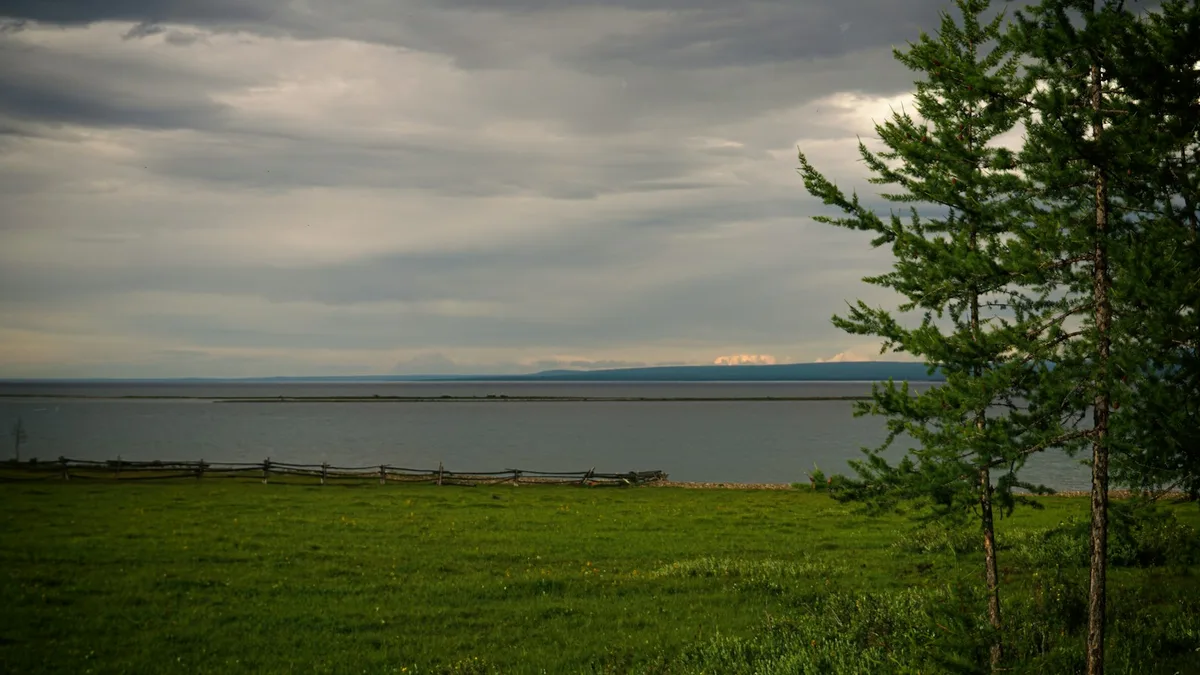
Mongolia's largest freshwater lake by volume, in the forested Sayan Mountains near the Russian border, known as the country's cleanest and clearest lake and a base for horseback and boat trips.
Visitor guide
Lake Khovsgol is a deep freshwater lake in northern Mongolia, in the forested eastern Sayan Mountains near the Russian border. It is the largest freshwater lake in Mongolia by volume, and Mongolians traditionally call it Mother Sea.
According to Wikipedia, the lake covers about 2,760 square kilometres, is 136 kilometres long and up to 36.5 kilometres wide, and sits at an elevation of 1,645 metres. Average depth is 138 metres, with a maximum commonly given as around 262 to 267 metres, and its volume is about 380.7 cubic kilometres. It is the second-largest lake in Mongolia by area, after Uvs Lake, and holds almost 70 percent of the country's fresh water. The town of Hatgal lies at its southern end, where the Egiin Gol drains the lake into the Selenge River and on toward Lake Baikal.
Khovsgol is a rift lake and one of about twenty ancient lakes worldwide that are more than two million years old. Its watershed is small and few streams feed it. The water is ultra-oligotrophic, meaning low in nutrients and extremely clear, with Secchi depths above 18 metres common. Wikipedia states that the water is potable without treatment, though visitors should follow local guidance. In winter the lake freezes completely, and ice roads were once used as shortcuts before being forbidden over pollution and safety concerns.
The surrounding national park is larger than Yellowstone, according to Wikipedia, and forms a transition zone between Central Asian steppe and Siberian taiga. Wildlife includes ibex, argali, elk, wolves, wolverines, musk deer, brown bears, moose and sable, and the area is an Important Bird Area. The lake's fish community is less diverse than Baikal's, with perch, burbot, lenok and the endangered endemic Hovsgol grayling. The Hovsgol Long-term Ecological Research Site, established in 1997, studies the lake, and researchers have found notable microplastic pollution there, so conservation remains a live concern. Illegal fishing also persists.
The lake is traditionally regarded as sacred. Its shores are home to Mongolian herding families, and the taiga north of the lake is associated with the Dukha, or Tsaatan, reindeer herders, although the Wikipedia lake article does not cover them, so visitors should consult dedicated sources. Horseback riding and boat trips are common ways to see the shoreline, and the larch-covered hills and open meadows around the south end of the lake are among the best-known scenery in northern Mongolia.
The lake is remote and far from Ulaanbaatar, with travel normally by domestic flight to Moron followed by a road transfer, or by a long drive. Summers are short and mild, while winters are severe. A private guided visit with a driver is a practical way to cover the roads and tracks around the shore. Seasonal changes are dramatic, from summer wildflower meadows to a fully frozen lake in winter.
See every tour and attraction we cover in Mongolia.