TorontoOntario · 36 tours
 Niagara FallsOntario · 25 tours
 New York CityNew York · 30 tours
 Las VegasNevada · 8 tours
 San FranciscoCalifornia · 16 tours
 VancouverBritish Columbia · 17 tours
 DubaiUAE · 54 tours
 Abu DhabiUAE · 5 tours
 Buenos AiresArgentina · 23 tours
 AthensGreece · 31 tours
 AucklandNew Zealand · 38 tours
 CancunMexico · 54 tours
No destinations match “”. Try searching all tours instead — that search understands full questions, not just place names.
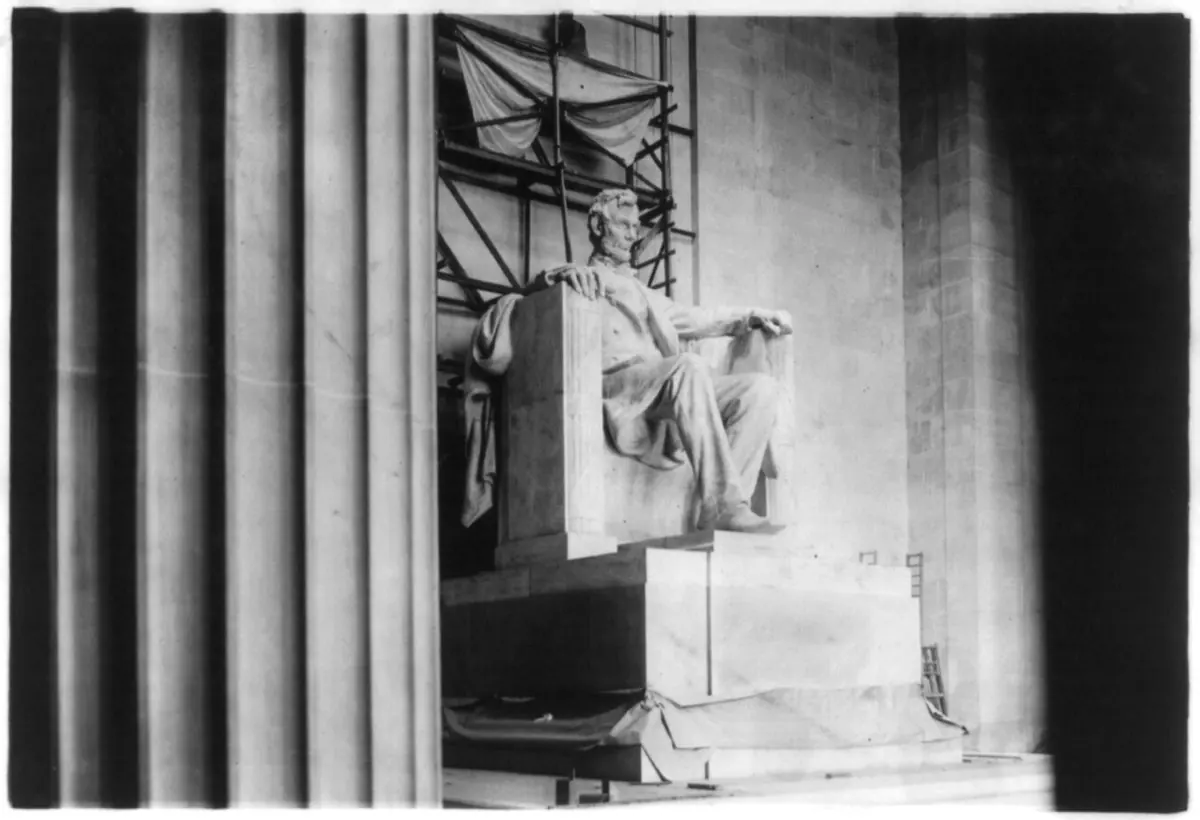
A neoclassical monument honoring Abraham Lincoln, overlooking the Reflecting Pool.
Visitor guide
The Lincoln Memorial is a neoclassical monument at the western end of the National Mall in Washington, D.C., honoring Abraham Lincoln, the 16th president. Architect Henry Bacon modeled it on a Greek temple, and it was dedicated on May 30, 1922. It is run by the National Park Service.
After the commission reviewed proposals from Henry Bacon and John Russell Pope, Congress approved Bacon's design on January 29, 1913. Ground was broken on February 12, 1914, and the cornerstone was laid on February 12, 1915. The exterior is Colorado Yule marble. Thirty-six Doric columns surround the chamber, one for each state in the Union at the time of Lincoln's death. Ionic columns divide the interior into three chambers. Sources differ on the exact number of steps; the NPS counts 98 steps to the statue, while Wikipedia mentions 87 steps to the chamber, so check before quoting a figure.
Daniel Chester French designed the seated figure of Lincoln, and the Piccirilli Brothers carved it in New York, with the work taking over four years. The statue is about 19 feet tall and 19 feet wide and was shipped in 28 pieces. The side chambers carry the texts of the Gettysburg Address and the Second Inaugural Address. Above each, Jules Guerin painted a large mural, each roughly 60 feet long and 12 feet high: one shows an angel of truth with a freed slave, the other the unity of North and South.
William Howard Taft, president of the Lincoln Memorial Commission, presented the memorial and President Warren G. Harding accepted it on behalf of the American people. Lincoln's son Robert Todd Lincoln attended, and Dr. Robert Moton of the Tuskegee Institute delivered the keynote address.
The steps and Reflecting Pool have long served as a national gathering place. On Easter Sunday 1939, Marian Anderson, who had been denied the use of Constitution Hall, sang a free concert on the memorial steps to a crowd estimated at 75,000. On August 28, 1963, about 200,000 people attended the March on Washington for Jobs and Freedom, where Martin Luther King Jr. gave his I Have a Dream speech. The memorial was listed on the National Register of Historic Places in 1966. Two popular stories, a hidden face of Robert E. Lee and Lincoln's hands forming his initials in sign language, are legends that the National Park Service does not endorse.
The Reflecting Pool stretches east toward the Washington Monument, and the Korean War Veterans Memorial and the Vietnam Veterans Memorial are both within a short walk. The Tidal Basin and the memorials around it are a ten to fifteen minute stroll. Parking close to the Mall is limited, so a Voyzo private tour, with a private vehicle, driver and door-to-door pickup, can drop a group at the memorial steps and collect them afterward.
See every tour and attraction we cover in Washington DC.