TorontoOntario · 36 tours
 Niagara FallsOntario · 25 tours
 New York CityNew York · 30 tours
 Las VegasNevada · 8 tours
 San FranciscoCalifornia · 16 tours
 VancouverBritish Columbia · 17 tours
 DubaiUAE · 54 tours
 Abu DhabiUAE · 5 tours
 Buenos AiresArgentina · 23 tours
 AthensGreece · 31 tours
 AucklandNew Zealand · 38 tours
 CancunMexico · 54 tours
No destinations match “”. Try searching all tours instead — that search understands full questions, not just place names.
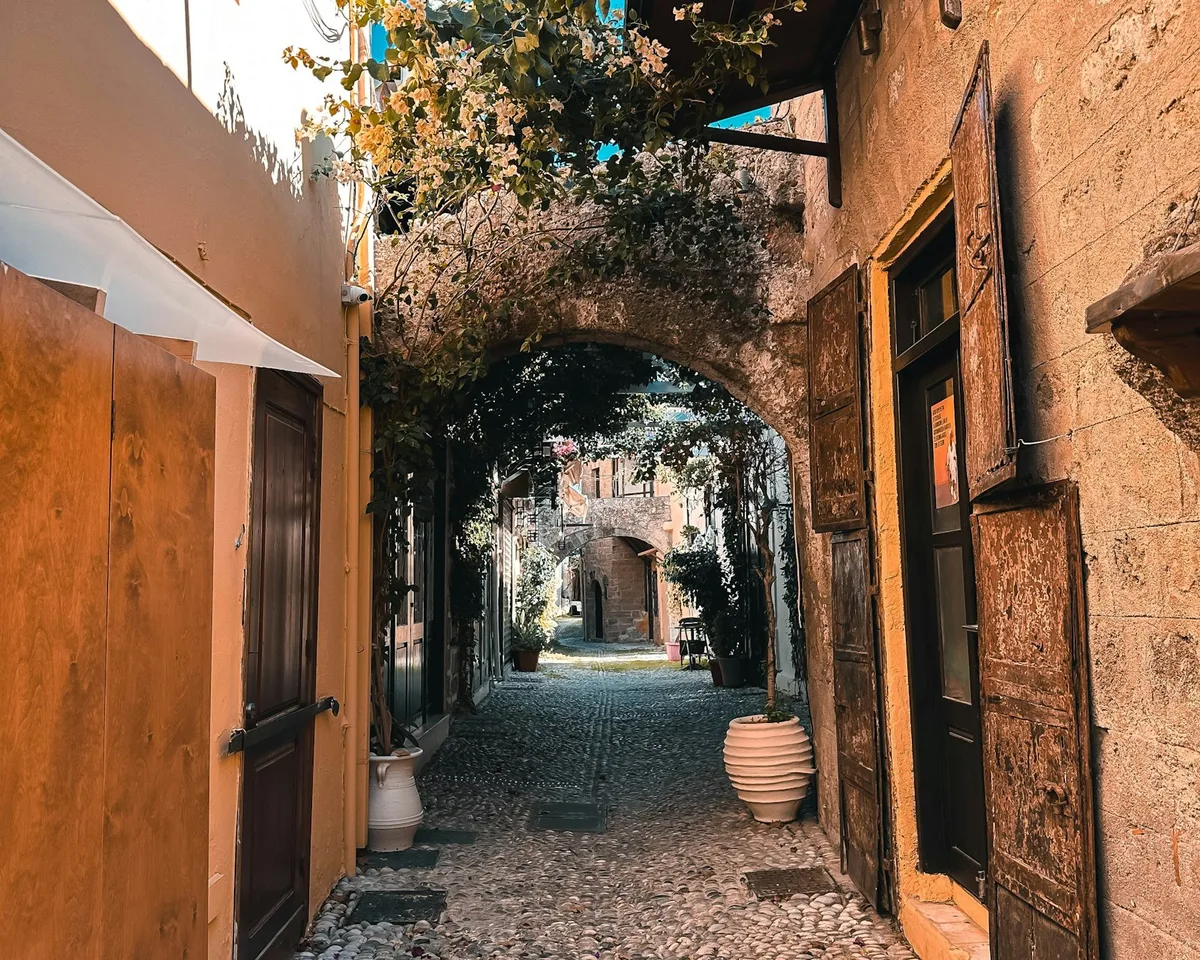
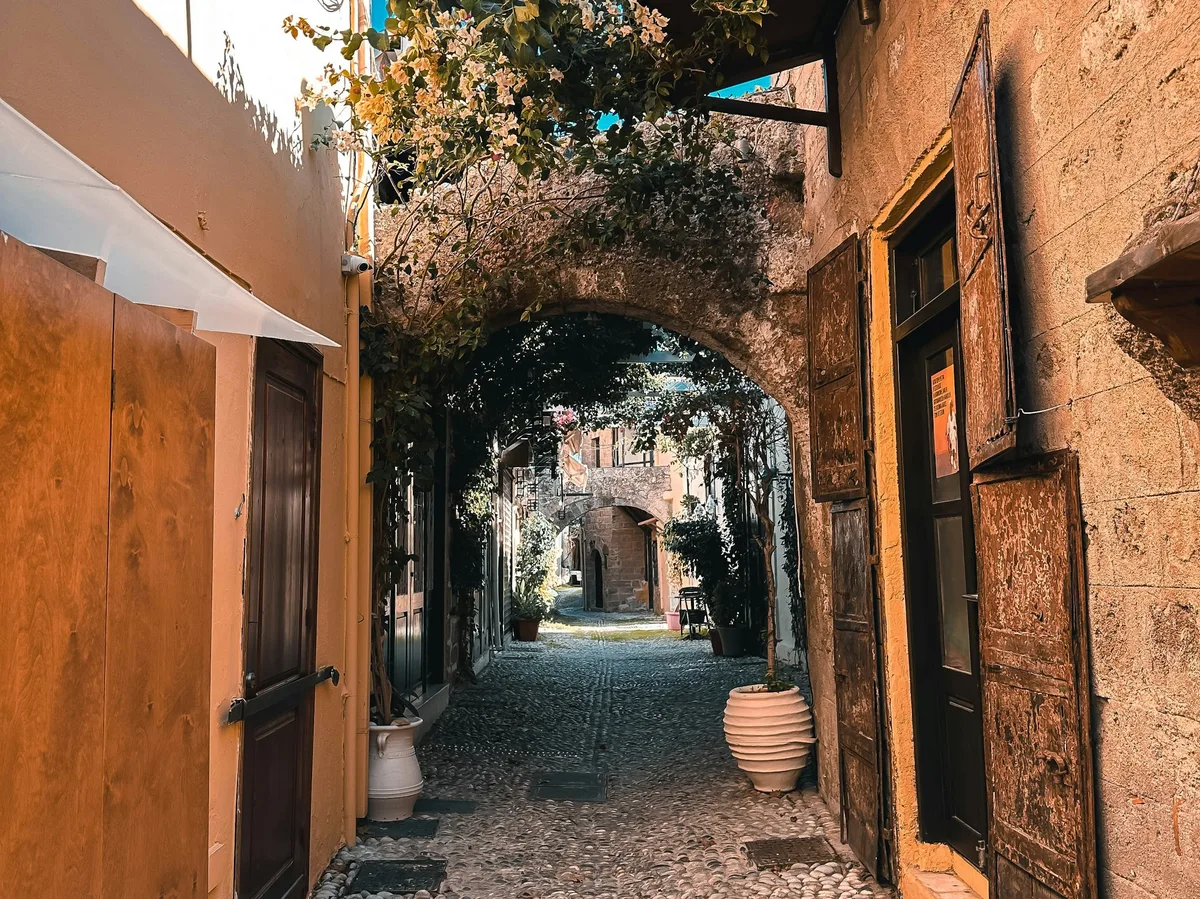
A walled medieval old town on the island of Rhodes, built by the Knights Hospitaller in the 14th and 15th centuries around the Street of the Knights and the Palace of the Grand Master.
Visitor guide
The Medieval City of Rhodes is a walled old town on the Greek island of Rhodes in the Dodecanese, built largely by the Knights Hospitaller between 1309 and 1523. Enclosed by walls about four kilometres long, it was inscribed on the UNESCO World Heritage List in 1988 and preserves a rare example of a fortified Gothic city in the eastern Mediterranean.
The Knights Hospitaller took the island after leaving Cyprus, following the suppression of the Knights Templar in 1307, and Pope Clement V confirmed their possession in 1309. They held Rhodes for about two centuries. The upper town in the north, built entirely by the Knights, contains the Gothic buildings, while a lower town extends to the south and south-west. The Byzantine harbour has been excavated, revealing medieval shipwrecks.
The medieval walls were built in the mid-14th century on an earlier line and were rebuilt after the failed Ottoman siege of 1480 and an earthquake the following year. Grand Master Pierre d'Aubusson oversaw major fortification work, and by his death in 1521 the city had some of the strongest defences of any Christian stronghold. Gates such as the Gate of the Virgin, the Gate d'Amboise and the Gate of the Arsenal survive in the circuit.
In 1480 a force sent by the Ottoman sultan under Mesih Pasha attacked by land and sea but was repelled. In 1522 Sultan Suleiman the Magnificent besieged the city, and the vastly outnumbered Knights inflicted heavy casualties before agreeing terms in December 1522. They left with their wealth on 1 January 1523, residents were spared reprisals, and Christians were allowed to keep practising their faith.
The Street of the Knights, also called the Avenue of the Knights, is the old town's main landmark. The Palace of the Grand Master, also known as the Kastello, was the Knights' administrative centre and fortress. A recent study cited by Wikipedia suggests it stands on the foundations of an ancient temple of the sun god Helios. In 1856 a gunpowder magazine beneath the neighbouring Church of Saint John was struck by lightning, and the explosion destroyed much of the palace. The Italians rebuilt it between 1937 and 1940, and critics say the reconstruction was not historically accurate.
After 1522 most churches became mosques and large houses became mansions or public buildings, with Ottoman additions including baths and enclosed wooden balconies over the streets. Landmarks from this period include the Suleymaniye Mosque and the Hafiz Ahmed Agha Library. La Juderia, the former Jewish quarter, contains the Kahal Shalom Synagogue.
During Italian rule from 1912 to 1943, architect Florestano Di Fausto drew up a 1923 city plan that kept the walled town largely intact and removed houses built against the walls. Allied bombing in 1944 destroyed a significant part of the old city, and the entire medieval town was designated a protected monument in 1960.
Rhodes is also associated with the Colossus, a statue of the sun god Helios built by Chares of Lindos between 304 and 293 BC and toppled by an earthquake around 226 BC. Its exact site is unknown, and the popular image of it straddling the harbour is not supported by the sources. A private guided visit suits the old town, whose lanes and fortifications reward a guide who can explain the layers of history.
See every tour and attraction we cover in Greece.