TorontoOntario · 36 tours
 Niagara FallsOntario · 25 tours
 New York CityNew York · 30 tours
 Las VegasNevada · 8 tours
 San FranciscoCalifornia · 16 tours
 VancouverBritish Columbia · 17 tours
 DubaiUAE · 54 tours
 Abu DhabiUAE · 5 tours
 Buenos AiresArgentina · 23 tours
 AthensGreece · 31 tours
 AucklandNew Zealand · 38 tours
 CancunMexico · 54 tours
No destinations match “”. Try searching all tours instead — that search understands full questions, not just place names.
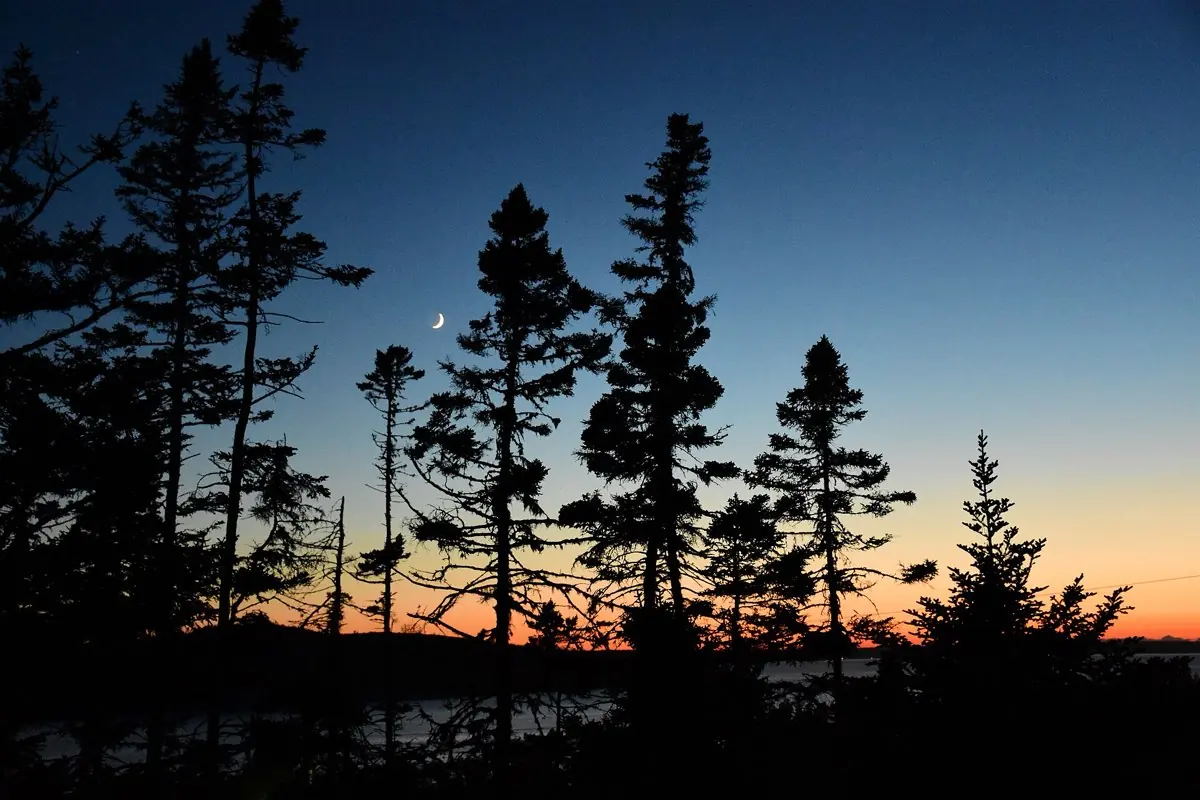
A drive along Nova Scotia's rugged Atlantic shoreline, past fishing villages and rocky coves.
Visitor guide
Halifax sits between two of Nova Scotia's designated scenic drives, and both leave the city in opposite directions. The Lighthouse Route runs southwest along the South Shore toward Yarmouth, while Marine Drive follows the Eastern Shore. Neither is a single attraction; they are long coastal roads, and most visitors sample a slice of one in a day.
Wikipedia describes the Lighthouse Route as a scenic roadway following the South Shore from Halifax to Yarmouth, about 585 km in the provincial road listing. Tourism material gives about 339 km, so the figure depends on which roads are counted. It is built from Trunk 3, Highway 103 and several numbered routes, passes through Halifax, Lunenburg, Queens, Shelburne and Yarmouth counties, and is maintained by the provincial transportation department. Communities along it include Peggys Cove, Hubbards, Chester, Mahone Bay, Lunenburg, Liverpool and Shelburne.
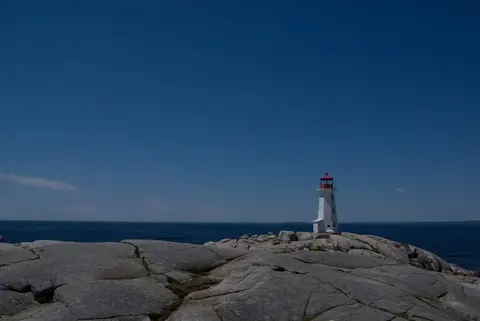
Peggys Cove is roughly 45 minutes from Halifax, and Wikipedia puts it about 43 km southwest of downtown. It is known for its lighthouse, established in 1868, and its granite shoreline: the bedrock formed in the Devonian period as part of the Great Nova Scotia batholith, and glaciers left behind boulders of roughly 415-million-year-old granite called glacial erratics. The village was settled in 1811 by six families of German descent and remains a working lobster-fishing community with only a few dozen year-round residents. A popular legend ties its name to a shipwreck survivor called 'Peggy of the Cove', but her identity is disputed, and it is more likely named after St. Margarets Bay.
Mahone Bay is best known for the view of three churches by the harbour, St. James' Anglican, St. John's Evangelical Lutheran and Trinity United, which appear on many postcards. Wikipedia dates the town to 1754 and records shipbuilding there from at least 1817, with as many as 500 people working in local shipyards during the Second World War.
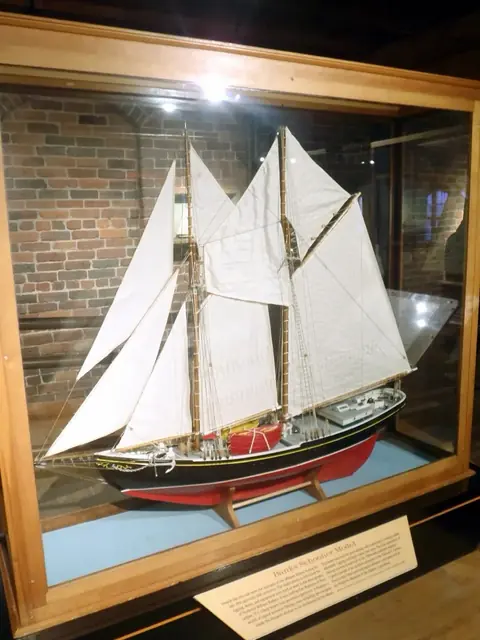
Lunenburg's Old Town was inscribed as a UNESCO World Heritage Site in 1995, and Tourism Nova Scotia describes it as a planned British colonial settlement dating to 1753. Wikipedia says the British recruited more than 1,400 'Foreign Protestants' to settle it, and that the town was laid out in a rectangular grid on a steep, south-facing hillside. About 40 Old Town buildings are on the Canadian Register of Historic Places. The Smith & Rhuland yard built the schooner Bluenose in 1921, and the Fisheries Museum of the Atlantic is part of the Nova Scotia Museum. Many visitors make Halifax to Lunenburg a day trip, which is roughly 1.5 hours each way by the quicker roads.
Marine Drive is a designated route along the Atlantic coast and Strait of Canso, running about 414 km, plus a 16 km spur to Canso, from Dartmouth to the Canso Causeway area at Auld's Cove. It is built from Trunk 7, Trunk 16 and several local routes. Communities include Cole Harbour, Musquodoboit Harbour, Sheet Harbour, Guysborough and Canso. Provincial parks on or near the route include Porters Lake, Martinique Beach, Lawrencetown Beach and Taylor Head, and Wikipedia notes museums such as the Fisherman's Life Museum at Oyster Pond, Sherbrooke Village and the Out of the Fog Lighthouse Museum. It has fewer visitors than the South Shore.
Martinique Beach, near Musquodoboit Harbour, is about 5 km long and is described on Wikipedia as the longest sandy beach in Nova Scotia, a superlative to treat with care. A wildlife sanctuary adjoins it, with a protected nesting area for the endangered Piping Plover, and it is an Important Bird Area. Taylor Head, near Spry Bay, has about 1 km of sandy beach and roughly 22 km of hiking trails, and Wikipedia says it is one of the few places in Nova Scotia with sand volcanoes.
The South Shore suits visitors who want postcard fishing villages, shops and restaurants, and heritage towns. The Eastern Shore suits those who prefer beaches, hiking, and long stretches of quiet coast. Tour and day timings depend on stops, traffic and weather, so plan generous time; fog and wind are common on the Atlantic coast.
Check Nova Scotia tourism and provincial road updates for current conditions, closures and attraction hours, and heed any warning signs at Peggys Cove near the surf. A Voyzo private tour with a private vehicle and driver suits these roads well: you can stop for photographs as you choose, and nobody has to concentrate on narrow, winding two-lane stretches.
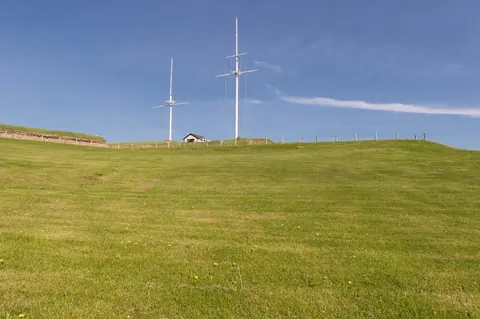
Back in the city, the Halifax waterfront, Citadel Hill and the Public Gardens fill out a longer stay.
See every tour and attraction we cover in Halifax.