TorontoOntario · 36 tours
 Niagara FallsOntario · 25 tours
 New York CityNew York · 30 tours
 Las VegasNevada · 8 tours
 San FranciscoCalifornia · 16 tours
 VancouverBritish Columbia · 17 tours
 DubaiUAE · 54 tours
 Abu DhabiUAE · 5 tours
 Buenos AiresArgentina · 23 tours
 AthensGreece · 31 tours
 AucklandNew Zealand · 38 tours
 CancunMexico · 54 tours
No destinations match “”. Try searching all tours instead — that search understands full questions, not just place names.
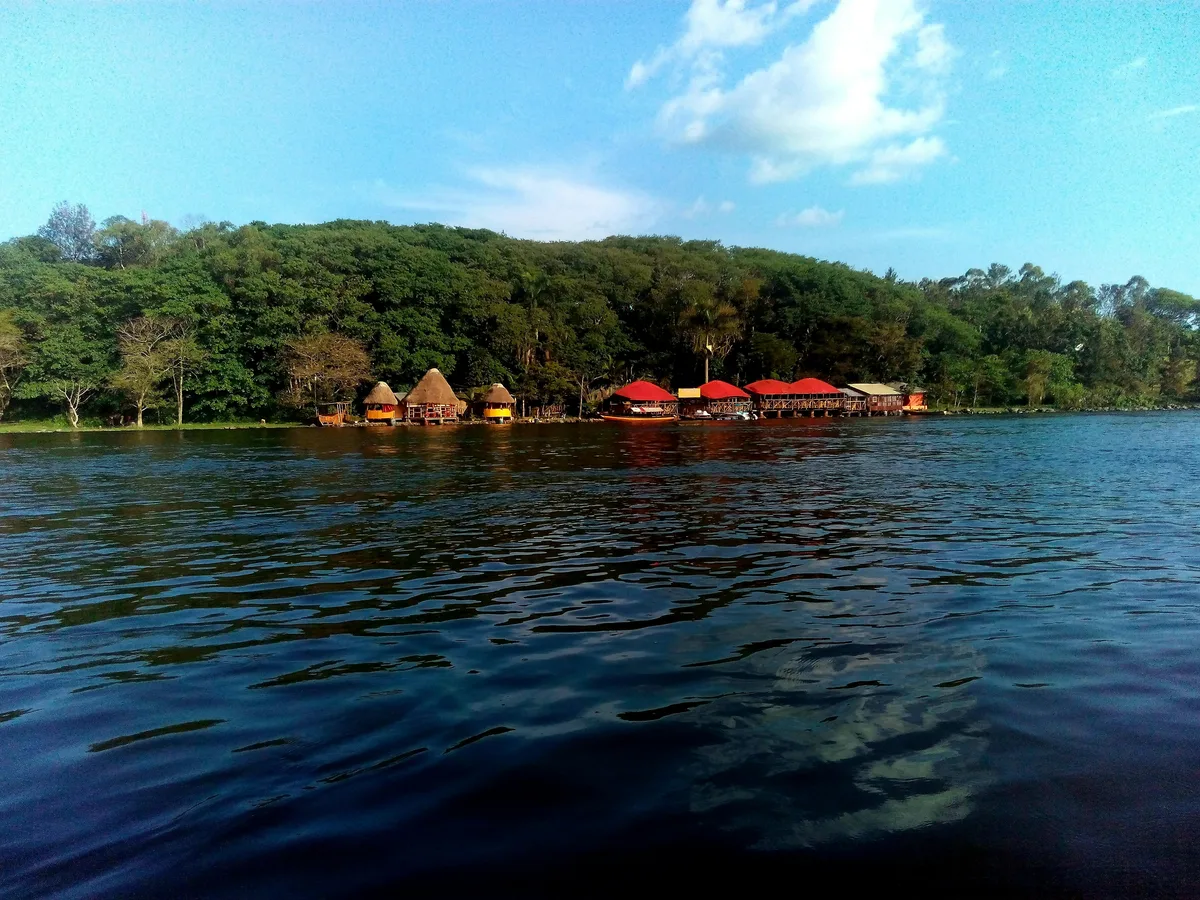
The town where the White Nile begins its run north from Lake Victoria, now East Africa's white-water rafting capital, with the Bujagali Falls rapids just outside town.
Visitor guide
Jinja is a city in eastern Uganda on the northern shore of Lake Victoria, about 81 kilometres east of Kampala, near the place where the White Nile begins its journey north. Often called the Source of the Nile, it is also known today as a hub for adventure activities on the river.
According to Wikipedia, the name comes from the flat rocks in the river, which people on both banks called the stones, ejjinja in Luganda. Accounts of the town's founding differ, with 1901, 1906 and 1907 all given; the Jinja local government site gives 1907. In 1948 a planned layout was drawn up under colonial rule, and Jinja later became an industrial centre, with the Owen Falls Dam of 1954 bringing power to factories. The city was granted city status on 1 July 2020 and sits at an average elevation of about 1,204 metres.
John Hanning Speke is credited as the first European to see the source of the Nile. He reached the southern shore of Lake Victoria in 1858 and, according to other histories, returned in 1862 to reach the point where the river leaves the lake, which he named Ripon Falls. His claim was disputed by his former partner Richard Burton, and the question took years to settle. Speke's notes, quoted by Wikipedia, describe the falls as about twelve feet deep and four to five hundred feet broad, with hippos, crocodiles and fishermen on the rocks.
Ripon Falls was submerged by the Owen Falls Dam in 1954, so the original falls can no longer be seen. Visitors today go to the riverside viewing area and take boat trips. Different sources note that the Nile has other upstream tributaries, so the Jinja site is best described as the traditional and historical source of the White Nile from Lake Victoria.
According to a separate Wikipedia article, Ripon Falls was about 5 metres high and 275 metres wide and was named after George Robinson, the 1st Marquess of Ripon, who was President of the Royal Geographical Society from 1859 to 1860. Before the dam it was the natural outflow of Lake Victoria and regulated the discharge into the Nile. The Owen Falls Dam, finished in 1954 and known locally as the Nalubaale Dam, widened the outlet and permanently submerged the falls, and hydroelectric units were added in 1968.
Jinja is also a centre for hydropower on the Victoria Nile. Wikipedia lists the Nalubaale (Owen Falls) station, the Kiira station completed in 2003 and the Bujagali station about 8 kilometres to the north. The Bujagali Falls, a rapids and a place of spiritual significance to local people, was submerged by the Bujagali power project beginning in November 2011, although rafting operators continue to run trips on the river nearby.
Wikipedia lists white-water rafting, the Source of the Nile and bungee jumping among the attractions of Jinja. A monument at the source commemorates Mahatma Gandhi, whose ashes were reported to have been immersed in the Nile in 1948. The Nyege Nyege Festival has been held in Njeru since 2015. The Source of the Nile Bridge, commissioned in 2018, links Njeru and Jinja. A private driver can combine Jinja with a Kampala or Entebbe stay without a long detour.
See every tour and attraction we cover in Uganda.