TorontoOntario · 36 tours
 Niagara FallsOntario · 25 tours
 New York CityNew York · 30 tours
 Las VegasNevada · 8 tours
 San FranciscoCalifornia · 16 tours
 VancouverBritish Columbia · 17 tours
 DubaiUAE · 54 tours
 Abu DhabiUAE · 5 tours
 Buenos AiresArgentina · 23 tours
 AthensGreece · 31 tours
 AucklandNew Zealand · 38 tours
 CancunMexico · 54 tours
No destinations match “”. Try searching all tours instead — that search understands full questions, not just place names.
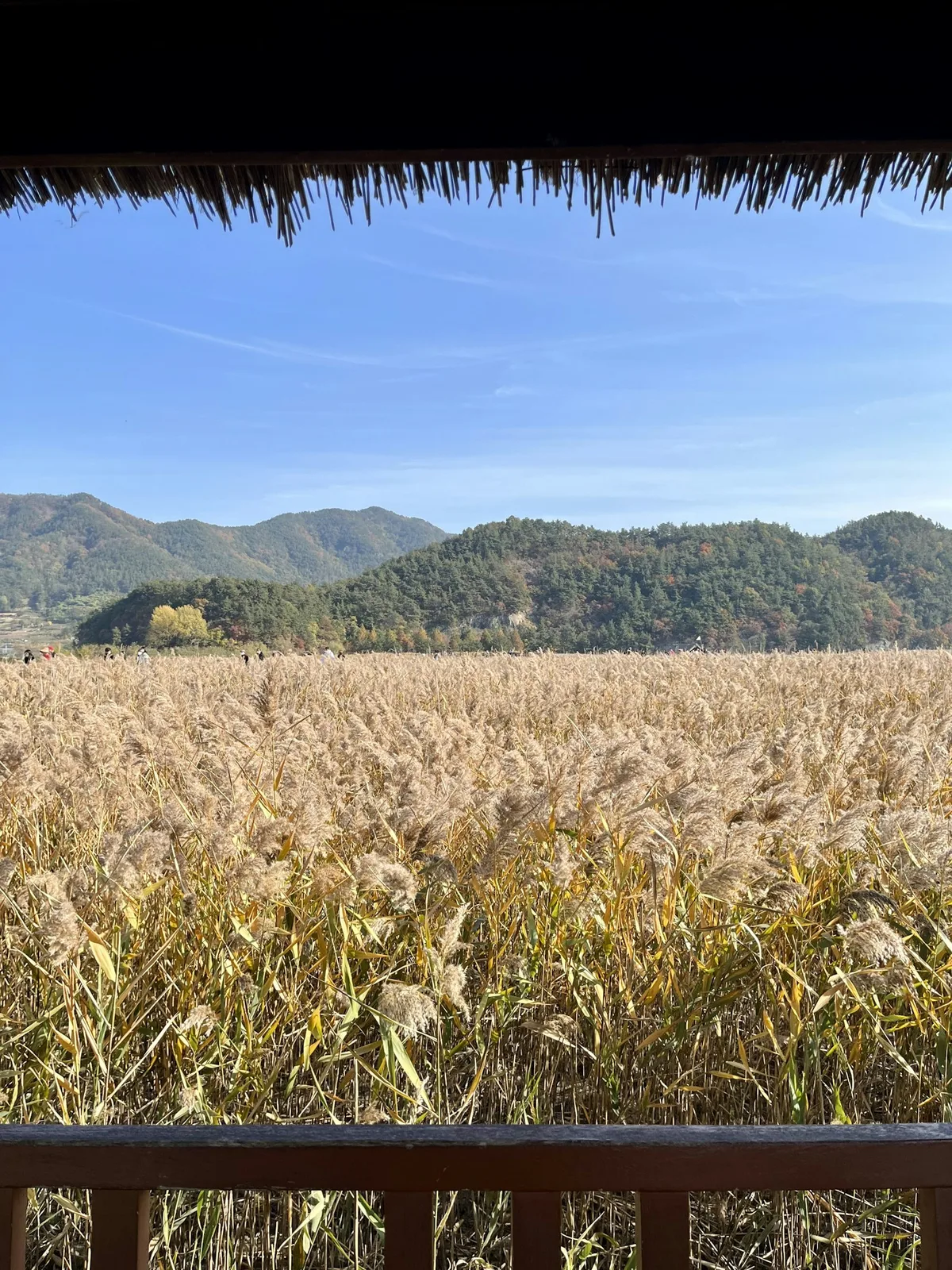
One of the world's largest coastal reed marshes, with boardwalks through golden reed fields and an observatory overlooking the tidal flats.
Visitor guide
Suncheon Bay is a coastal wetland in Suncheon, South Jeolla Province, South Korea, made up of tidal flats, a reed field and a salt marsh. It provides habitat for migratory birds, plants and other wildlife, and is registered as a Ramsar wetland. The Suncheon Bay Wetland Reserve is the part of the bay set up for visitors, with boardwalks through the reeds and viewpoints over the flats.
According to Wikipedia, Suncheon Bay covers about 35.5 square kilometres, composed of a 3.5-kilometre stream, a tideland of 2,221 hectares and a reed field of 230 hectares. Other sources put the reed beds at about 5.4 square kilometres alongside roughly 22.6 square kilometres of mudflats, so figures vary depending on which part of the bay is counted. Sources commonly describe the reed beds as the largest in Korea. The wide tideland, reed field and salt swamp are described as having largely undamaged natural scenery.
Suncheon Bay was designated a Ramsar Wetland on 20 January 2006, reference number 1594, and is described as the first Korean coastal wetland on the Ramsar list. The Ministry of Oceans and Fisheries designated the reserve a preservation zone in 2003. The shallow tideland at the river mouth has reasonable salt content, abundant organisms and healthy water quality, and the salt swamp helps prevent and purify water pollution. These conditions make the bay a spawning ground for fish, crabs and shellfish.
The bay is known for the hooded crane, the Eurasian spoonbill, the whooper swan and the Chinese egret, among other birds. According to the Ramsar information sheet as summarised in search results, it is the only wintering site for the hooded crane in Korea and supports over one percent of the populations of several other species. Bird counts vary by source, with one guide citing 158 kinds and a city document listing 240 species. Cranes are present mainly in the colder months, so the wildlife seen changes by season.
A deck trail of about 1.2 kilometres runs through the reed forest, allowing visitors to walk among the tall plants without disturbing the marsh. The Yongsan Observatory, reached by a longer hill walk, looks out over the reed forest and mudflats, and visitors often describe the river forming an S-shaped curve seen from above, especially at sunset. Details of routes and conditions are best checked locally.
Suncheon Bay National Garden, created to help protect the bay, covers about 1.1 square kilometres and has more than 790,000 trees, according to Wikipedia. The 2013 Suncheon Garden Expo left permanent gardens, a wetland centre and a monorail. The temple Seonamsa, on Mount Jogye, has 18 cultural assets and is another well-known sight in the area.
The reserve is particularly scenic in autumn when the reeds turn golden, and in winter for birdwatching. A private tour can combine the boardwalks with the observatory and nearby gardens, leaving time for the walk to the viewpoint.
See every tour and attraction we cover in South Korea.