TorontoOntario · 36 tours
 Niagara FallsOntario · 25 tours
 New York CityNew York · 30 tours
 Las VegasNevada · 8 tours
 San FranciscoCalifornia · 16 tours
 VancouverBritish Columbia · 17 tours
 DubaiUAE · 54 tours
 Abu DhabiUAE · 5 tours
 Buenos AiresArgentina · 23 tours
 AthensGreece · 31 tours
 AucklandNew Zealand · 38 tours
 CancunMexico · 54 tours
No destinations match “”. Try searching all tours instead — that search understands full questions, not just place names.
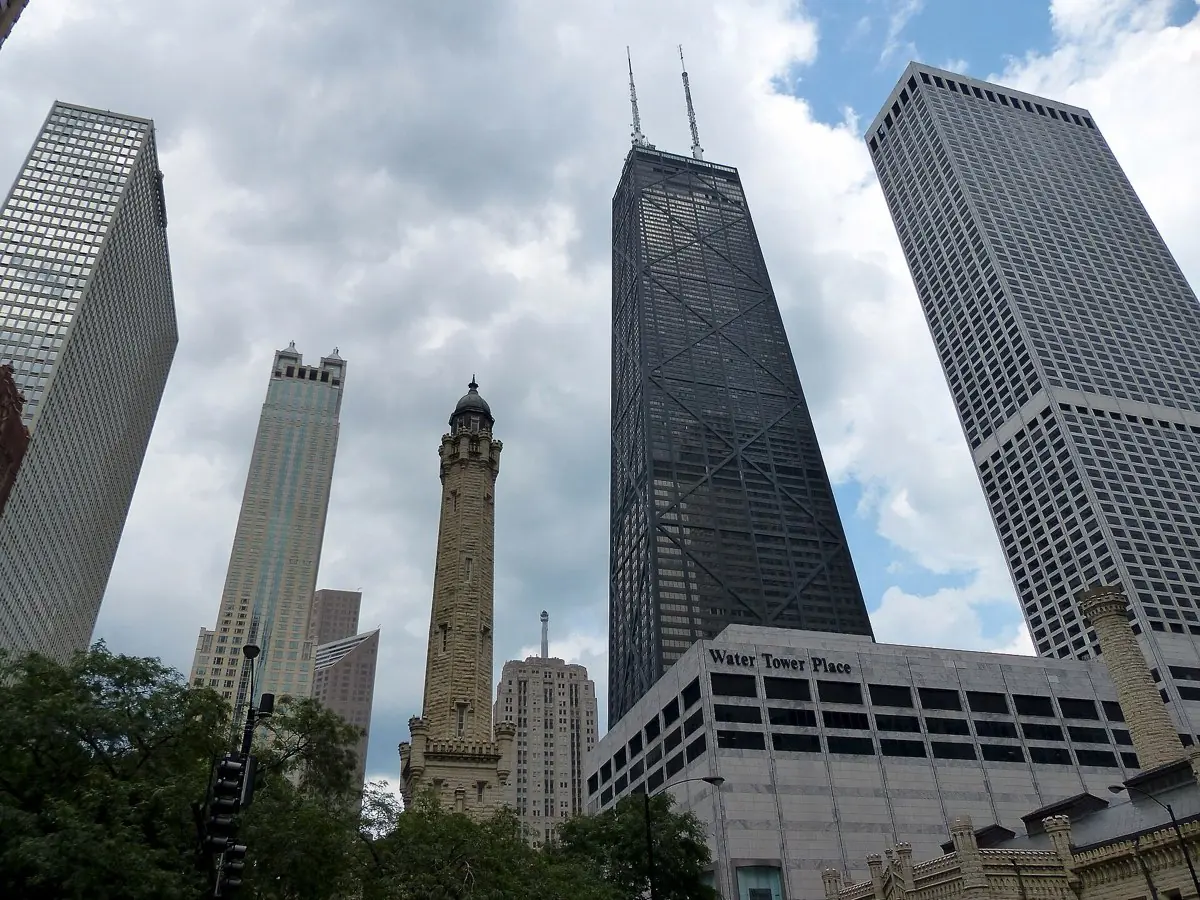
Chicago's premier shopping district along North Michigan Avenue.
Visitor guide
The Magnificent Mile is the roughly one-mile stretch of North Michigan Avenue between the Chicago River and Oak Street, Chicago's best-known shopping and hotel corridor. It is a product of the 1909 Plan of Chicago, the 1920 opening of the Michigan Avenue Bridge, and a mid-century marketing campaign that gave it its name.
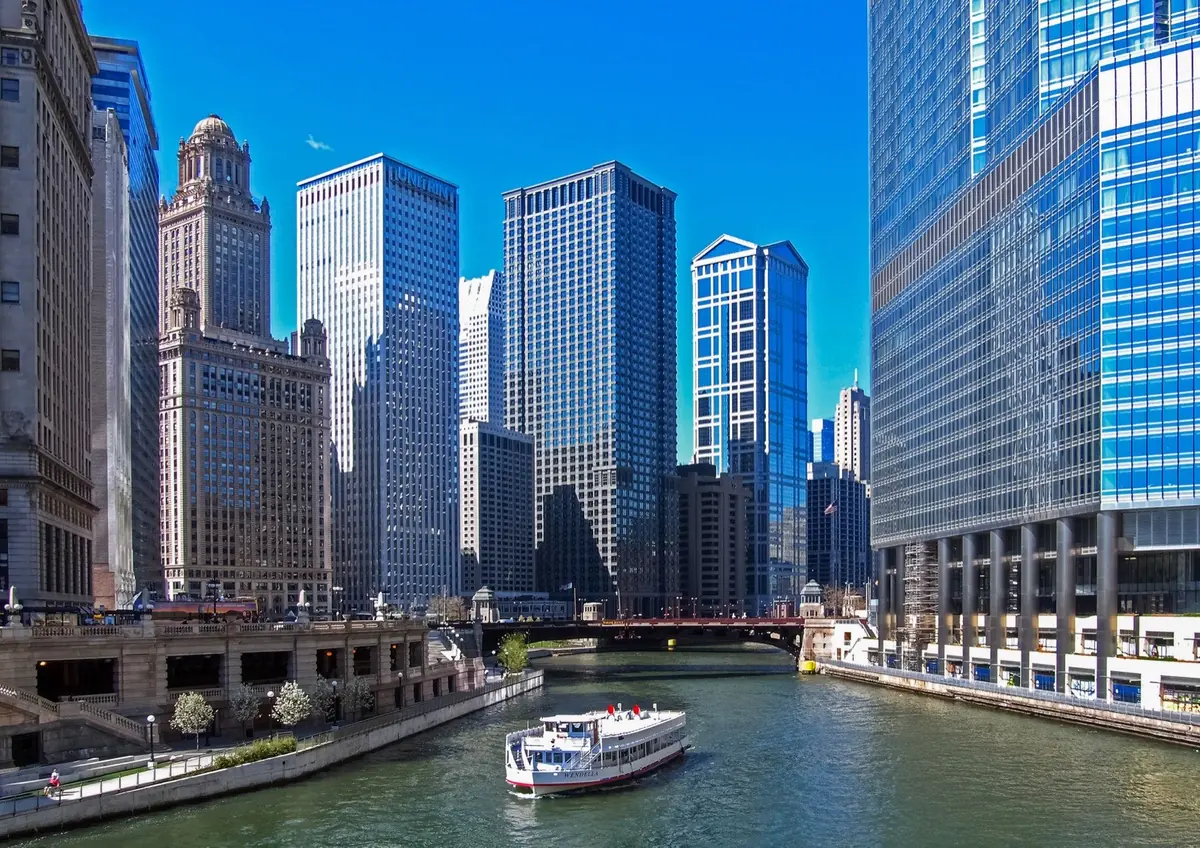
North of the river, the street began as Pine Street, a narrow, mostly residential road cut off from the Loop; the area around the Old Water Tower later became Towertown, a bohemian district of studios and nightclubs, according to the city's Chicago Landmarks tour material. Daniel Burnham's 1909 Plan of Chicago proposed a grand bridge linking South Michigan Boulevard to a widened North Michigan Avenue. The Michigan Avenue Bridge opened in 1920, and in the following decade dozens of buildings rose between Tribune Tower and the Drake Hotel, many of which still stand. Styles of the period ranged from Beaux-Arts classicism to Gothic Revival and vertical-style modernism.
The bridge and its esplanade were designed by Edward Bennett with Pihlfeldt and Young. The esplanade followed in 1926, and the monumental bridge sculptures were added in 1928. The bridge and esplanade became a Chicago Landmark on October 2, 1991, and the span was renamed the DuSable Bridge in 2010 for Jean Baptiste Point du Sable.
Developer Arthur Rubloff is credited with coining the name "Magnificent Mile" in the 1940s (Wikipedia gives 1947). Together with partner William Zeckendorf, he bought or gained control of much of the property along the avenue at Depression-era prices and promoted a plan by Holabird and Root for new buildings and renovations. The phrase is now a registered trademark of The Magnificent Mile Association.
The Wrigley Building and Tribune Tower, part of the Michigan-Wacker Historic District, anchor the southern end near the bridge; Tribune Tower became a Chicago Landmark in 1989. Further north, the Palmolive Building at 919 North Michigan, completed in 1929, rises 37 floors and about 565 feet and has been a Chicago Landmark since 2000. The Drake Hotel became a Chicago Landmark in 1985 as part of the East Lake Shore Drive District, and the Allerton Hotel in 1998. The John Hancock Center, completed in 1969, is 100 floors and 1,127 feet tall, and Water Tower Place, which opened in 1975, rises 74 floors.
The Old Chicago Water Tower, a Lemont limestone tower completed in 1869 and designed by William Boyington, is widely described as the only public building in the burned zone to survive the Great Chicago Fire of 1871. It once enclosed a standpipe that regulated water pressure alongside the neighboring pumping station, and today it houses the City Gallery. Critic Oscar Wilde reportedly called it a castellated monstrosity. The surrounding Old Chicago Water Tower District is a Chicago Landmark district.
The corridor is home to department stores such as Bloomingdale's, Neiman Marcus and Nordstrom, plus three malls: Water Tower Place, The Shops at North Bridge and 900 North Michigan Shops. Wikipedia notes that many luxury brands moved onto nearby Oak Street after the 2008 financial crisis, so the retail mix has shifted over time; store lineups change often, so check before planning around a particular brand. The American Planning Association named Michigan Avenue one of its Great Streets in 2007. Planters in the median are planted with tulips that bloom in spring, and the holiday season is marked by a lights festival and tree lighting.
The Mile is walkable, but it works well as part of a larger day. Voyzo's private vehicle and driver can collect you at your hotel door to door, drop you near the bridge or the Water Tower, and meet you at the far end so you only walk the stretch you want. Nearby, the Chicago River cruise, Grant Park and Millennium Park are all part of the same downtown loop.
See every tour and attraction we cover in Chicago.