TorontoOntario · 36 tours
 Niagara FallsOntario · 25 tours
 New York CityNew York · 30 tours
 Las VegasNevada · 8 tours
 San FranciscoCalifornia · 16 tours
 VancouverBritish Columbia · 17 tours
 DubaiUAE · 54 tours
 Abu DhabiUAE · 5 tours
 Buenos AiresArgentina · 23 tours
 AthensGreece · 31 tours
 AucklandNew Zealand · 38 tours
 CancunMexico · 54 tours
No destinations match “”. Try searching all tours instead — that search understands full questions, not just place names.
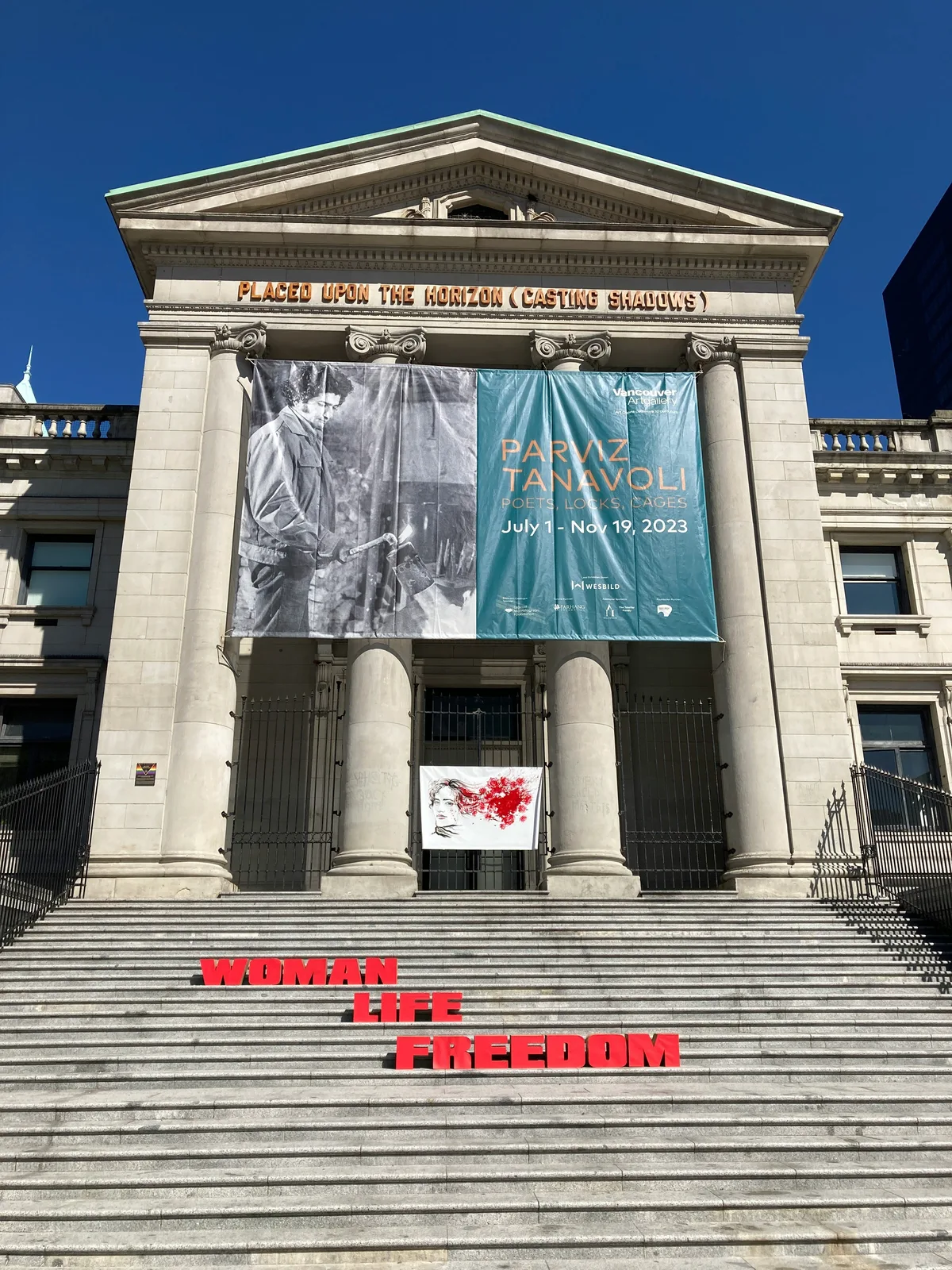
Housed in a 1906 former courthouse building in the heart of downtown, Vancouver's main art museum holds a major collection of work by Northwest Coast-associated painter Emily Carr alongside rotating contemporary exhibitions.
Visitor guide
The Vancouver Art Gallery is housed at 750 Hornby Street in downtown Vancouver, in a Neoclassical building that began life in 1911 as the provincial courthouse. It is the city's principal public art museum, founded in 1931, and it occupies one of the most recognisable heritage buildings in the city core, facing the lawn and plaza that function as an informal gathering place.
Architect Francis Mawson Rattenbury, already known for the British Columbia Parliament Buildings and the Fairmont Empress in Victoria, won a 1905 design competition for a new provincial courthouse. The Canadian Register gives construction as 1907 to 1911 (the gallery's own history calls it a 1906 building), and the courthouse opened in the fall of 1911 with 18 courtrooms. According to the Canadian Register, by 1914 a large new wing designed by Thomas Hooper had been added on the west side. Granite lions from Nelson Island were placed at the entrance in 1910; the western lion was damaged by dynamite blasts in 1942 and repaired. Courts continued to operate here until 1979, when proceedings moved to the new Law Courts complex designed by Arthur Erickson across the street.
Parks Canada's Canadian Register lists the building as the Former Vancouver Law Courts National Historic Site, formally recognised in 1980, describing it as an enduring visual landmark and a symbol of justice. Its conversion followed: Erickson's firm reworked the old courthouse as part of the Robson Square complex in a renovation reported at about CA$20 million, and the gallery moved in during 1983. According to Wikipedia, the gallery holds the building under a 99-year sublease signed with the City of Vancouver in 1974.
The Vancouver Art Gallery Association was established in April 1931, and the first gallery opened on 5 October 1931 at 1145 West Georgia Street in a building by Sharp and Thompson Architects. Emily Carr died in 1945 and bequeathed a large number of her works to the people of British Columbia, to be held in trust by the gallery, which describes the resulting Emily Carr Trust Collection as nearly 200 works. That bequest is one reason Carr remains central to the institution: the gallery describes the Emily Carr Trust Collection as comprising nearly 200 works.
As of a 2018 count cited on Wikipedia, the permanent collection held about 12,000 works, owned by the City of Vancouver with the gallery acting as custodian. About half are by artists from Western Canada, with particular emphasis on Lower Mainland art, First Nations art and Asian art. Indigenous holdings include work by Haida, Heiltsuk, Kwakwaka'wakw, Nuu-chah-nulth, Nuxalk and Tlingit makers, among others, and a 2015 bequest brought in 37 First Nations works, including carvings by Robert Davidson. The gallery's own website acknowledges that it stands on the ancestral and unceded territories of the Musqueam, Squamish and Tsleil-Waututh Nations, and it runs the Centre for Global Asias (formerly the Institute of Asian Art), founded in 2014.
The gallery's front steps and lawn have long been used for public events and protest. The 2010 Olympic countdown clock stood on the lawn from 2007, and in June 2021 a vigil of 215 pairs of shoes was set out there for the children whose remains were found at the Kamloops Indian Residential School. Those moments are a useful reminder that the building is as much civic space as museum.
The gallery has outgrown its heritage home, and planning for a purpose-built museum began around 2004. Herzog & de Meuron was selected as design architect in 2014 for a site at Larwill Park, and a groundbreaking was held in September 2023. In December 2024 the gallery announced it was scrapping that design after projected costs rose from about $400 million to about $600 million. Future plans may have changed since, so check the gallery directly for the current situation.
The Hornby Street building sits a short walk from Robson Square, Robson Street shopping and the waterfront, so it combines easily with other downtown stops. Exhibitions rotate, and the main galleries have in the past been supplemented by programming such as the FUSE performance series; confirm current exhibitions, hours and tickets with the gallery before you go.
Because a Voyzo private tour uses a private vehicle and driver with door-to-door pickup, the gallery works well as a short downtown stop in a longer day, with time on the courthouse steps and in the galleries set by your own group rather than a fixed schedule.
See every tour and attraction we cover in Vancouver.