TorontoOntario · 36 tours
 Niagara FallsOntario · 25 tours
 New York CityNew York · 30 tours
 Las VegasNevada · 8 tours
 San FranciscoCalifornia · 16 tours
 VancouverBritish Columbia · 17 tours
 DubaiUAE · 54 tours
 Abu DhabiUAE · 5 tours
 Buenos AiresArgentina · 23 tours
 AthensGreece · 31 tours
 AucklandNew Zealand · 38 tours
 CancunMexico · 54 tours
No destinations match “”. Try searching all tours instead — that search understands full questions, not just place names.
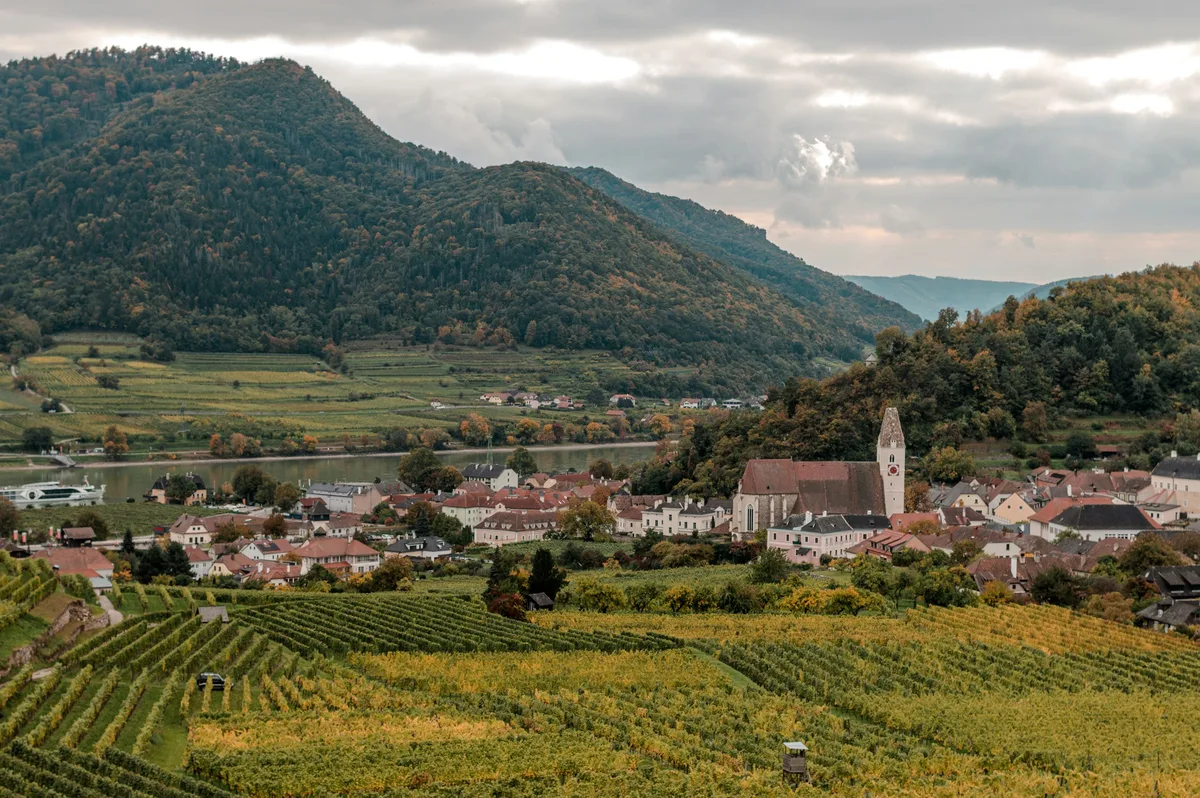
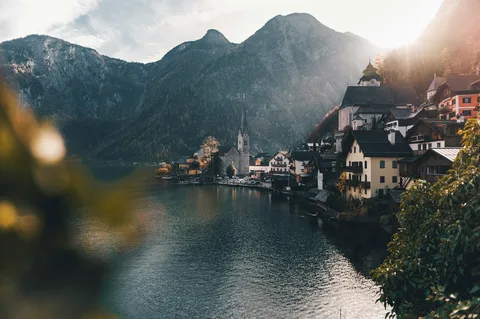
A UNESCO World Heritage wine region along the Danube between Melk and Krems, with terraced vineyards, riverside villages, and Dürnstein's ruined castle overlooking it all.
Visitor guide
The Wachau is a stretch of the Danube valley in Lower Austria between the towns of Melk and Krems, about 36 kilometres long. UNESCO inscribed it in 2000 as the Wachau Cultural Landscape, recognising its monasteries, castles, riverside towns and terraced vineyards.
According to Wikipedia, the valley has been settled since prehistoric times. Palaeolithic figurines found at Galgenberg and Willendorf are dated to roughly 32,000 and 26,000 years old respectively. In 15 BC the Celtic kingdom of Noricum became part of the Roman Empire, and the Danube formed the frontier, with a fort at Castrum Favianis, today Mautern an der Donau, at the downstream end of the valley. Krems is recorded as Urbs Chremisa in 995, and the valley name appears as locus Wahowa in 853.
From 976 the Babenberg margraves ruled the region. The four towns of St. Michael, Wösendorf, Joching and Weissenkirchen functioned independently between 1150 and 1839 and only formed the single entity of Tal Wachau in 1972.
Dürnstein is among the most visited places in the Wachau. Its castle ruin is associated with King Richard I of England, who was held captive in the castle above the town in 1192 by Duke Leopold V of Austria after a quarrel during the Third Crusade. Wikipedia notes that he was later handed to Emperor Henry VI. The story that his French aide Blondel helped win his freedom is described there as a myth. The castle was almost completely destroyed by Swedish troops under Lennart Torstenson in 1645.
Dürnstein Abbey, founded in 1410 and rebuilt in Baroque style from 1710, is famous for its blue tower, which is clearly visible from the river. The monastery was dissolved in 1788 on the order of Emperor Joseph II.
The architectural character of the valley rests on its monasteries, Melk Abbey and Göttweig Abbey among them, as well as its castles and medieval towns. Melk Abbey was rebuilt from 1702, the canons' abbey in Dürnstein was refurbished between 1715 and 1733, and the major reconstruction of Göttweig began in 1719. Winegrowers' farmsteads follow oblong, L- or U-shaped layouts with gated walls, vaulted passages and Baroque facades, often with steeply pitched hipped roofs.
Monasteries from the 9th century onwards drove the creation of vine terraces on the steep slopes. Grüner Veltliner and Riesling grapes are still grown on the terraces along the Danube. Wikipedia describes the area as having some 5,000 historic monuments, most of them privately owned, and the valley has also been part of the Natura 2000 network since 1994.
The Wachau is crossed by the Danube, which flows from Melk through a meander near Dürnstein and then east past Krems. Spitz lies on the western bank and Melk on the eastern. Wikipedia notes that historic sights can be visited by river steamer, with May to September given as the best season, and that a well-developed road follows the valley contours between Melk and Krems. A private vehicle with a driver is a practical way to combine towns, viewpoints, abbeys and wine-growing villages in one day without worrying about parking or tasting.
See every tour and attraction we cover in Austria.