
 TorontoOntario · 36 tours
 Niagara FallsOntario · 25 tours
 New York CityNew York · 30 tours
 Las VegasNevada · 8 tours
 San FranciscoCalifornia · 16 tours
 VancouverBritish Columbia · 17 tours
 DubaiUAE · 54 tours
 Abu DhabiUAE · 5 tours
 Buenos AiresArgentina · 23 tours
 AthensGreece · 31 tours
 AucklandNew Zealand · 38 tours
 CancunMexico · 54 tours
No destinations match “”. Try searching all tours instead — that search understands full questions, not just place names.
A private literary day trip to Walden Pond and Orchard House.
A private day trip to Concord's literary landmarks — Walden Pond, Louisa May Alcott's Orchard House, Sleepy Hollow Cemetery, and The Old Manse — the Transcendentalist side of Concord.
This tour focuses on Concord's literary and Transcendentalist history — Walden Pond, Orchard House, Sleepy Hollow Cemetery — distinct from our Revolutionary War-focused Lexington & Concord tour, which covers Battle Road and the Old North Bridge instead.
A popular starting point — every Voyzo itinerary is fully customizable, so we'll shape the order and stops around your group.
Trinity Church, 206 Clarendon St (Copley Square), or hotel pickup on request.
The real pond where Henry David Thoreau lived and wrote.
The home where Alcott wrote Little Women, with admission included.
The resting place of Thoreau, Emerson, and the Alcott family.
The historic home overlooking the Old North Bridge, linked to Emerson and Hawthorne.
Back to your hotel, home, or the airport — whenever your day wraps up.
Every group size is covered — from an intimate private ride to large multi-coach groups.
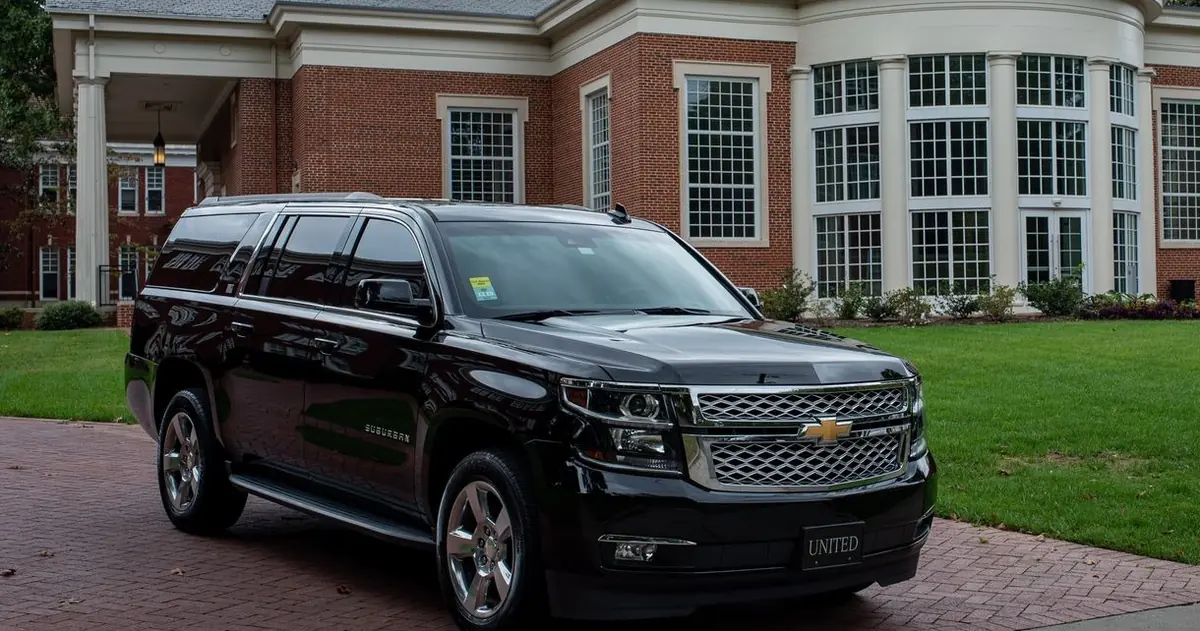 Up to 6
A fast, private ride for couples, small families, or business travelers — plenty of luggage room and a smooth, quiet cabin.
 Up to 14
Comfortable, air-conditioned seating for small and mid-size groups — our most popular option for families and friend groups traveling together.
 Up to 56
Our largest single vehicle — a full-size luxury motorcoach for large groups, conventions, and corporate events that still want one private tour, one vehicle.
A private day trip to Concord's literary landmarks — Walden Pond, Louisa May Alcott's Orchard House, Sleepy Hollow Cemetery, and The Old Manse — the Transcendentalist side of Concord. This tour focuses on Concord's literary and Transcendentalist history — Walden Pond, Orchard House, Sleepy Hollow Cemetery — distinct from our Revolutionary War-focused Lexington & Concord tour, which covers Battle Road and the Old North Bridge instead.
Walden Pond's fame rests on a very specific, very small building: in the spring of 1845, Henry David Thoreau borrowed a wooded lot on the pond's shore from his friend and mentor Ralph Waldo Emerson and built himself a one-room cabin, about 10 by 15 feet, for a total cost he later calculated at $28.12. He moved in on July 4, 1845, and stayed roughly two years, two months, and two days, using the experience as the basis for Walden, published in 1854 as an account of what it meant to live deliberately with only life's essentials. The cabin itself didn't survive, and its exact site was actually lost for almost a century until an archaeologist named Roland Robbins rediscovered it in 1945 — the pond was declared a National Historic Landmark in 1962 largely on the strength of that one book.
Orchard House holds a similarly concrete literary fact: Louisa May Alcott wrote Little Women there in just six weeks, working at a small shelf-desk her father built into her bedroom wall, and the 1868 novel drew directly on her own childhood in Concord with her three sisters. The Alcotts lived in the house from 1858 to 1877, and Louisa's father, Bronson Alcott, was himself a Transcendentalist philosopher and educator who ran in the same circle as Emerson and Thoreau — which is part of why Orchard House sits so naturally alongside Walden Pond on a literary itinerary rather than a purely Revolutionary one. The house wasn't opened to the public until 1911, twenty-three years after both Louisa and her father had died.
Sleepy Hollow Cemetery, consecrated in 1855 with remarks delivered by Emerson himself, is where that whole circle of writers ended up together: Authors' Ridge, a quiet rise within the cemetery, holds the graves of Emerson, Thoreau, Hawthorne, and the Alcott family within a short walk of one another. It's become enough of a pilgrimage site that visitors regularly leave pencils at Thoreau's headstone, a small, informal tradition that's grown up entirely on its own.
The Old Manse, meanwhile, connects Concord's literary history back to its Revolutionary one in a single building. Built in 1770 for the patriot minister William Emerson — Ralph Waldo Emerson's grandfather — the house looks directly out over the Old North Bridge, and William Emerson actually watched the April 19, 1775 battle there from his own fields while his family watched from the upstairs windows. Six decades later, his grandson drafted the essay "Nature" in an upstairs study of the same house; published in 1836, it's generally credited as the opening statement of American Transcendentalism. Nathaniel Hawthorne later lived there with his new wife Sophia, in a vegetable garden Thoreau had planted for them as a wedding gift, and named his 1846 short story collection, Mosses from an Old Manse, after the house itself.
Every Voyzo tour is a starting point — tell us what you have in mind and we'll build it.