
 TorontoOntario · 36 tours
 Niagara FallsOntario · 25 tours
 New York CityNew York · 30 tours
 Las VegasNevada · 8 tours
 San FranciscoCalifornia · 16 tours
 VancouverBritish Columbia · 17 tours
 DubaiUAE · 54 tours
 Abu DhabiUAE · 5 tours
 Buenos AiresArgentina · 23 tours
 AthensGreece · 31 tours
 AucklandNew Zealand · 38 tours
 CancunMexico · 54 tours
No destinations match “”. Try searching all tours instead — that search understands full questions, not just place names.
A private day trip pairing Salem's history with an oceanfront castle.
A private day trip from Boston to Salem and Hammond Castle Museum — the Salem Witch Trials Memorial, the Witch House, Ropes Mansion, and a real castle built into the Gloucester coastline.
This tour includes a genuine 2-hour-plus visit to Hammond Castle, a real oceanfront estate, before heading to Salem's historic district.
A popular starting point — every Voyzo itinerary is fully customizable, so we'll shape the order and stops around your group.
Door-to-door hotel pickup in Boston or Cambridge.
A real medieval-style castle on the Gloucester coast, with admission included.
A stop at the memorial honoring the victims of the 1692 trials.
The only structure still standing with direct ties to the trials.
A historic Salem estate and its garden, part of the walking route.
Back to your hotel, home, or the airport — whenever your day wraps up.
Every group size is covered — from an intimate private ride to large multi-coach groups.
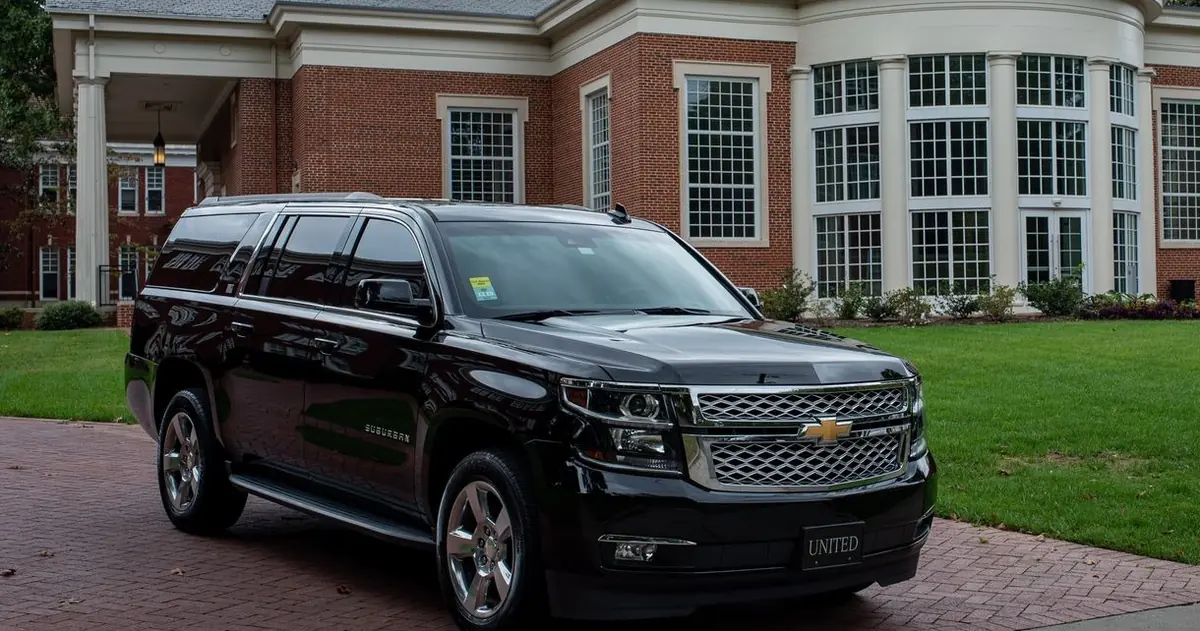 Up to 6
A fast, private ride for couples, small families, or business travelers — plenty of luggage room and a smooth, quiet cabin.
 Up to 14
Comfortable, air-conditioned seating for small and mid-size groups — our most popular option for families and friend groups traveling together.
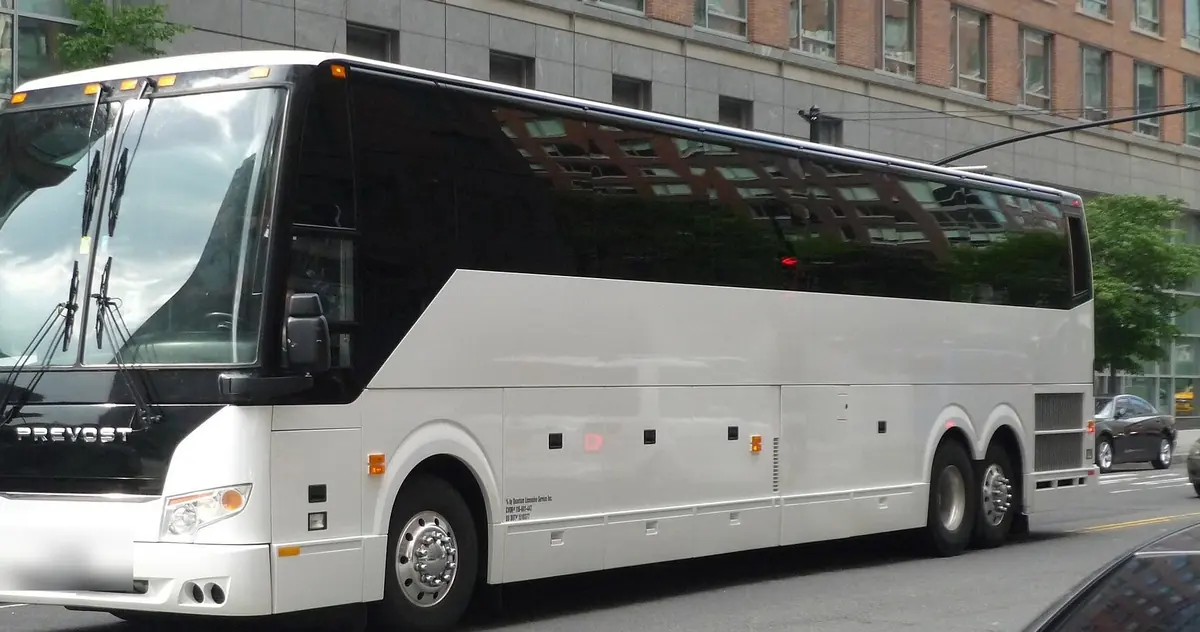 Up to 56
Our largest single vehicle — a full-size luxury motorcoach for large groups, conventions, and corporate events that still want one private tour, one vehicle.
A private day trip from Boston to Salem and Hammond Castle Museum — the Salem Witch Trials Memorial, the Witch House, Ropes Mansion, and a real castle built into the Gloucester coastline. This tour includes a genuine 2-hour-plus visit to Hammond Castle, a real oceanfront estate, before heading to Salem's historic district.
Hammond Castle is a genuinely strange building to find on a quiet stretch of the Gloucester coastline, and that's because it was never meant to be a conventional house. It was built between 1926 and 1929 for John Hays Hammond Jr., an eccentric American inventor who had worked as a young protégé under both Thomas Edison and Alexander Graham Bell. Hammond became known as the "Father of Radio Control" for his pioneering work in wireless remote-control technology — the foundational research behind what would eventually become modern drone and missile-guidance systems — and over his career he filed for roughly 400 patents, placing him second only to Edison himself in sheer volume of American inventions. He built the castle in four distinct architectural styles, one per section — a Romanesque Great Hall, a medieval-town-square courtyard, and Gothic and French Renaissance living quarters — specifically to house his own laboratory alongside his sizeable personal collection of Roman, medieval, and Renaissance artifacts.
The centerpiece of the Great Hall is a genuinely enormous pipe organ, with roughly 8,200 individual pipes, that Hammond began building himself in the early 1920s — before the castle itself even existed around it. He used it for his own acoustic experiments as much as for music. A popular local story holds that Nikola Tesla once lived at the castle during a rough financial patch, but the real history doesn't support it: by the time the castle was finished, Tesla and Hammond had already had a public falling-out, with Tesla accusing Hammond of patenting ideas lifted from his own earlier work. It's a fun story that keeps getting repeated, but not one the historical record backs up.
Salem's own history is handled plainly on this stop, as it should be. In 1692, more than 160 people across Essex County were formally accused of witchcraft, and twenty-five ultimately died as a result — nineteen were hanged, one man was pressed to death under stones after refusing to enter a plea, and at least five more died from the conditions inside the overcrowded local jails. The Salem Witch Trials Memorial, dedicated in 1992 on the 300th anniversary, is a deliberately understated space built to honor those twenty-five people rather than to dramatize what happened to them.
The Witch House, a short walk away, is genuinely the only structure still standing in Salem with a direct, documented connection to the 1692 trials — it was the home of magistrate Jonathan Corwin, who sat on the special court that sent the accused to the gallows. Interestingly, there's no record of any interrogation or trial actually taking place inside the house itself, despite Corwin's central role in the proceedings; the building itself was physically moved about 35 feet in the 1940s as part of a citizen-led restoration effort that saved it from demolition. Ropes Mansion, the other historic stop on this route, tells an entirely different and gentler Salem story — a Georgian-style home built around 1727 for merchant Samuel Barnard and later owned for generations by the Ropes family, with a garden added in 1912 that's open to the public year-round, and whose exterior doubled as Allison's house in the 1993 film Hocus Pocus.
Every Voyzo tour is a starting point — tell us what you have in mind and we'll build it.