
 TorontoOntario · 36 tours
 Niagara FallsOntario · 25 tours
 New York CityNew York · 30 tours
 Las VegasNevada · 8 tours
 San FranciscoCalifornia · 16 tours
 VancouverBritish Columbia · 17 tours
 DubaiUAE · 54 tours
 Abu DhabiUAE · 5 tours
 Buenos AiresArgentina · 23 tours
 AthensGreece · 31 tours
 AucklandNew Zealand · 38 tours
 CancunMexico · 54 tours
No destinations match “”. Try searching all tours instead — that search understands full questions, not just place names.
A private walking tour of Brooklyn's Black cultural heritage in Fort Greene and Clinton Hill.
A private walking tour for your group only through Brooklyn's real Black cultural heritage — Fort Greene Park, the Prison Ship Martyrs' Monument, and the Brooklyn Academy of Music.
This is a private tour for your group only. Real stops include Fort Greene Park and its Prison Ship Martyrs' Monument, with a pass-by of the Brooklyn Academy of Music, tracing the neighborhood's real Black cultural heritage.
A popular starting point — every Voyzo itinerary is fully customizable, so we'll shape the order and stops around your group.
Meeting point in Fort Greene, Brooklyn, confirmed ahead of your tour.
A real, historic Brooklyn park with deep community roots.
A genuine, significant historic monument within the park.
A real, storied cultural institution central to the neighborhood.
A different real Brooklyn neighborhood and history.
Back to your hotel, home, or the airport — whenever your day wraps up.
Every group size is covered — from an intimate private ride to large multi-coach groups.
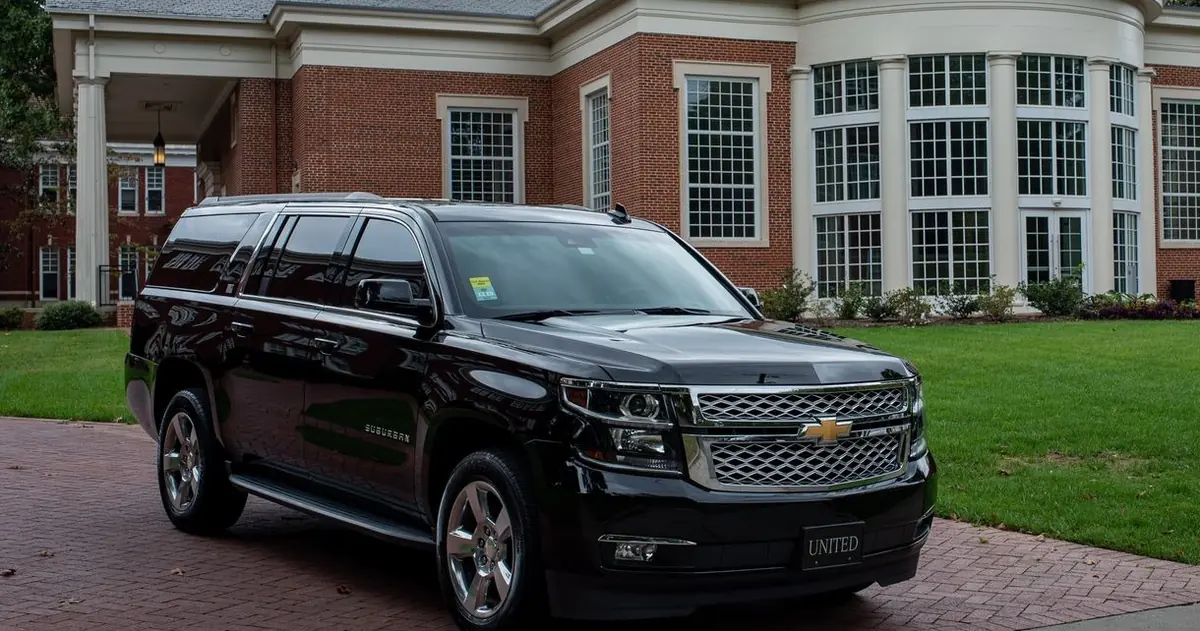 Up to 6
A fast, private ride for couples, small families, or business travelers — plenty of luggage room and a smooth, quiet cabin.
 Up to 14
Comfortable, air-conditioned seating for small and mid-size groups — our most popular option for families and friend groups traveling together.
 Up to 56
Our largest single vehicle — a full-size luxury motorcoach for large groups, conventions, and corporate events that still want one private tour, one vehicle.
A private walking tour for your group only through Brooklyn's real Black cultural heritage — Fort Greene Park, the Prison Ship Martyrs' Monument, and the Brooklyn Academy of Music. This is a private tour for your group only. Real stops include Fort Greene Park and its Prison Ship Martyrs' Monument, with a pass-by of the Brooklyn Academy of Music, tracing the neighborhood's real Black cultural heritage.
Fort Greene Park's own history predates the neighborhood's Black cultural heritage by nearly a century. Designed in 1864 by Frederick Law Olmsted and Calvert Vaux — the same team behind Central Park and Prospect Park — the park contains the Prison Ship Martyrs' Monument, a 149-foot Doric column designed by architect Stanford White and dedicated in 1908. It honors more than 11,500 American soldiers, sailors, and civilians who died aboard British prison ships anchored in nearby Wallabout Bay during the Revolutionary War — a toll that, by most historical accounts, exceeded American combat deaths in every battle of the war combined. Their remains were recovered and reinterred in a crypt beneath the monument in 1873.
Over the 20th century, Fort Greene and neighboring Clinton Hill became home to a significant African American community, and later to a large Caribbean and West Indian population as well — today Clinton Hill's Black and West Indian residents make up a substantial share of the neighborhood. Some of the area's historic churches reflect that layered history directly, including St. Mary's Episcopal Church (built 1858, listed on the National Register of Historic Places) and Emmanuel Baptist Church (built in the 1880s), both of which today serve congregations with deep West Indian roots.
Fort Greene's more recent cultural weight comes from filmmaker Spike Lee, who grew up partly in the neighborhood and founded his production company, 40 Acres and a Mule Filmworks, there in 1979. From 1985 to 2008, the company was headquartered in a converted early-1900s firehouse on DeKalb Avenue before relocating a few blocks away — a real, tangible thread connecting the neighborhood to a major chapter of independent Black filmmaking in America.
The Brooklyn Academy of Music, which this tour passes, adds another layer of institutional history to the neighborhood: chartered in 1859 and opened in 1861, it's often cited as the oldest continuously operating performing arts center in the country. Its original Brooklyn Heights building burned down in 1903, and BAM rebuilt in its current Fort Greene home, reopening in 1908 — making it, like Fort Greene Park itself, a genuine 19th-century institution that has outlasted the neighborhood's many changes.
Every Voyzo tour is a starting point — tell us what you have in mind and we'll build it.