
 TorontoOntario · 36 tours
 Niagara FallsOntario · 25 tours
 New York CityNew York · 30 tours
 Las VegasNevada · 8 tours
 San FranciscoCalifornia · 16 tours
 VancouverBritish Columbia · 17 tours
 DubaiUAE · 54 tours
 Abu DhabiUAE · 5 tours
 Buenos AiresArgentina · 23 tours
 AthensGreece · 31 tours
 AucklandNew Zealand · 38 tours
 CancunMexico · 54 tours
No destinations match “”. Try searching all tours instead — that search understands full questions, not just place names.
A private walking tour tracing Jewish Gilded Age history on Manhattan's Upper East Side.
A private walking tour for your group only tracing Jewish Gilded Age history — Temple Emanu-El, the Guggenheim Museum (founded by Solomon R. Guggenheim), and the Jewish Museum.
This is a private tour for your group only. Real stops include Temple Emanu-El (dedicated 1929), the Guggenheim Museum (founded by Solomon R. Guggenheim), and the Jewish Museum.
A popular starting point — every Voyzo itinerary is fully customizable, so we'll shape the order and stops around your group.
Meeting point on Manhattan's Upper East Side, confirmed ahead of your tour.
A real, grand Gilded Age synagogue, dedicated in 1929.
Founded by Solomon R. Guggenheim, of one of Gilded Age New York's most prominent Jewish dynasties.
A real, dedicated institution on Museum Mile.
Gilded Age wealth on the Upper East Side, distinct from the Lower East Side and Boro Park.
Back to your hotel, home, or the airport — whenever your day wraps up.
Every group size is covered — from an intimate private ride to large multi-coach groups.
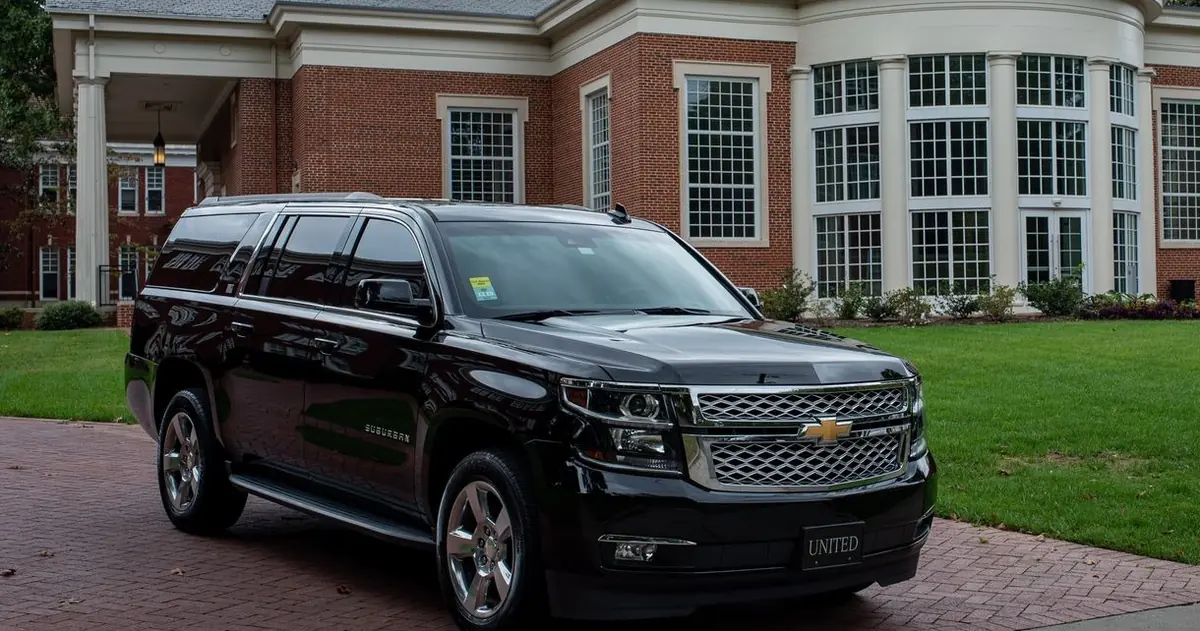 Up to 6
A fast, private ride for couples, small families, or business travelers — plenty of luggage room and a smooth, quiet cabin.
 Up to 14
Comfortable, air-conditioned seating for small and mid-size groups — our most popular option for families and friend groups traveling together.
 Up to 56
Our largest single vehicle — a full-size luxury motorcoach for large groups, conventions, and corporate events that still want one private tour, one vehicle.
A private walking tour for your group only tracing Jewish Gilded Age history — Temple Emanu-El, the Guggenheim Museum (founded by Solomon R. Guggenheim), and the Jewish Museum. This is a private tour for your group only. Real stops include Temple Emanu-El (dedicated 1929), the Guggenheim Museum (founded by Solomon R. Guggenheim), and the Jewish Museum.
This is a different era and a different social class from New York's Lower East Side or Boro Park: wealthy, German-Jewish banking families who arrived from Germany earlier in the 19th century and, within a generation or two, built financial fortunes that rivaled the Astors and Rockefellers. Names like Loeb, Sachs, Seligman, Lehman, Guggenheim, and Goldman became a kind of parallel American aristocracy, later nicknamed "Our Crowd" after a well-known 1967 social history of these families. Despite their wealth, they were excluded from the era's elite social register — the Astor-era "400" — purely on account of religion and background, and responded by building their own equally grand philanthropic and cultural institutions, many of them on Manhattan's Upper East Side.
Temple Emanu-El is a direct product of that story. The congregation was founded in 1845 by a small group of German-Jewish immigrants, originally meeting in a modest space on the Lower East Side before growing alongside its members' fortunes. After merging with Temple Beth-El in the 1920s, the congregation built its current Fifth Avenue sanctuary, completed in 1929 — at the time, the largest synagogue in the world, seating roughly 2,500 people. Emanu-El also played a defining role in the growth of Reform Judaism in America.
The Guggenheim Museum's Jewish roots run through the same banking dynasty, though it's worth getting the family history precise: the museum was founded and funded by Solomon R. Guggenheim, who began assembling his art collection and established his foundation in 1937; the Frank Lloyd Wright-designed building didn't open until 1959, a decade after his death. Solomon's brother Benjamin Guggenheim, part of the same family, died aboard the Titanic in 1912, long before the museum existed — it was Benjamin's daughter, Peggy Guggenheim, who later added her own personal collection to her uncle Solomon's foundation.
The Jewish Museum has its own real Gilded Age pedigree: it's housed in the former Felix M. Warburg House, a Gothic- and Renaissance-Revival mansion built in 1907–1908 for Felix Warburg, a partner at Kuhn, Loeb & Co. and one of the genuine "Our Crowd" bankers. After his death in 1937, the Warburg family donated the mansion to the Jewish Theological Seminary, which opened it as the Jewish Museum in 1947 — meaning the building itself is an intact survivor of the very Gilded Age wealth this tour traces.
Every Voyzo tour is a starting point — tell us what you have in mind and we'll build it.