TorontoOntario · 36 tours
 Niagara FallsOntario · 25 tours
 New York CityNew York · 30 tours
 Las VegasNevada · 8 tours
 San FranciscoCalifornia · 16 tours
 VancouverBritish Columbia · 17 tours
 DubaiUAE · 54 tours
 Abu DhabiUAE · 5 tours
 Buenos AiresArgentina · 23 tours
 AthensGreece · 31 tours
 AucklandNew Zealand · 38 tours
 CancunMexico · 54 tours
No destinations match “”. Try searching all tours instead — that search understands full questions, not just place names.
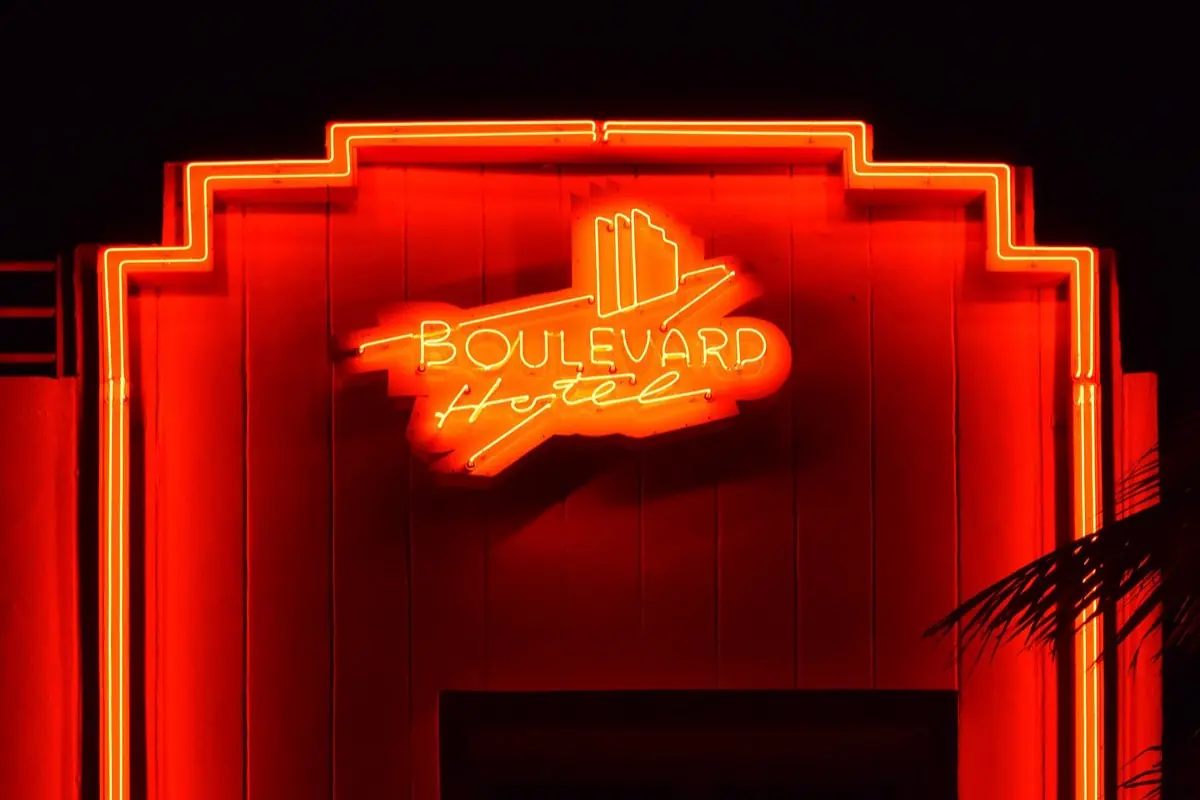
One of the largest and best-preserved collections of Art Deco architecture in the world.
Visitor guide
The Miami Beach Architectural District, better known as the Art Deco Historic District, is a compact stretch of South Beach where hotels, apartment houses and civic buildings from the 1920s through the early 1940s stand shoulder to shoulder. Listed on the National Register of Historic Places in 1979, it is often described as the world's largest concentration of Art Deco architecture, a claim worth treating as a local boast rather than a measured fact.
Miami Beach grew quickly in the early 1920s, but the Florida land bust of 1925 and the Great Miami Hurricane of 1926 left the region shaken and many residents homeless. Rebuilding picked up through the Depression years, and most of the district's buildings date from that period to the early 1940s. Earlier structures, mostly from the early to mid-1920s, tend to be Mediterranean Revival in style, while the newer wave of hotels and apartment blocks leaned into Art Deco, Streamline Moderne and a tropical variation of both.
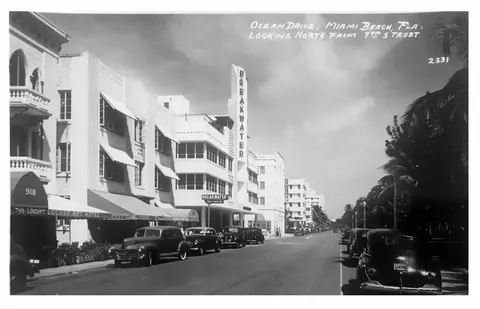
A handful of architects shaped the look of the district, among them Henry Hohauser, L. Murray Dixon, Albert Anis, Russell Pancoast and Lester Avery. Many Ocean Drive buildings show Moderne influences that echo the 1933 Chicago and 1939 New York world's fairs, with rounded corners, horizontal bands and ship-like detailing.
By the 1970s, much of South Beach was run-down and home to many elderly, mostly Jewish, retirees. Preservationist Barbara Baer Capitman and her son John, working with designers Leonard Horowitz and Lillian Barber, helped found the Miami Design Preservation League, which was incorporated in 1977. Their campaign led to the listing of the Miami Beach Architectural District on the National Register on May 14, 1979. Local accounts and the state historical marker describe it as the first urban twentieth-century district to be listed, and Capitman's goal was to save the buildings without displacing the district's low-income residents.
Sources describe the district's size a little differently. The National Register listing covers roughly a square mile of South Beach, bounded broadly by the Atlantic Ocean, Alton Road, 6th Street and the Collins Canal and Dade Boulevard to the north. Wikipedia counts about 960 historic buildings, while Miami Design Preservation League materials and older summaries speak of more than 800, so treat any single figure as approximate.
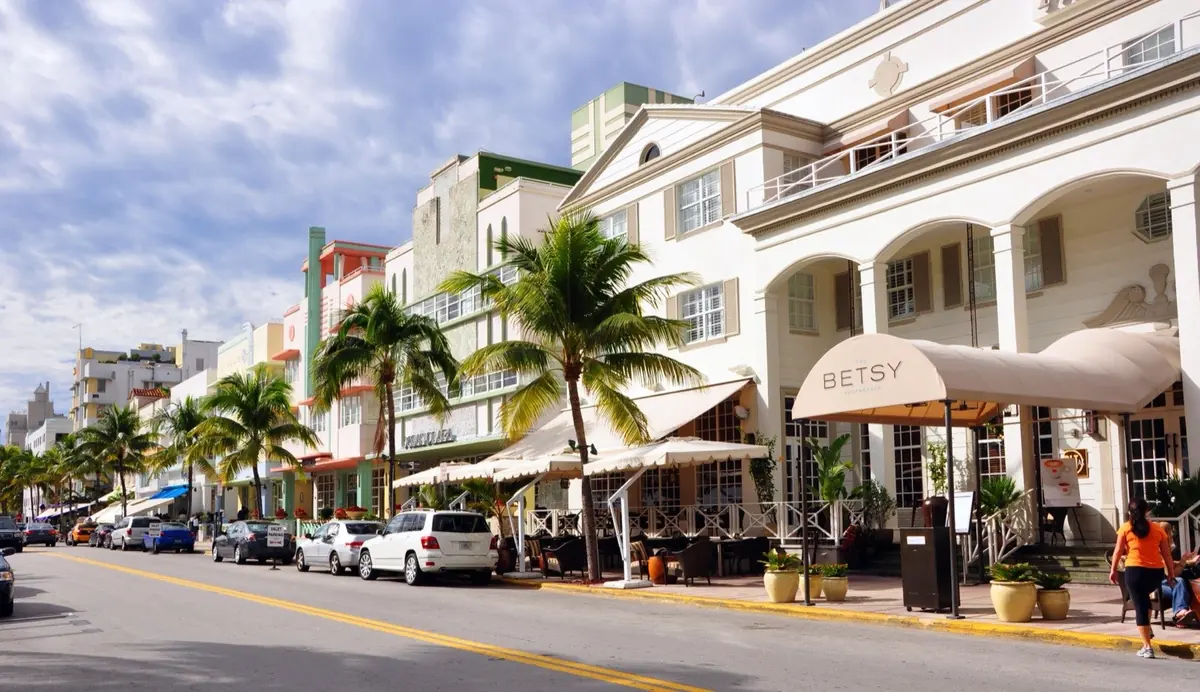
Ocean Drive is the best-known frontage, with hotels from 5th to 15th Street facing Lummus Park and the beach. Collins Avenue and Washington Avenue carry more hotels, apartment buildings and civic architecture. Landmarks frequently named include the Carlyle (1941), the Cardozo (1939), the Tides (1936), the Victor (1937), the Raleigh (1940) and the Netherlands (1935), as well as the former Miami Beach City Hall from 1927.
Part of the fun is learning to tell the styles apart. Art Deco buildings favor stepped or symmetrical facades, geometric ornament and vertical emphasis. Streamline Moderne is smoother and more horizontal, with curved corners, thin parallel lines and porthole windows. Mediterranean Revival brings barrel-tile roofs, arches and stucco. Locals also use the shorthand MiMo, for Miami Modern, for the postwar buildings of the 1950s and 60s that sit just beyond the core of the district. Pastel paint, neon at night, terrazzo floors and nautical motifs tie the area together visually.
One building often cited among the early Art Deco structures here is the former Beth Jacob synagogue at 301 Washington Avenue, now home to the Jewish Museum of Florida-FIU. As with other superlatives about the district, it is best treated as a commonly repeated local claim.
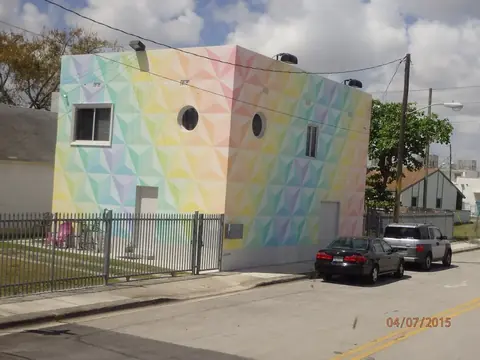
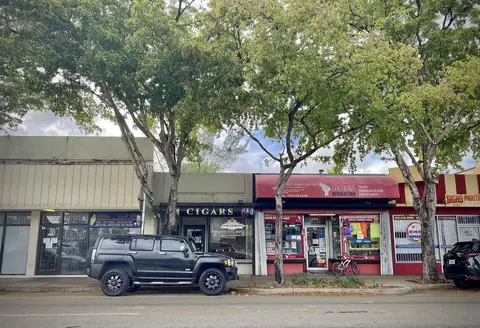
Because parking is tight and Ocean Drive traffic can be slow, a private vehicle and driver who drops you at one end and collects you at the other, with door-to-door pickup from your hotel, takes the logistics out of a South Beach visit. It also pairs naturally with a drive across the causeways to Wynwood, Little Havana or Vizcaya in a single day.
Lummus Park and the beach lie directly east of Ocean Drive, and the pedestrian Lincoln Road is a short walk west. Further north, the Collins Avenue corridor leads to Miami Beach's mid-century resorts.
See every tour and attraction we cover in Miami.