TorontoOntario · 36 tours
 Niagara FallsOntario · 25 tours
 New York CityNew York · 30 tours
 Las VegasNevada · 8 tours
 San FranciscoCalifornia · 16 tours
 VancouverBritish Columbia · 17 tours
 DubaiUAE · 54 tours
 Abu DhabiUAE · 5 tours
 Buenos AiresArgentina · 23 tours
 AthensGreece · 31 tours
 AucklandNew Zealand · 38 tours
 CancunMexico · 54 tours
No destinations match “”. Try searching all tours instead — that search understands full questions, not just place names.
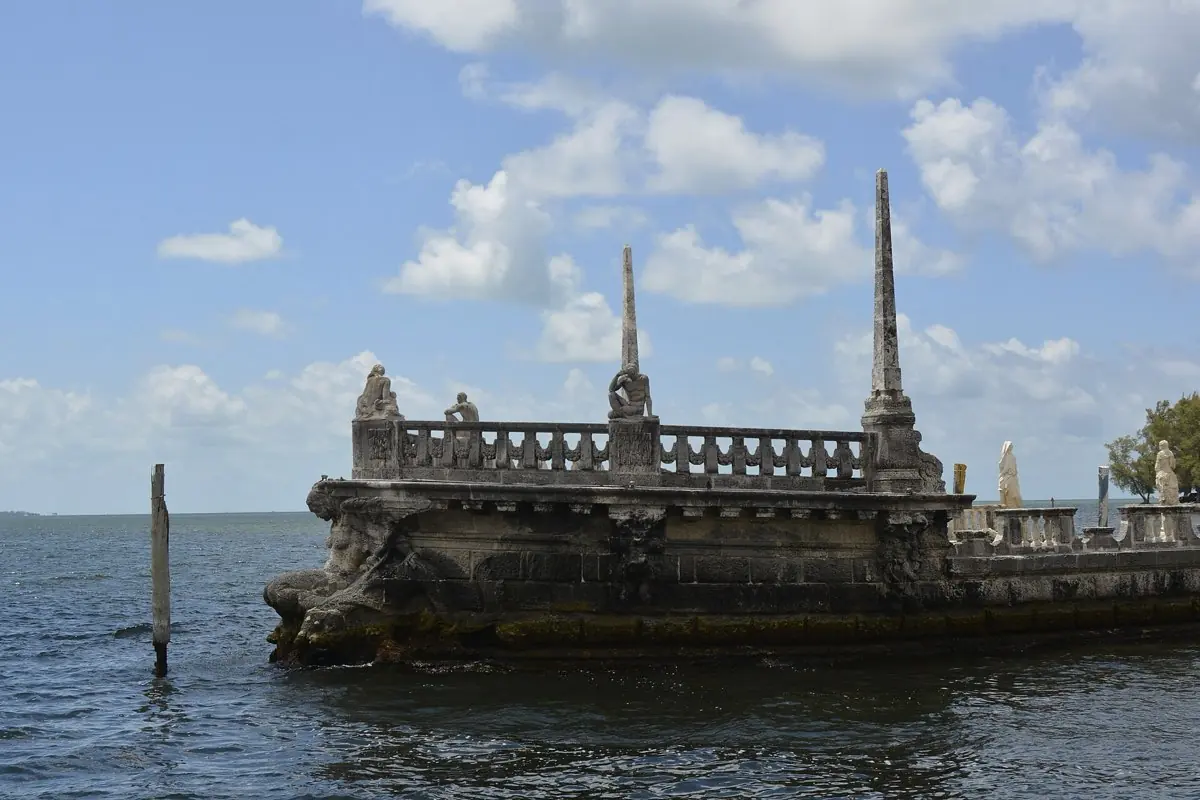
An early-20th-century Italian Renaissance-style villa and gardens on Biscayne Bay.
Visitor guide
Vizcaya Museum and Gardens is the Biscayne Bay estate that businessman James Deering built as his winter residence in what is now Coconut Grove. An Italian Renaissance-inspired villa and formal gardens, it is a National Historic Landmark and one of Miami's most distinctive historic sites.
James Deering, a businessman tied to the Deering McCormick and International Harvester fortune, began planning Vizcaya around 1910. Construction started in 1912, and Deering officially took up residence on Christmas Day 1916. The villa was built mainly between 1914 and 1922 at a reported cost of about $15 million, with gardens and village work continuing into 1923. The estate originally covered about 180 acres of shoreline mangrove and inland forest, and development was kept along the shore to conserve the forest. The name refers to the Spanish province of Biscay.
The design team included architect F. Burrall Hoffman, design director Paul Chalfin, who encouraged the collecting of art and architectural elements, and landscape architect Diego Suarez, who left the project in 1917 after disagreements with Chalfin. The villa is largely built of reinforced concrete, which was notably modern for its time. Its facade is primarily based on the Villa Rezzonico in Bassano del Grappa in the Veneto, and the estate combines European garden layouts with local materials such as Cuban limestone, Florida coral trim and palms.
Deering spent winters at Vizcaya until his death in September 1925. The 1926 Great Miami Hurricane devastated the estate and destroyed the historic rose garden with saltwater, which is now the Fountain Garden. Later hurricanes in 1992 and 2005 flooded the swimming grotto. In 1945 Deering's heirs, his nieces, sold large portions of the property to the Catholic Diocese of St. Augustine for Mercy Hospital while keeping about 50 acres. Miami-Dade County bought the villa and formal gardens in 1952 for $1 million, and the museum opened in 1953 as the Dade County Art Museum. Vizcaya was added to the National Register of Historic Places in 1970 and designated a National Historic Landmark in 1994.
Wikipedia describes more than seventy rooms and an emphasis on fifteenth- to early nineteenth-century European decorative arts, while the museum itself notes original furnishings in 34 rooms of the main house. Both are accurate descriptions of different counts, so expect a house that is more heavily furnished than many historic houses of the period.
About ten acres are formal Italian Renaissance gardens, and roughly forty acres are native hammock and circulation space. Highlights include the Secret Garden, Theater Garden, Maze Garden, Fountain Garden, and the artificial mound that anchors the garden's main axis. The stone barge sits on the bay shore. The garden casino was used as a filming location for the Mandarin's lair in Iron Man 3.
Vizcaya is operated by the Vizcaya Museum and Gardens Trust, a nonprofit, and owned and supported by Miami-Dade County. The Trust was formed in 1998 and entered a long-term operating agreement with the county in 2017.
A private vehicle and driver with door-to-door pickup is a comfortable way to reach Coconut Grove, and it pairs naturally with a drive through the neighborhood or on to Little Havana or Brickell.
The village of Coconut Grove, with its waterfront parks and cafes, is a short distance away, and downtown Miami and Brickell lie to the northeast.
See every tour and attraction we cover in Miami.