TorontoOntario · 36 tours
 Niagara FallsOntario · 25 tours
 New York CityNew York · 30 tours
 Las VegasNevada · 8 tours
 San FranciscoCalifornia · 16 tours
 VancouverBritish Columbia · 17 tours
 DubaiUAE · 54 tours
 Abu DhabiUAE · 5 tours
 Buenos AiresArgentina · 23 tours
 AthensGreece · 31 tours
 AucklandNew Zealand · 38 tours
 CancunMexico · 54 tours
No destinations match “”. Try searching all tours instead — that search understands full questions, not just place names.
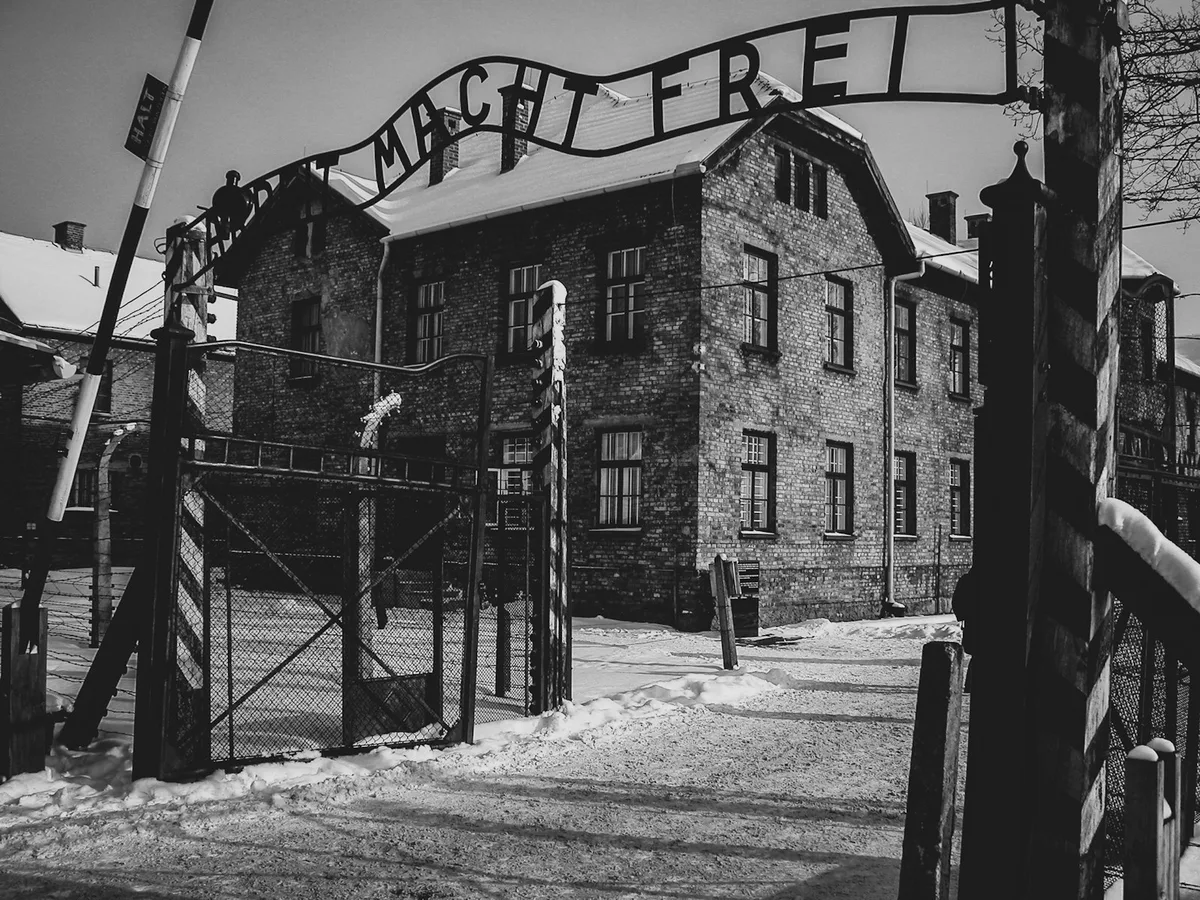
The former Nazi concentration and extermination camp near Oświęcim, preserved as a memorial and museum documenting the Holocaust — the site where over a million people were murdered during World War II.
Visitor guide
Auschwitz-Birkenau Memorial and Museum preserves the sites of Auschwitz I and Auschwitz II-Birkenau, parts of the Nazi German concentration and extermination camp complex near the town of Oswiecim in southern Poland. It is a memorial and museum documenting the Holocaust, and a UNESCO World Heritage Site. It is a place of remembrance and a serious educational visit rather than a conventional sightseeing stop.
According to Wikipedia, Auschwitz was a complex of more than 40 camps operated by Nazi Germany in occupied Poland during the Second World War. It consisted of Auschwitz I, the main camp in Oswiecim; Auschwitz II-Birkenau, a concentration and extermination camp with gas chambers; Auschwitz III-Monowitz, a labor camp; and dozens of subcamps. After Germany invaded Poland in September 1939, the SS converted an army barracks at Auschwitz I into a camp, established in April 1940, at first for Polish political prisoners. The first gassings took place around August 1941, and construction of Birkenau began soon after. From 1942 until late 1944, freight trains brought Jews from across German-occupied Europe to Birkenau.
Wikipedia states that of the roughly 1.3 million people sent to Auschwitz, about 1.1 million were murdered, including around 960,000 Jews, 74,000 non-Jewish Poles, 21,000 Romani, and 15,000 Soviet prisoners of war. On 7 October 1944 prisoners in the Sonderkommando units launched an uprising that was unsuccessful. As the Soviet Red Army approached in January 1945, the SS sent most prisoners west on death marches, and Soviet troops liberated the camp on 27 January 1945. That date has been observed since 2005 as International Holocaust Remembrance Day.
On 2 July 1947 the Polish government passed a law establishing a state memorial and museum on the site, which is the origin of the Auschwitz-Birkenau State Museum. The museum set up its exhibitions at Auschwitz I, where the first exhibition opened in 1947 and the main-camp exhibition was completed in 1955, displaying prisoner photographs and objects taken from victims such as suitcases, shoes and hair. Much of the Birkenau camp had been dismantled after the war, so the remaining grounds, ruins and surviving structures there are read largely as a landscape. Until 1990 all of the museum's directors were former Auschwitz prisoners. UNESCO added the site to the World Heritage List in 1979.
Wikipedia notes that Auschwitz has become the primary symbol of the Holocaust, in part because of the many survivors who bore witness. Memoirs by survivors including Primo Levi, Elie Wiesel and Tadeusz Borowski have shaped how the camp is understood around the world. Pope John Paul II celebrated Mass at Birkenau in 1979, and world leaders and survivors have gathered at the site for anniversary commemorations, including the 70th anniversary of the liberation in 2015. Visitor numbers have grown from about 492,500 in 2001 to around two million in 2016, according to Wikipedia.
The site is roughly 50 kilometres west of Krakow in a straight line (more by road), and Auschwitz I and Birkenau are separate locations a short distance apart. The museum has its own rules for conduct, and curators treat removing items from the ground as theft, so visitors are expected to behave quietly and respectfully throughout. A private tour with a driver from Krakow and a qualified guide can allow your group to travel comfortably and to take in the history at a considered pace; please check current museum requirements well before your visit.
See every tour and attraction we cover in Poland.