TorontoOntario · 36 tours
 Niagara FallsOntario · 25 tours
 New York CityNew York · 30 tours
 Las VegasNevada · 8 tours
 San FranciscoCalifornia · 16 tours
 VancouverBritish Columbia · 17 tours
 DubaiUAE · 54 tours
 Abu DhabiUAE · 5 tours
 Buenos AiresArgentina · 23 tours
 AthensGreece · 31 tours
 AucklandNew Zealand · 38 tours
 CancunMexico · 54 tours
No destinations match “”. Try searching all tours instead — that search understands full questions, not just place names.
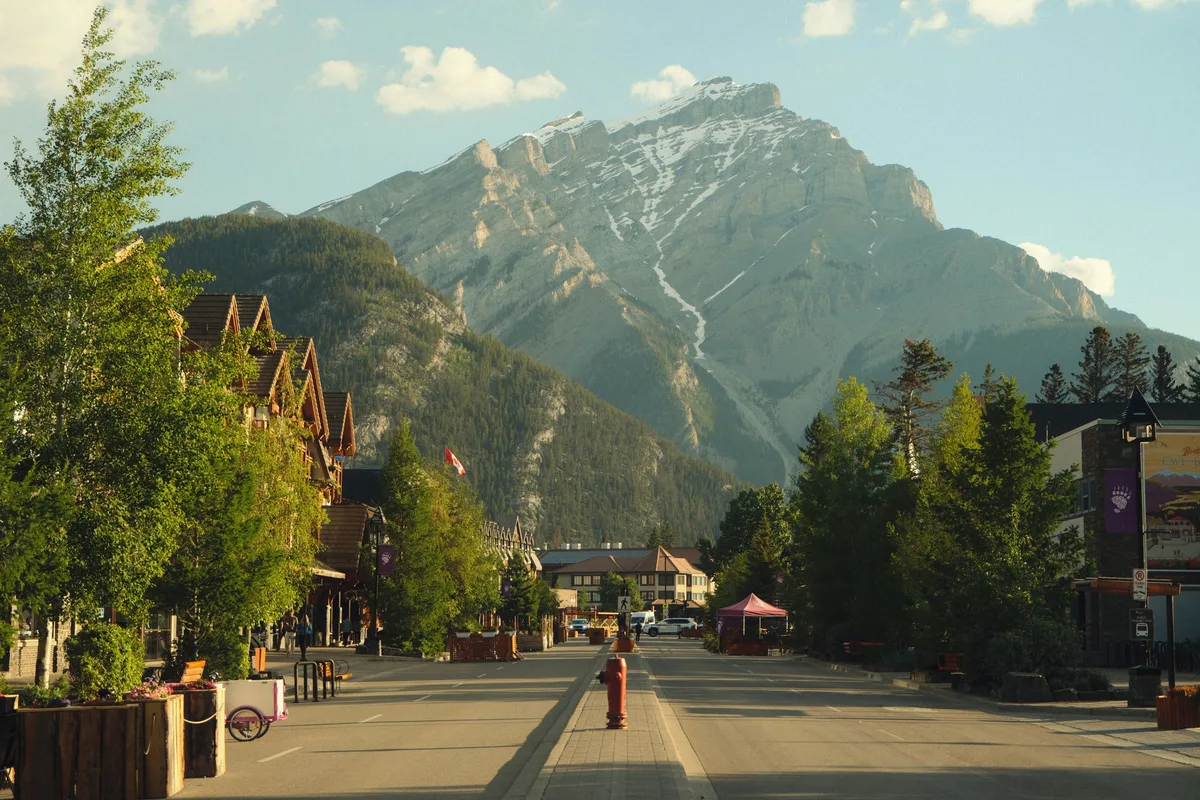
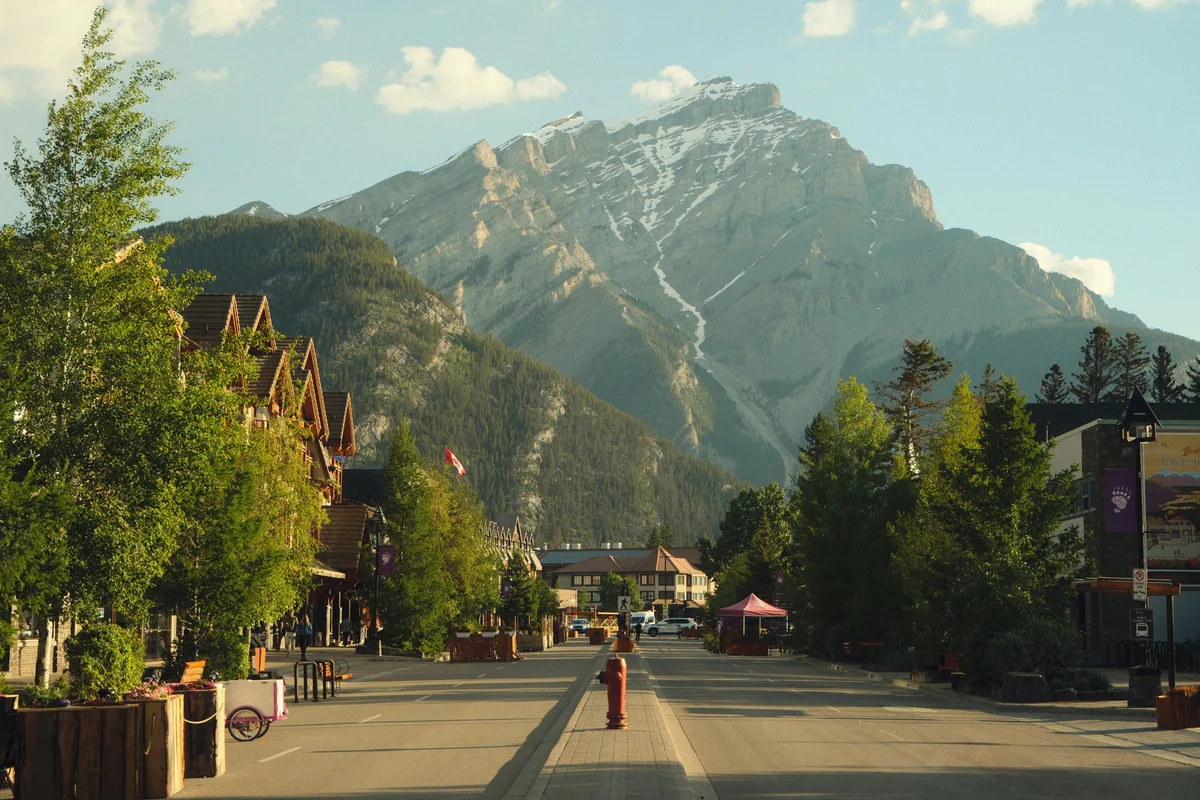
The mountain town at the heart of the park, with Banff Avenue's shops and restaurants set against Cascade Mountain.
Visitor guide
Banff is a small mountain town inside Banff National Park, sitting at around 1,400 m in the Bow Valley below Mount Rundle, Sulphur Mountain, Mount Norquay and Cascade Mountain. It grew from a railway siding and a hot-springs dispute in the 1880s into the service centre for Canada's oldest national park.
In 1883, Canadian Pacific Railway workers William and Tom McCardell and Frank McCabe found hot springs at what became the Cave and Basin site and claimed them. The federal government rejected the claim, seeing the tourism potential, and in 1885 created a 26 square kilometre reserve around the springs. On June 23, 1887, the reserve was expanded under the Rocky Mountains Park Act to roughly 670 square kilometres (sources give 665 to 674), creating Rocky Mountains National Park, Canada's first national park. The National Parks Act of 1930 renamed it Banff National Park.
The townsite began as a railway stop and was named Banff in the 1880s, after Banff, Scotland. Credit is variously given to George Stephen, the CPR's president, to Lord Strathcona, and to others, and sources do not agree, so the person who chose the name is best treated as uncertain.
The CPR promoted Banff as an international spa and tourist destination and built the Banff Springs Hotel, which opened in 1888. Banff Park Museum, built in 1903, is a National Historic Site that Parks Canada describes as the oldest surviving federal building in any Canadian national park. Banff was administered by the federal government until the Town of Banff was incorporated on January 1, 1990, a rare case of a municipality within a Canadian national park. At the 2021 census it had 8,305 residents.
From 1915 to 1917 an internment camp at Banff and nearby Castle Mountain held mostly Ukrainian immigrants during the First World War. Indigenous peoples had lived in the region for thousands of years before the park was created, and Parks Canada acknowledges that many Indigenous nations regard the hot springs as a sacred place.
The Banff Centre for Arts and Creativity on Tunnel Mountain hosts concerts, dance and theatre, and the town hosts festivals including the Banff Mountain Film Festival. The Whyte Museum of the Canadian Rockies holds art, heritage displays and archives. Banff hosted the 1991 Winter Deaflympics, the only time that event has been held in Canada. Banff was part of the Canadian Rocky Mountain Parks World Heritage Site inscribed in 1984. Nearby are Bow Falls, Lake Minnewanka, the Banff Gondola and the Upper Hot Springs on Sulphur Mountain, and the town is the starting point for the Great Divide Mountain Bike Route to New Mexico.
See every tour and attraction we cover in Banff.