TorontoOntario · 36 tours
 Niagara FallsOntario · 25 tours
 New York CityNew York · 30 tours
 Las VegasNevada · 8 tours
 San FranciscoCalifornia · 16 tours
 VancouverBritish Columbia · 17 tours
 DubaiUAE · 54 tours
 Abu DhabiUAE · 5 tours
 Buenos AiresArgentina · 23 tours
 AthensGreece · 31 tours
 AucklandNew Zealand · 38 tours
 CancunMexico · 54 tours
No destinations match “”. Try searching all tours instead — that search understands full questions, not just place names.
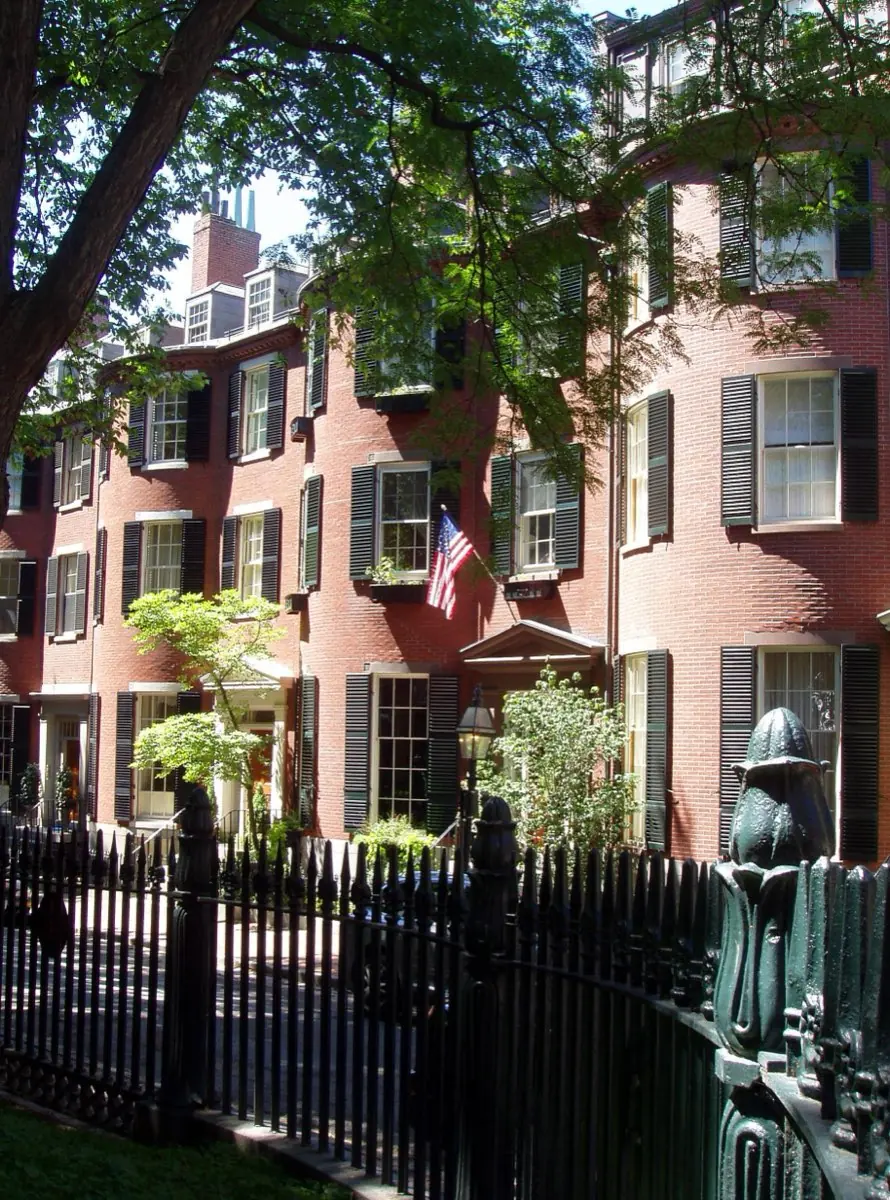
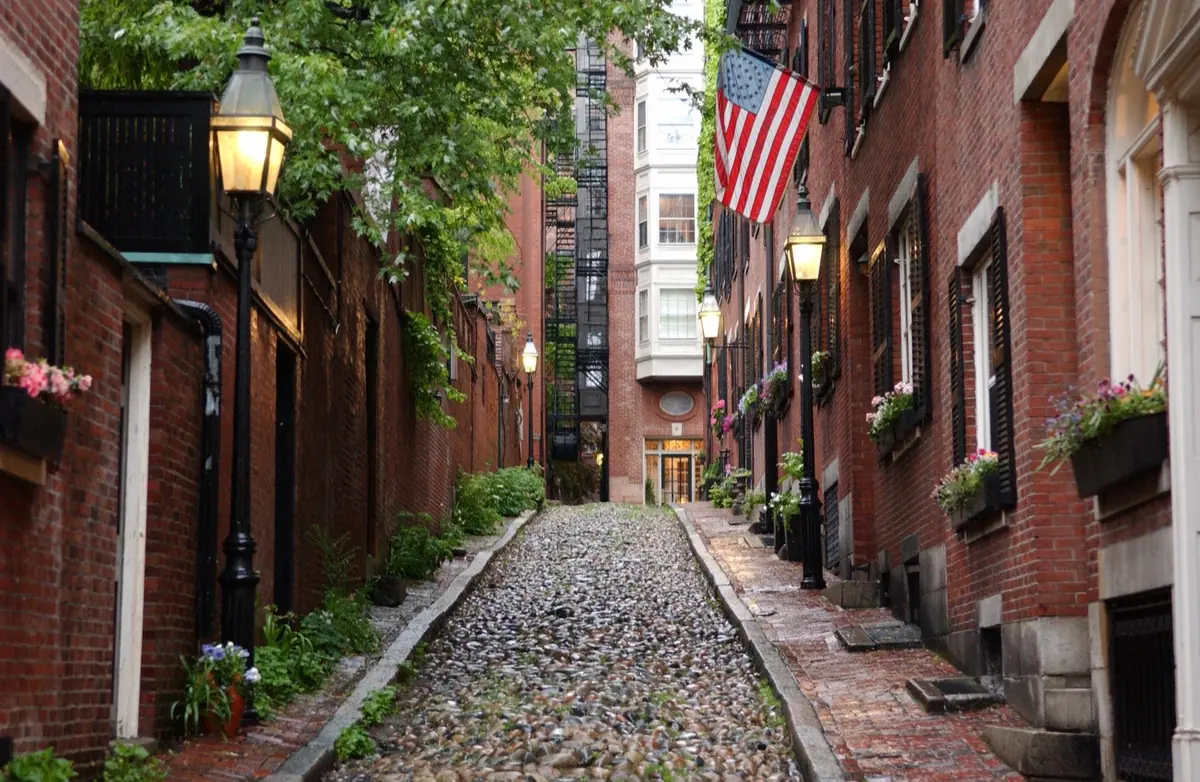
A gas-lit, Federal-style neighbourhood of narrow brick row houses near the State House.
Visitor guide
Beacon Hill is the compact, brick-built neighborhood climbing behind the Massachusetts State House, and it is one of the best-preserved early-19th-century residential districts in the United States. It is a National Historic Landmark, and its narrow lanes, gas lamps and rowhouses are the reason.
The neighborhood is named for a signal beacon, established on the hill's highest point in the 1630s, to warn the settlement of invasion. Beacon Hill was one of three neighboring hills; Pemberton Hill and Mount Vernon were leveled for development, and between 1807 and 1832 Beacon Hill itself was cut down from about 138 feet to about 80 feet. The excavated earth was used to fill the shoreline and the old Mill Pond, which added a large share of Boston's present land area.
Development took off around the Massachusetts State House, designed by Charles Bulfinch and completed in 1798 on land that had belonged to John Hancock. In 1795 investors bought roughly 18 to 19 acres west of the State House, mostly from the painter John Singleton Copley, and Mount Vernon Street was laid out a few years later. The Harrison Gray Otis House on Cambridge Street, built in 1796, was among the first homes; Bulfinch designed it and two further houses for Otis.
The streetscape is the attraction: red-brick rowhouses with decorative ironwork, brick sidewalks, narrow streets and gas lamps. Louisburg Square, with its Greek Revival townhouses, is commonly described as the neighborhood's most prestigious address. Acorn Street, a narrow cobblestone lane that once housed coachmen working for families on nearby Mount Vernon and Chestnut Streets, is often called the most photographed street in the country. Both are residential, so keep voices down and respect doors and steps.
Beacon Hill's protections came early. The Massachusetts legislature created the Historic Beacon Hill District in 1955, described as the first historic district of its kind in the state, with the Flat of the Hill added in 1958 and the north slope in 1963; an architectural commission was set up to review changes. The area was designated a National Historic Landmark on December 19, 1962, and listed on the National Register of Historic Places on October 15, 1966.
The north side of the hill was home to a substantial free Black community in the 1800s, and the National Park Service describes the area as the center of the Boston African American National Historic Site. The African Meeting House on Smith Court, built in 1806, served as the religious, educational and political heart of that community; Maria Stewart, Frederick Douglass and William Lloyd Garrison are among the speakers the NPS associates with it. Wikipedia describes it as the oldest surviving Black church built by Black Americans. Nearby, the Abiel Smith School opened in 1835 as a segregated public school for Black students, and the Hayden House was the home of Lewis and Harriet Hayden, an active center of Underground Railroad and abolitionist work. The Museum of African American History stewards the Meeting House and school.
The Robert Gould Shaw and Massachusetts 54th Regiment Memorial, which the NPS lists with the historic site, was created by Augustus Saint-Gaudens and dedicated in 1897 to honor one of the first Black regiments from the North to fight in the Civil War. The NPS also lists a ranger-led Black Heritage Trail walk; check the NPS for current schedules and availability.
Beacon Hill rewards slow, unhurried exploration, which suits a private tour: your Voyzo driver can collect you at your door, drop you at the edge of the hill so you can walk the lanes at your own pace, and meet you again afterward without any parking hunt. Beacon Hill sits beside the State House and Boston Common, so it pairs easily with those stops; check the relevant operators and the NPS for current hours, tours and access to individual sites.
See every tour and attraction we cover in Boston.