TorontoOntario · 36 tours
 Niagara FallsOntario · 25 tours
 New York CityNew York · 30 tours
 Las VegasNevada · 8 tours
 San FranciscoCalifornia · 16 tours
 VancouverBritish Columbia · 17 tours
 DubaiUAE · 54 tours
 Abu DhabiUAE · 5 tours
 Buenos AiresArgentina · 23 tours
 AthensGreece · 31 tours
 AucklandNew Zealand · 38 tours
 CancunMexico · 54 tours
No destinations match “”. Try searching all tours instead — that search understands full questions, not just place names.
A granite obelisk marking one of the first major battles of the American Revolution.
Visitor guide
The Bunker Hill Monument is a 221-foot granite obelisk in Charlestown that commemorates the Battle of Bunker Hill, fought on June 17, 1775. It stands on Breed's Hill, where colonial forces built an earthen redoubt, and is the final stop on the Freedom Trail.
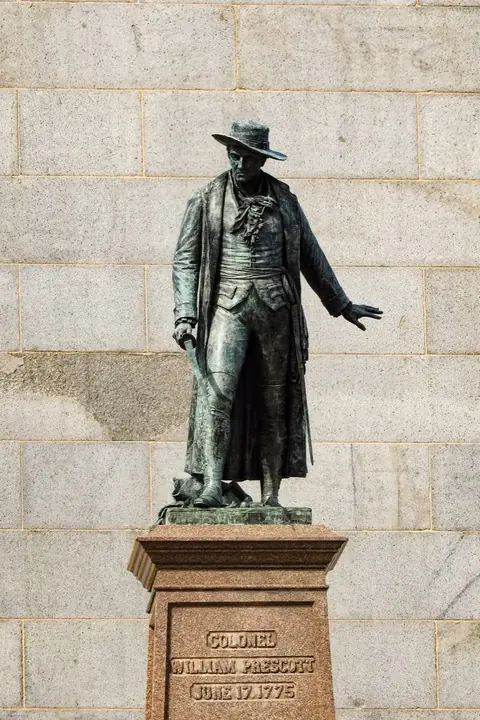
The battle took place early in the siege of Boston, and although it carries Bunker Hill's name most of the fighting was on Breed's Hill. Colonel William Prescott led the force that fortified the hill overnight. The British took the position on their third assault but suffered heavy losses; Wikipedia gives about 1,054 British casualties, roughly 40 percent of the attacking force, and says figures vary by source. Joseph Warren was killed during the retreat. The saying 'don't fire until you see the whites of their eyes' is widely repeated, but Wikipedia calls it apocryphal, with several different officers credited in accounts.
The Bunker Hill Monument Association organized in 1823. Lafayette laid the cornerstone on June 17, 1825, the battle's 50th anniversary, and Daniel Webster addressed the crowd. Solomon Willard was the architect and superintendent of the project; the National Park Service says Horatio Greenough won the design competition and the Association then appointed Willard to lead the work. The granite came from Quincy, hauled over the horse-drawn Granite Railway, which became operational in October 1826. The capstone was set on July 23, 1842, and the monument was dedicated on June 17, 1843. By 1919 the Commonwealth of Massachusetts owned it, and the National Park Service says it took over the monument's care in 1975.
Wikipedia says the fight showed that militia could stand against regular troops and made British commanders more cautious afterward, even though the British took the field. The NPS describes it as the first pitched battle between New England soldiers and the British army, with provincial forces from Massachusetts, Connecticut and New Hampshire. The British also set fire to Charlestown during the fighting to clear snipers. Warren, president of the Massachusetts Provincial Congress, had been commissioned a major general but fought as a volunteer because the commission had not yet taken effect. The NPS says the monument took over seventeen years to complete, and Wikipedia says 221 feet was the maximum height the Association could afford.
The obelisk is 221 feet tall and is climbed by a spiral stair of 294 steps. At its foot stands a bronze statue of William Prescott, sculpted by William Wetmore Story and dedicated in 1881. Henry Dexter's statue of Joseph Warren, made in 1857, is in the rotunda of the Bunker Hill Lodge. The Bunker Hill Museum, which preserves battle artifacts, is in the Charlestown Library.
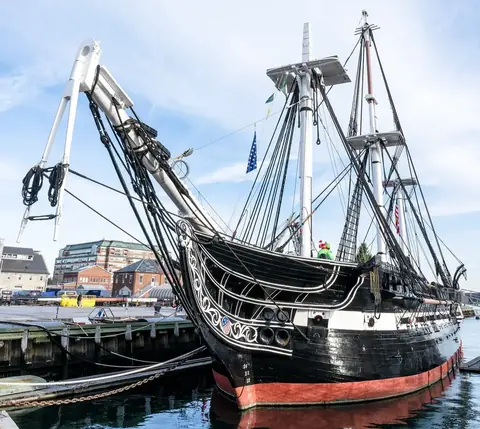
The NPS says only 25 people are allowed inside the monument at a time, and the climb may close for weather or safety, so check the NPS for current access. Voyzo can include the monument in a private Charlestown itinerary with door-to-door pickup, easily paired with a stop at USS Constitution.
See every tour and attraction we cover in Boston.