TorontoOntario · 36 tours
 Niagara FallsOntario · 25 tours
 New York CityNew York · 30 tours
 Las VegasNevada · 8 tours
 San FranciscoCalifornia · 16 tours
 VancouverBritish Columbia · 17 tours
 DubaiUAE · 54 tours
 Abu DhabiUAE · 5 tours
 Buenos AiresArgentina · 23 tours
 AthensGreece · 31 tours
 AucklandNew Zealand · 38 tours
 CancunMexico · 54 tours
No destinations match “”. Try searching all tours instead — that search understands full questions, not just place names.
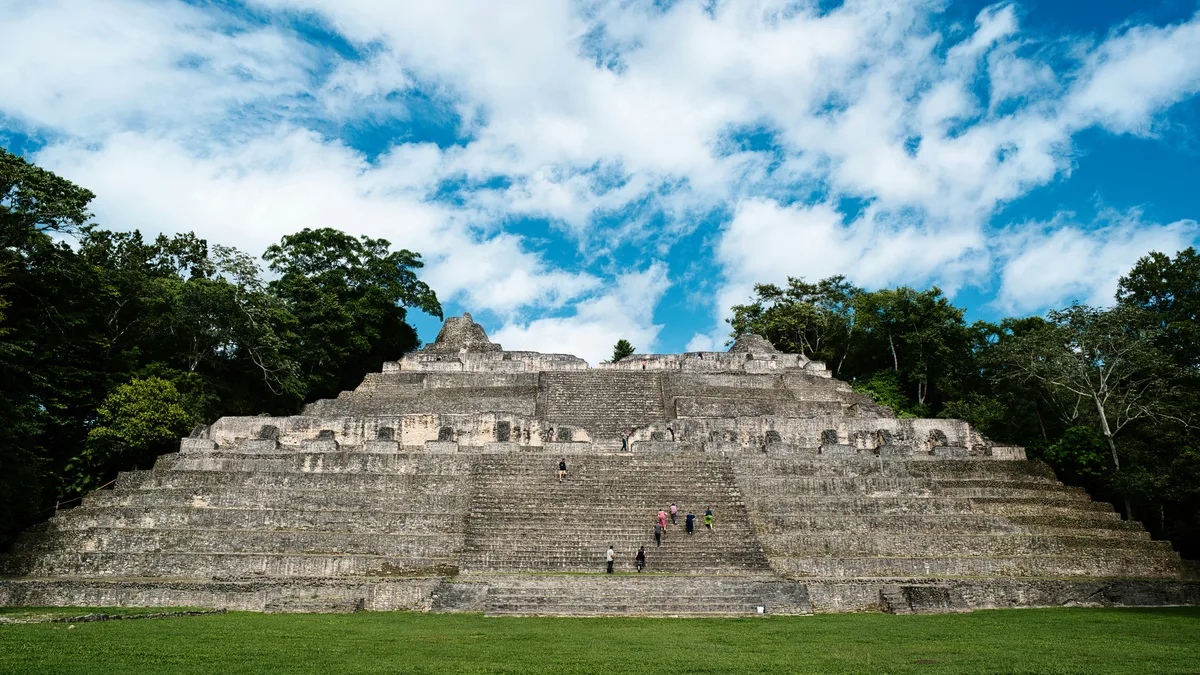
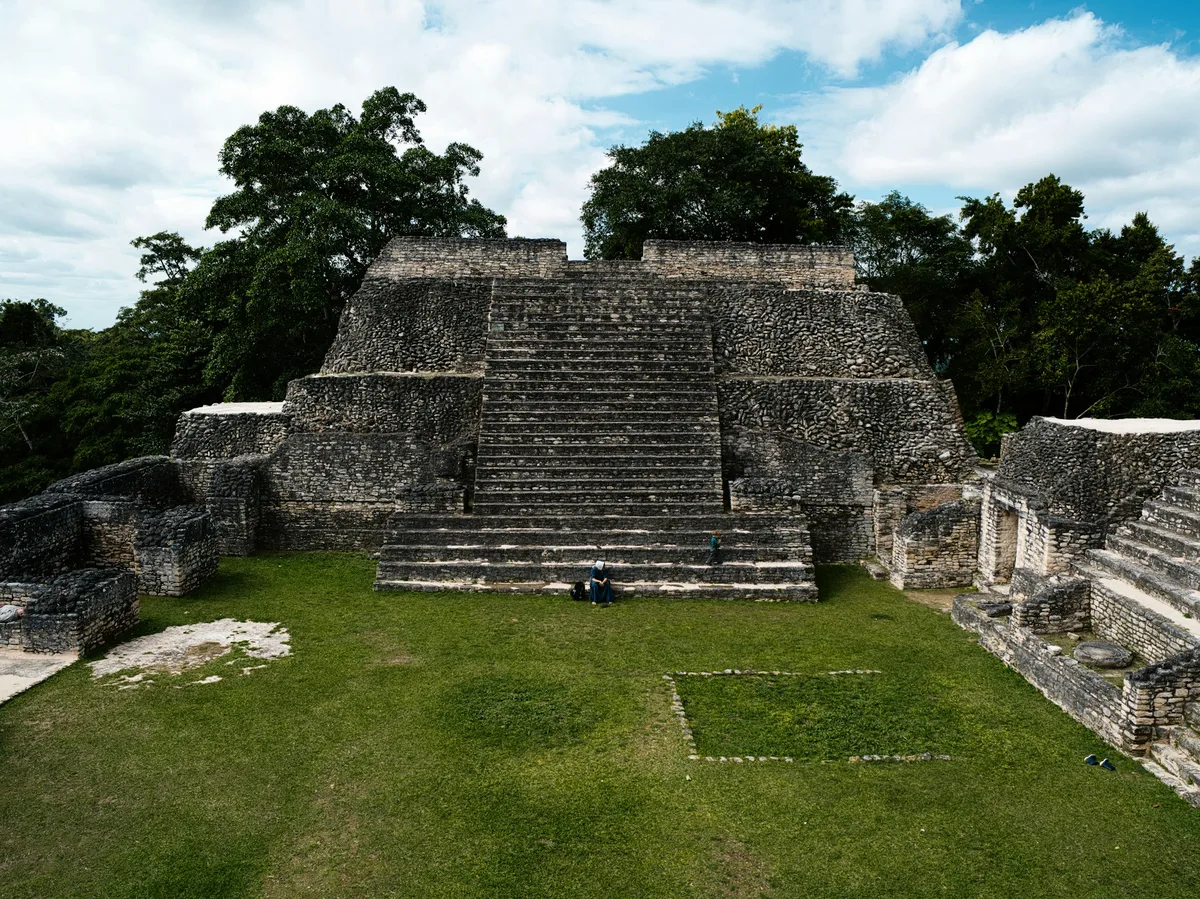
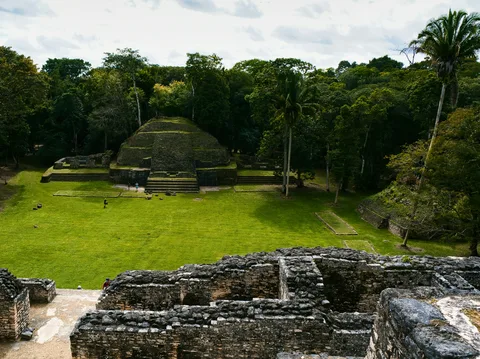
Belize's largest Maya archaeological site, deep in the Chiquibul Forest, centred on Caana ('sky place'), a temple that remains the tallest man-made structure in the country.
Visitor guide
Caracol is a large ancient Maya city in the Cayo District of Belize, on the Vaca Plateau in the foothills of the Maya Mountains. Its main pyramid, Caana, meaning sky palace, stands roughly 43 metres (about 139 to 141 feet, depending on source) tall and is described as the tallest man-made structure in Belize.
Caracol sits at roughly 500 metres elevation, about 40 km south of Xunantunich. Its ancient name is reported as Uxwitza, meaning Three Water Hill, while Caracol is a modern Spanish name, thought to refer to the winding access road. A logger, Rosa Mai, reported the site in 1937, and A. Hamilton Anderson visited in 1938 and gave it its modern name.
Linton Satterthwaite documented monuments in the early 1950s, and the Caracol Archaeological Project, directed by Arlen and Diane Chase, has worked at the site annually since 1985. A LiDAR survey in 2009 mapped about 200 square kilometres and revealed new causeways and residential groups.
Caana is the largest building at the site. LiDAR-based estimates revise Caracol's peak population to roughly 70,000 to 100,000 people, with around 7,700 residential groups, and a structure density that Wikipedia says was reportedly 85 percent higher than at Tikal. Population rose through the Late Classic, peaking between about AD 680 and 800, before falling sharply in the Terminal Classic.
The site has 53 carved monuments, made up of 25 stelae and 28 altars, along with more than 250 burials and 200 caches. Examples include Stela 3, dedicated in AD 652, and Stela 10, which carries AD 859, the last recorded date at the site.
According to Wikipedia, the dynasty was founded in AD 331 by Te' K'ab Chaak, and Caracol was initially a client state of Tikal, around 76 km to the northwest. Tikal defeated Caracol in an axe war in AD 556, but in AD 562 Caracol's ruler, Yajaw Te' K'inich II, won a star war against Tikal, an event linked to a long gap in Tikal's monuments.
The reign of K'an II, from AD 618 to 658, is seen as a golden age with a building boom and expanded causeways. After a long epigraphic gap, the city revived under K'inich Joy K'awiil. Caana was abandoned around AD 900, and the last use of one structure is placed around AD 1050.
The only access road is paved for its last 16 km and connects to the Western Highway, so the site is a long day from San Ignacio. A private guided visit suits a site this large and spread out, and Voyzo can provide a private vehicle and driver for the trip.
See every tour and attraction we cover in Belize.