TorontoOntario · 36 tours
 Niagara FallsOntario · 25 tours
 New York CityNew York · 30 tours
 Las VegasNevada · 8 tours
 San FranciscoCalifornia · 16 tours
 VancouverBritish Columbia · 17 tours
 DubaiUAE · 54 tours
 Abu DhabiUAE · 5 tours
 Buenos AiresArgentina · 23 tours
 AthensGreece · 31 tours
 AucklandNew Zealand · 38 tours
 CancunMexico · 54 tours
No destinations match “”. Try searching all tours instead — that search understands full questions, not just place names.
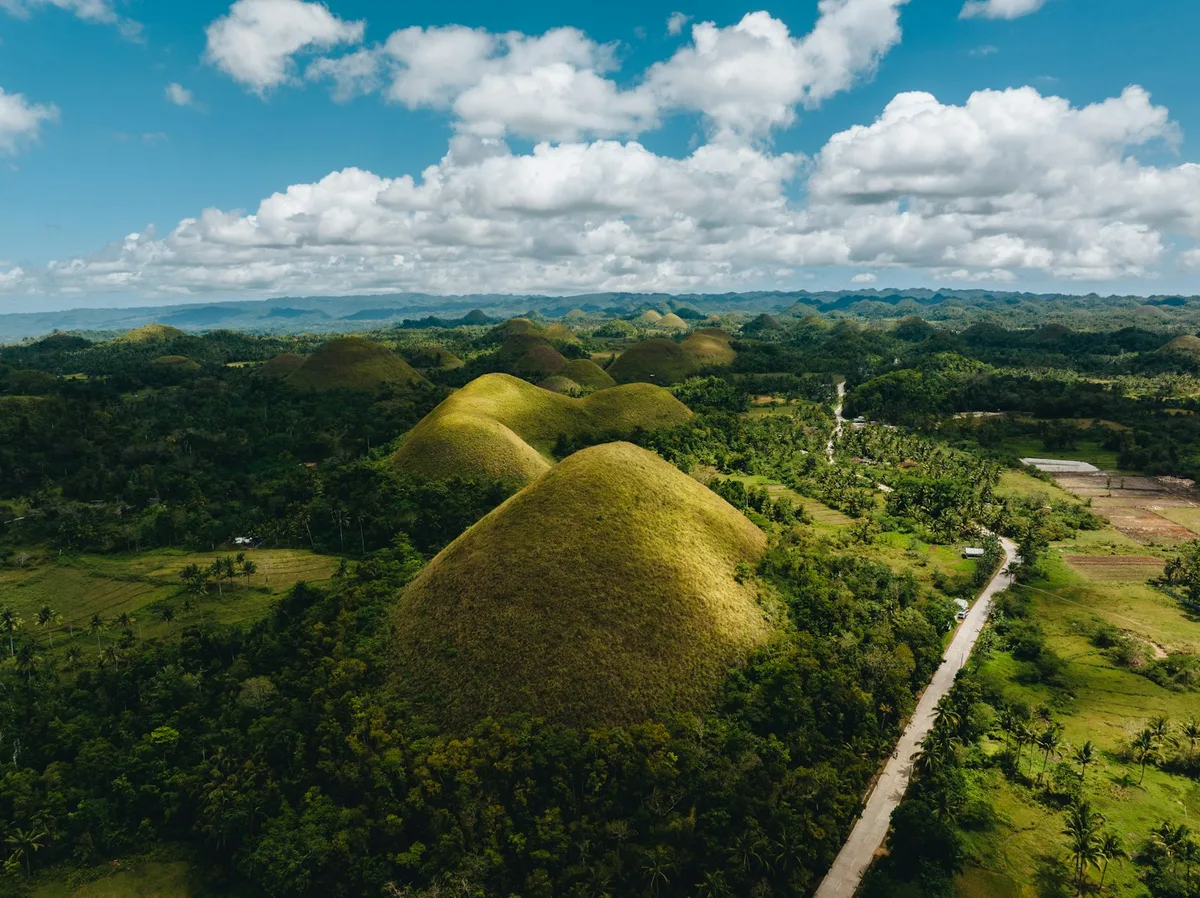
Over 1,000 near-identical grass-covered limestone mounds spread across Bohol's interior, turning brown in the dry season — the source of their name.
 Multi-Day Tours
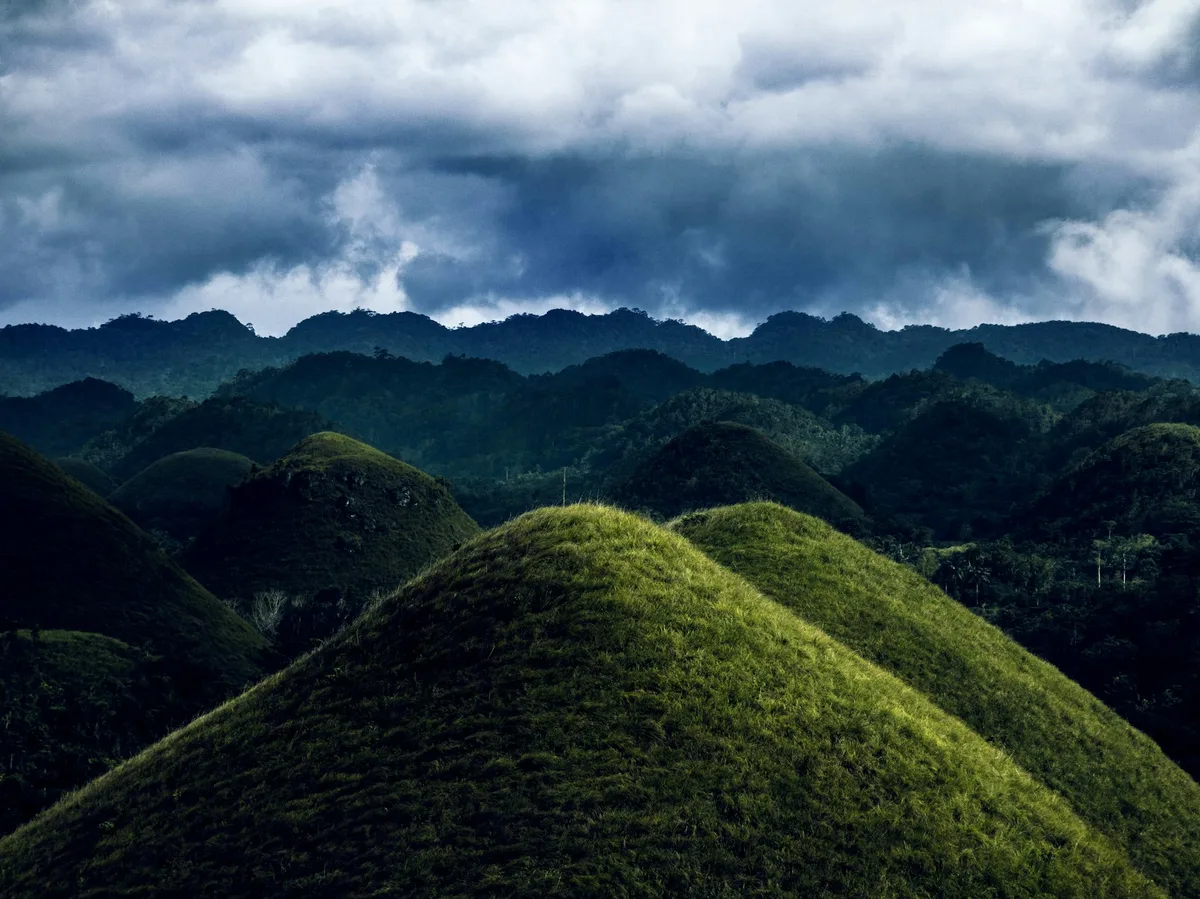
A 14-day route through Cebu, Bohol, and Camiguin — the Chocolate Hills and tarsiers, Anda's cave pools and Lamanok Island's mangroves, then Camiguin's volcanic hot springs and White Island sandbar.
 Multi-Day Tours
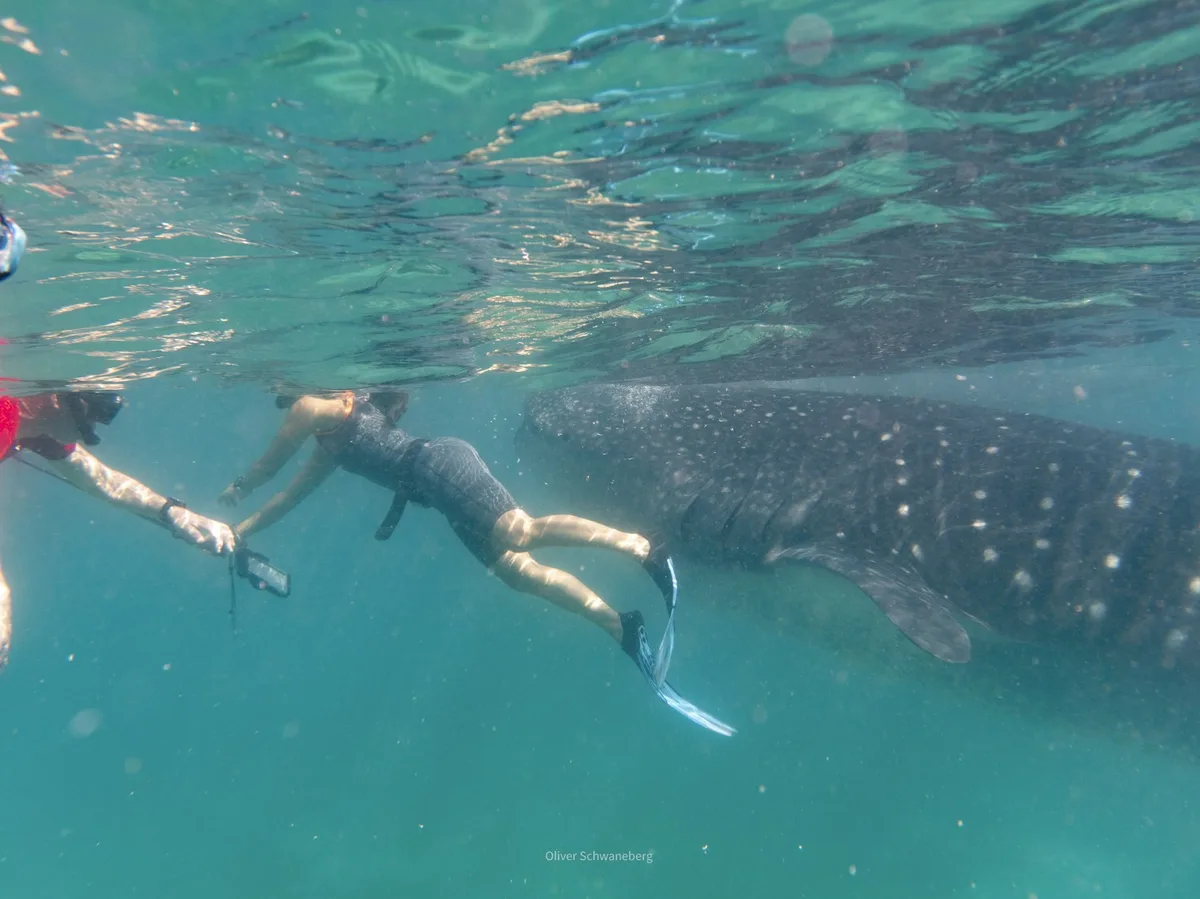
A 14-day island-hop through the Visayas — swimming with whale sharks at Oslob, Dumaguete's crater lakes, Siquijor's waterfalls, and Bohol's Chocolate Hills and tarsiers, ending with dolphin watching off Panglao.
Visitor guide
The Chocolate Hills are a geological formation in the interior of Bohol in the Philippines, made up of more than a thousand almost symmetrical grass-covered mounds. They turn chocolate brown in the dry season, which gives them their name.
According to Wikipedia, there are at least 1,260 hills, possibly over 1,776, spread over more than 50 square kilometres, with the greatest concentrations in Sagbayan, Batuan and Carmen. Most are 30 to 50 metres high and the largest is about 120 metres. The page gives estimates from 1,268 to 1,776 mounds, so the exact count is uncertain. The hills are haycock-shaped and separated by flat plains, with numerous caves and springs.
Geologists describe them as conical karst, or cockpit karst, made of marine limestone from the Late Pliocene to Early Pleistocene containing fossils of foraminifera, coral, mollusks and algae. After uplift and fracturing, rainfall and groundwater dissolved the limestone and streams eroded the land into hills. A bronze plaque at the Carmen viewing deck describes them as eroded marine limestone resting on hardened clay. Popular explanations such as volcanic activity, tides or a sudden geological shift are not supported, as there are no associated volcanic rocks.
Local stories offer other explanations. One tells of two giants who threw mud and fought until both died, leaving the mud as hills. Another tells of a giant named Arogo whose tears for the human lover Aloya formed the mounds, and a third says giant children baked mud cakes. These are folklore, not geology.
The hills are covered in green grass that turns brown in the dry season. Dominant grasses include Imperata cylindrica and Saccharum spontaneum, with several daisy-family species and ferns. The flatlands between the hills are farmed for rice and cash crops, and Wikipedia says quarrying threatens the natural vegetation.
Wikipedia notes that similar karst hill ranges occur elsewhere in the Philippines, including the interior of Siquijor and Cebu, southeastern Leyte, western Guimaras, northwestern Masbate and parts of the Bicol region. The Chocolate Hills were submitted by the DENR to UNESCO in 2006 for consideration as a World Heritage Site, though the article does not report an inscription.
The National Committee on Geological Sciences declared the hills a National Geological Monument on 18 June 1988, and Proclamation No. 1037 of 1997 established them as a natural monument. In 2018 Republic Act No. 11038, the Expanded NIPAS Act, included them as a protected area, the Chocolate Hills Natural Monument. The Chocolate Hills appear on the Bohol provincial flag and seal. The main viewpoint is the government-owned Chocolate Hills Complex in Carmen, about 55 km from Tagbilaran, with another viewpoint at Sagbayan Peak about 18 km away. A magnitude 7.2 earthquake in October 2013 damaged the hills and destroyed the viewing deck.
A private tour with a driver suits the countryside drive from Tagbilaran, and the viewing is best planned with the dry season in mind, when the hills show their brown colour.
See every tour and attraction we cover in Philippines.