TorontoOntario · 36 tours
 Niagara FallsOntario · 25 tours
 New York CityNew York · 30 tours
 Las VegasNevada · 8 tours
 San FranciscoCalifornia · 16 tours
 VancouverBritish Columbia · 17 tours
 DubaiUAE · 54 tours
 Abu DhabiUAE · 5 tours
 Buenos AiresArgentina · 23 tours
 AthensGreece · 31 tours
 AucklandNew Zealand · 38 tours
 CancunMexico · 54 tours
No destinations match “”. Try searching all tours instead — that search understands full questions, not just place names.
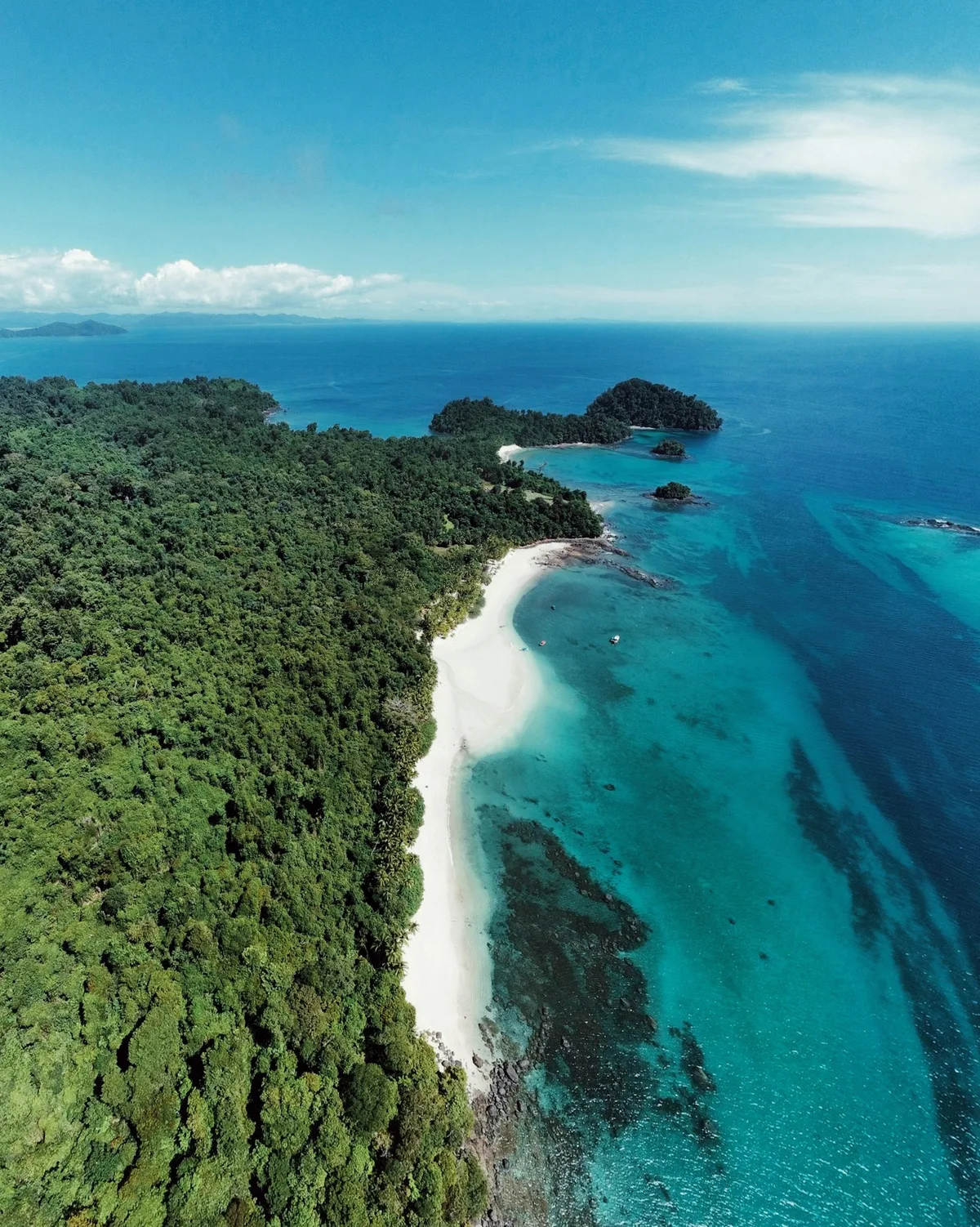
A UNESCO World Heritage marine park off Panama's Pacific coast, its largely uninhabited main island and surrounding reefs protecting some of the healthiest coral and biggest schools of fish in the Eastern Pacific.
Visitor guide
Coiba National Park is a marine and island protected area off Panama's Pacific coast in the Gulf of Chiriqui. Its main island, Coiba, is the largest island in Central America, and its forests and surrounding reefs are protected as a UNESCO World Heritage Site.
Wikipedia gives the island's area as about 494 square kilometres and notes that it lies off the coast of Veraguas Province. It separated from the mainland roughly 12,000 to 18,000 years ago as sea levels rose. Isolation over thousands of years allowed populations to diverge, and many animals now differ in appearance and behaviour from their mainland relatives. The park includes Coiba and 38 smaller islands, along with surrounding waters. Sources do not agree on the park's total area, so treat any single figure with care.
A penal colony was built on the island in 1919. During the dictatorships of Omar Torrijos and Manuel Noriega, the prison became notorious for harsh conditions, with reports of torture and executions. The death toll is unknown, though some sources suggest it may have been close to 300. Local people avoided the island, which remained largely undeveloped, and the prison closed in 2004. The long period of restricted access helped preserve the island's forests and made it suitable as a reserve.
Panama created Coiba National Park in 1992. UNESCO inscribed it in July 2005, at the 29th session of the World Heritage Committee, as Coiba National Park and its Special Zone of Marine Protection, under natural criteria ix and x. Its location in the Gulf of Chiriqui helps buffer temperature swings caused by El Nino, which supports high marine biodiversity.
About 75 percent of the island is forested, much of it ancient standing forest, and it preserves tree species that have disappeared from the mainland because of deforestation and overharvesting. Endemic subspecies include the Coiba Island howler monkey and the Coiba spinetail, and the island is one of the last places in Central America where scarlet macaws remain in large numbers in the wild. BirdLife International has designated the park an Important Bird Area for birds such as the brown-backed dove, the Coiba spinetail and the three-wattled bellbird.
The park protects coral reefs and a rich marine community. Wikipedia lists 760 marine fish species, 33 shark species and 20 cetacean species, and mentions humpback whales, pilot whales, killer whales, dolphins, sea turtles, manta rays and marlins. Divers and snorkellers reach the reefs by boat from the mainland, and rules limit access to the island itself.
Because access is regulated and the park lies offshore, trips are normally arranged through licensed boat operators. A private guided visit with a driver can handle the overland transfer to the departure port on the Pacific coast, with the sea crossing done on a local vessel.
See every tour and attraction we cover in Panama.