TorontoOntario · 36 tours
 Niagara FallsOntario · 25 tours
 New York CityNew York · 30 tours
 Las VegasNevada · 8 tours
 San FranciscoCalifornia · 16 tours
 VancouverBritish Columbia · 17 tours
 DubaiUAE · 54 tours
 Abu DhabiUAE · 5 tours
 Buenos AiresArgentina · 23 tours
 AthensGreece · 31 tours
 AucklandNew Zealand · 38 tours
 CancunMexico · 54 tours
No destinations match “”. Try searching all tours instead — that search understands full questions, not just place names.
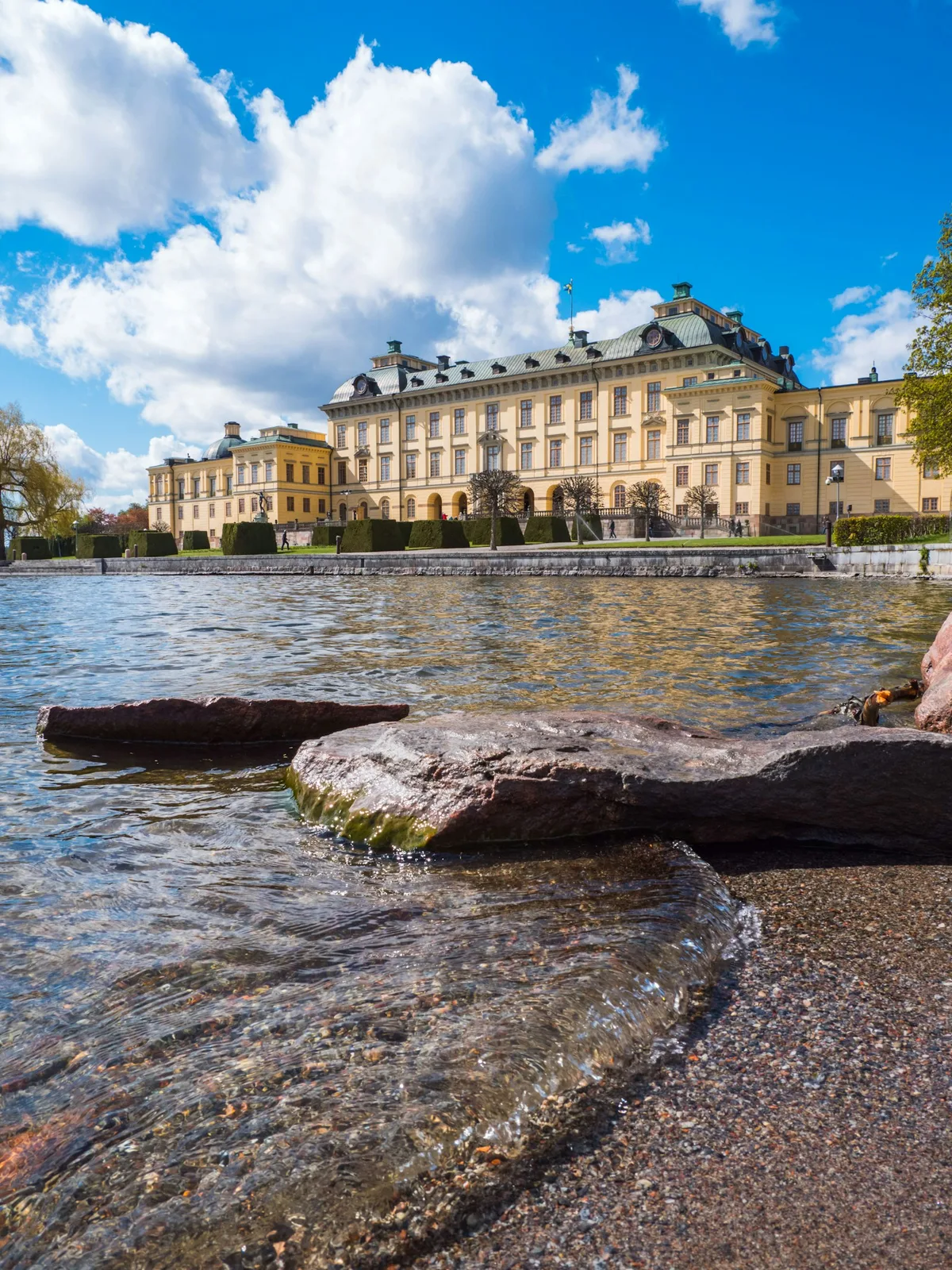
A UNESCO-listed royal residence on Lake Mälaren, still the private home of the Swedish royal family, with formal gardens and a well-preserved 18th-century court theatre.
Visitor guide
Drottningholm Palace stands on the island of Lovön in Lake Mälaren, in Ekerö Municipality near Stockholm, Sweden. It is the residence of the Swedish royal family and is also open to the public. Its grounds, theatre and Chinese Pavilion form the UNESCO-listed Royal Domain of Drottningholm.
The name means 'Queen's islet'. It comes from a stone palace built in 1580 by King John III for his queen, Catherine Jagiellon, designed by Willem Boy, which replaced an earlier mansion called Torvesund. Queen Dowager Regent Hedwig Eleonora bought the castle in 1661, but it burned to the ground on 30 December of that year. Nicodemus Tessin the Elder designed the rebuilding, which began in 1662, and after his death in 1681 his son Nicodemus Tessin the Younger completed the interiors. Flemish sculptor Nicolaes Millich made marble sculptures of the nine muses for the great staircase and hall.
Hedwig Eleonora governed as regent for the young Charles XI from 1660 to 1672 and used the palace as a summer residence until her death in 1715.
In 1744 King Frederick I gave the palace to the future queen Louisa Ulrika of Prussia, under whom the interiors were redone in a French rococo style. The theatre was rebuilt on a grander scale after a fire in 1762, and Louisa Ulrika sold Drottningholm to the Swedish state in 1777. Under Gustav III the palace hosted masquerades, theatrical festivities and tournaments in the gardens.
Charles XIV John largely abandoned the palace, which fell into disrepair, though the public was still allowed in. Oscar I made the first repairs in 1846, and Gustav V was born there in 1858. Restoration to its 18th-century appearance was carried out under Gustav V, with a major renovation between 1907 and 1913. Since 1981 King Carl XVI Gustaf and Queen Silvia have lived in the palace's southern wing.
The court theatre is still used, and its summer opera festivals are popular. It is a major reason the site is a World Heritage Site. UNESCO dates the theatre to 1766, while Wikipedia's history describes a rebuilding after the 1762 fire. The Chinese Pavilion, built in 1763 to 1770 in the park, is a Chinese-inspired royal pavilion.
The Baroque garden was laid out under Hedwig Eleonora and the Tessins, with tree avenues and statues, and was restored in the 1950s and 1960s on the initiative of Gustaf VI Adolf. The English landscape garden was begun by Gustav III, with ponds, canals, lawns and vistas and antique marble statues bought in Italy.
Drottningholm was inscribed by UNESCO in 1991 under criterion iv, reference number 559. UNESCO describes it as the finest example of an 18th-century northern European royal residence inspired by the Palace of Versailles.
The palace, theatre, pavilion and gardens are spread across a single estate. A private guide can structure the visit around the periods you most want to understand, and a private vehicle and driver can handle the trip from central Stockholm.
See every tour and attraction we cover in Sweden.